10 Best CNC Automation Systems for Manufacturers in 2026

Time:2026-11-02 Author:Sophia
0%

Cnc Automation is no longer limited to large factories with dedicated engineering teams. In 2026, manufacturers can choose from robotic machine tending, pallet pools, automatic part loading, and connected production systems. The right setup can reduce idle spindle time and keep jobs moving between shifts. Small details matter.

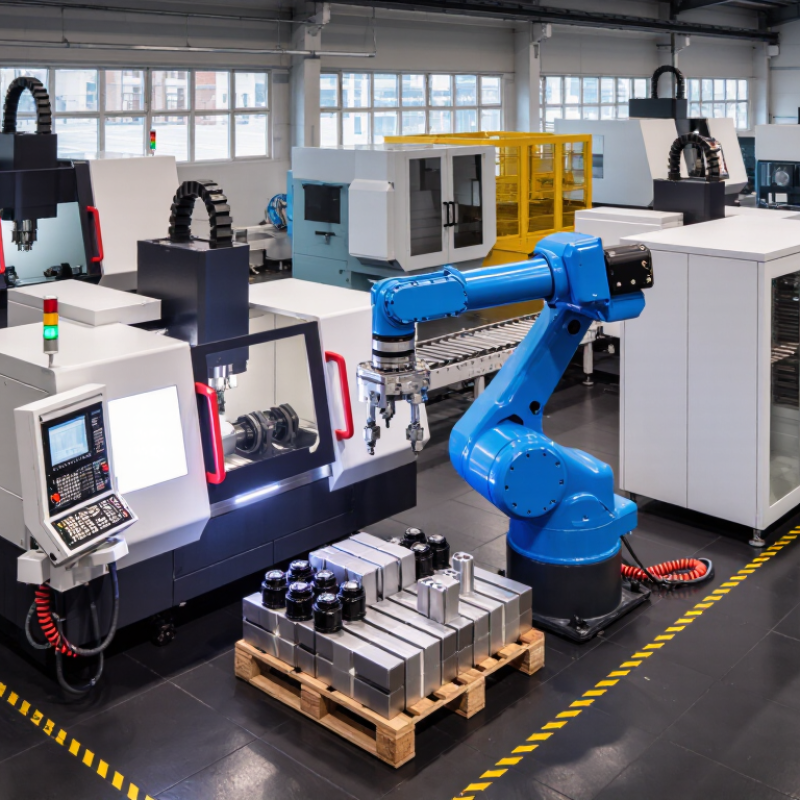
A compact cell might pair a CNC machine with a six-axis robot, a guarded work area, and a simple parts fixture. A larger shop may need pallet storage, tool-life monitoring, and links to scheduling software. These systems solve different problems. A fast robot will not help much if operators spend hours changing fixtures or correcting inconsistent blanks.

This guide reviews ten CNC automation systems through practical considerations: machine compatibility, setup demands, production flexibility, support, and room to expand. Specifications and advertised cycle-time gains are useful starting points, not guarantees. Real results depend on part geometry, batch size, operator training, and maintenance practices. Even a well-designed system can disappoint when those factors are overlooked. No system is perfect.

Manufacturers should confirm installation requirements and request references for applications similar to their own. Where possible, test representative parts before committing. The comparisons ahead are intended to clarify trade-offs, not declare one universal winner. A modest automation package may be the smarter choice for a shop still refining its process.
10 Best CNC Automation Systems for Manufacturers in 2026

How CNC Automation Systems Support Modern Manufacturing

CNC automation systems connect machine tools with robots, pallet pools, tool changers, and production software. The practical gain is continuity: a machine can load a new workpiece while an operator checks dimensions or prepares the next batch. In its 2024 Smart Manufacturing and Operations Survey, Deloitte reported that 92% of manufacturers viewed smart manufacturing as a driver of competitiveness over the following three years. That ambition depends on reliable basics, including stable fixtures, accurate tool offsets, and clear exception alerts. Small errors still compound.

The International Federation of Robotics reported 541,302 industrial robot installations worldwide in 2023, with 4.28 million robots operating in factories. Those figures show the scale of automation, though they do not isolate CNC applications. On a shop floor, useful systems track cycle status, tool wear, and unfinished jobs, helping teams respond before a stoppage consumes a shift. Not flawless. Automation can also expose weak scheduling or inconsistent part quality; adding a robot will not fix either. Manufacturers should test one cell against actual changeover time, scrap, and operator workload before expanding. Some results may be less impressive than a sales forecast suggests.

Key Components and Types of CNC Automation Systems

A CNC automation system is more than a robot beside a machine. Its core components include the CNC controller, a robot or gantry, workholding, sensors, and cell-control software. A gripper loads raw stock and removes finished parts; a pallet pool can stage multiple jobs nearby. Tool changers and in-process probes help reduce manual stops. Safety interlocks and clear status signals matter too. A cell may look simple, yet a poorly placed fixture can cause repeated pauses.

The main system types include machine tending, pallet handling, gantry loading, and connected multi-machine cells. Some run unattended for extended periods, but lights-out production is not a sensible fit for every shop. Part variation, chip buildup, and tool wear still need attention. The International Federation of Robotics reported 541,000 industrial robot installations worldwide in 2023, with 4.28 million robots operating in factories. This scale signals broad adoption, not guaranteed savings for each manufacturer. A useful design starts with cycle time, part weight, and changeover frequency, then matches automation to those constraints. In practice, the first layout often needs revision after operators test access and maintenance space. That is normal. A system that is easy to inspect may outperform a more elaborate cell that is difficult to keep running.

Criteria for Evaluating CNC Automation Systems in 2026

Evaluating CNC automation in 2026 starts with the job, not the robot. Map part sizes, batch variation, spindle utilization, and operator handoffs across a real shift. The International Federation of Robotics reported 541,302 industrial robot installations worldwide in 2023, with 4,281,585 robots in operation. That scale shows how common automation has become, but it does not prove a cell will suit a specific shop. Measure cycle time, changeover minutes, scrap, and unplanned stops before comparing proposals. Small details count: Can an operator load a heavy casting safely? Does the system recover cleanly after a tool break?

Assess integration and support as carefully as hardware. Check whether controls can exchange dependable data with existing CNC machines, scheduling software, and quality systems. Ask for a live demonstration using your parts, fixtures, and tolerances. The Deloitte 2024 Smart Manufacturing Survey found 86% of surveyed manufacturing executives expected smart manufacturing to be a primary competitiveness driver within five years. Yet digital dashboards cannot fix weak process planning. Compare total cost, including installation, training, maintenance, and downtime during commissioning. Test realistic recovery procedures. No scorecard catches every awkward handoff. It is easy to overlook one. Require clear uptime definitions, spare-parts plans, and measurable acceptance tests before signing off.

10 Leading CNC Automation Systems for Manufacturers in 2026

For manufacturers in 2026, leading CNC automation systems are practical combinations of machines, handling equipment, sensors, and software. Ten common approaches include robotic machine tending, collaborative-robot cells, gantry loaders, pallet pools, and bar feeders. Others use automatic tool changers, in-process inspection, tool-life monitoring, flexible manufacturing cells, or production-scheduling software. Each solves a different bottleneck.

A robotic tending cell can load a machine while an operator checks parts nearby. A pallet pool keeps several jobs ready, reducing setup delays between batches. Bar feeders suit long runs of turned components, while gantry loaders can serve multiple machines in a compact floor layout. Inspection probes catch dimensional drift before a full batch is affected. Useful, but not magic.

System choice should follow actual production data: cycle time, changeover frequency, part weight, tolerance, and staffing coverage. A small shop may gain more from reliable pallet handling than a complex lights-out cell. Check guarding, chip buildup, coolant exposure, and recovery steps after a fault. Those details matter. Ask operators to test loading and job changes before installation; plans can look tidy on paper and awkward beside a real machine. Automation also needs maintenance time, spare parts, and clear ownership. That part is easy to underestimate.

10 Best CNC Automation Systems for Manufacturers in 2026 — 10 Leading CNC Automation Systems for Manufacturers in 2026

Automation System Typical Setup Best-Fit Applications Main Advantages Planning Considerations Common CNC Processes
Robotic Machine-Tending Cell Industrial robot, gripper, safety enclosure, and a CNC machine interface Repeated loading and unloading of individual parts, especially in small- to medium-batch production Can handle multiple tasks, such as loading, unloading, and placing parts at a station; cell layouts can be adapted to different machines Requires careful gripper design, part presentation, guarding, and coordination with machine-door and cycle signals Milling, turning, drilling, and grinding
Pallet-Pool System Multiple workholding pallets stored in a rack and transferred to a CNC machine Machining centers that run multiple jobs or need longer unattended production periods Allows work to be set up on pallets while the machine is cutting; supports repeatable workholding and job changes Needs compatible pallet interfaces, planned workholding, and scheduling for jobs with different setups Vertical and horizontal milling, drilling, and multi-operation machining
Automatic Pallet Changer A machine-integrated mechanism that exchanges one workpiece pallet for another Production where a single CNC machine benefits from loading the next job while the current pallet is being machined Reduces manual pallet exchange time and can keep setup work outside the machining area Usually serves a limited number of pallets; operators still need to prepare and manage incoming work Milling and drilling on pallet-equipped machining centers
Gantry Loader Overhead or frame-mounted Cartesian axes with a part-gripping device High-volume production with predictable part locations and repeated load/unload cycles Provides consistent, direct part transfer and can be designed around a fixed production sequence Best suited to a defined layout; changes in part size, machine arrangement, or production flow may require reconfiguration Turning, milling, and transfer-line machining
Bar-Feeder System Bar stock feeder connected to a CNC lathe or turning center Long runs of turned components made from bar stock Feeds stock automatically and can reduce manual bar loading between cycles Bar diameter, length, material, spindle capacity, and machine compatibility must be checked; cut-off parts still require a collection or handling plan CNC turning and Swiss-type turning
Part Conveyor and Collection System Conveyor, chute, or parts catcher that moves finished parts away from the machine Small, repeatable components produced in batches or continuous cycles Reduces manual part removal and helps keep the machine’s output area clear Part geometry and surface finish affect how parts can be collected; downstream counting, inspection, or sorting may be needed Turning, drilling, and other processes producing discrete finished parts
Vision-Guided Bin-Picking Cell Robot, 2D or 3D vision system, bin, and part-transfer interface Loading randomly oriented parts when fixed-position part presentation is impractical Can identify part locations and orientations without requiring every part to be arranged in a dedicated nest Performance depends on part visibility, surface characteristics, bin arrangement, and validated vision and grasping routines Milling, turning, and other machining involving loose blanks or castings
Automated Guided Vehicle or Mobile-Robot Supply Mobile platform that transports pallets, fixtures, or materials between work areas Facilities that need flexible material movement between CNC cells, staging areas, and inspection stations Can change routes through software rather than fixed conveyor layouts; supports material delivery across a facility Requires traffic management, defined pickup and drop-off points, and compatible loading interfaces; it does not necessarily load a machine by itself Multi-machine milling and turning facilities, usually as part of a larger cell
Flexible Manufacturing System Two or more CNC machines linked by automated part or pallet handling and coordinated control Facilities producing a family of parts with recurring but varied routing requirements Can route work among connected machines and coordinate handling, scheduling, and production status Requires substantial integration, process planning, and consistent workholding; a bottleneck at one operation can affect the full system Multi-operation milling, turning, and combined machining workflows
Automated Tool-Management System Tool magazines or storage, tool identification, and software for tool data and availability Shops with frequent tool changes, extended unattended runs, or many tool assemblies Helps track tool data and availability; expanded tool storage can reduce interruptions for manual tool changes Tool life, preset data, offsets, and broken-tool checks need reliable procedures; it complements rather than replaces workpiece handling Milling, drilling, turning, and multi-axis machining

How to Select and Integrate a CNC Automation System

Selecting a CNC automation system starts with the work, not the robot. List part sizes, changeover frequency, target output, and the machines available. A cell handling identical parts all day needs different tooling from one producing short batches. Measure the actual cycle, including loading, inspection, and chip clearing. Those overlooked minutes matter.

Check how the system will communicate with each machine and where operators will stand during setup. Confirm gripper access, fixture clearance, and room for maintenance before fixing the layout. A clean drawing can miss a cable route or a door that cannot open fully. Integration may also reveal inconsistent workholding; automation will not correct a process that changes from shift to shift. Pilot one representative part, then adjust the plan using observed cycle times and operator feedback.

Tips: Define a clear recovery procedure for misloads and interrupted cycles. Keep the first cell simple. Record stoppages, tool changes, and manual interventions during commissioning. Compare those notes with the original production goals, and revisit assumptions that do not hold up. The first design may need revision.

FAQS

What do CNC automation systems connect?

They link machine tools with robots, pallet pools, tool changers, and production software. The aim is steadier production.

How can automation help operators?

A machine can load another workpiece while an operator checks dimensions or prepares the next batch. Waiting time may shrink.

What should a shop measure before choosing a system?

Track cycle time, changeover minutes, scrap, spindle use, and unplanned stops during a real shift. Use actual parts.

Can a robot fix poor scheduling or inconsistent part quality?

No. Automation can expose those problems, but it cannot fix them by itself. The process needs attention too.

What should a live demonstration test?

Use your parts, fixtures, and tolerances. Check safe loading of heavy castings and recovery after a tool break.

Which integration details matter?

Check that the system exchanges dependable data with existing CNC controls, scheduling software, and quality systems. Dashboards alone are not enough.

What costs belong in the budget?

Include installation, training, maintenance, and downtime during commissioning. Plan for spare parts as well.

How widespread is industrial robotics?

In 2023, factories had about 541,000 new industrial robot installations and 4.28 million robots in operation. Those figures do not prove a particular CNC cell will fit.

How can a shop judge whether automation worked?

Define uptime clearly and set measurable acceptance tests. Compare results with earlier cycle times, scrap, and operator workload. Some gains may disappoint. A scorecard can still miss an awkward handoff.

Conclusion

Cnc Automation helps manufacturers improve productivity, consistency, and flexibility by connecting machine tools with systems for material handling, job scheduling, monitoring, and quality checks. A modern setup may combine CNC machines with robotic loading, conveyors, sensors, software, and safety controls. These components can be configured in different ways, from automating a single machine to coordinating multiple work cells, depending on production needs.

Choosing a system in 2026 involves assessing compatibility, ease of integration, scalability, reliability, operator training, and total cost of ownership. Manufacturers should compare solutions according to their workflows, part mix, production volume, and available floor space rather than relying on one-size-fits-all claims. Successful adoption begins with clear goals, careful planning, and a phased implementation, followed by ongoing performance reviews. With the right approach, automation can reduce repetitive tasks, support more predictable output, and help teams respond more efficiently to changing demand.


Sophia

Sophia

Sophia is a dedicated marketing professional with an exceptional depth of knowledge about her company's products and services. With a keen understanding of market trends and customer needs, she crafts insightful blog posts that not only inform but also engage readers, enriching the company’s online......