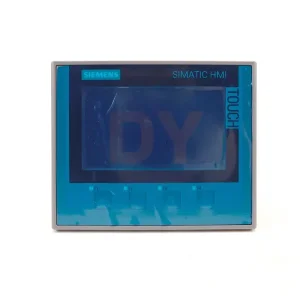
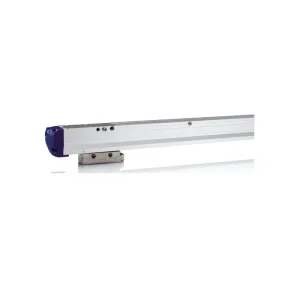
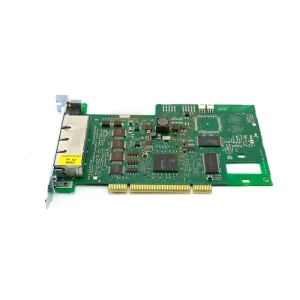
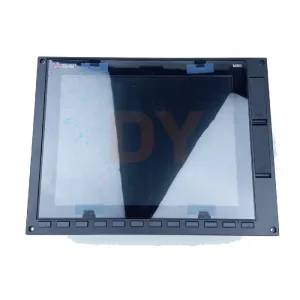
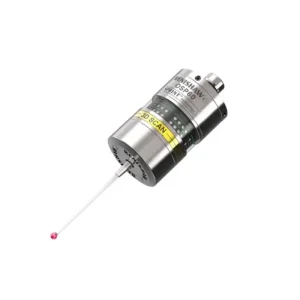
Verified original OEM replacements, CNC controllers, touch probes, encoders, and precision bearings for automated manufacturing networks.
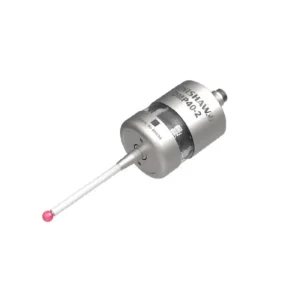
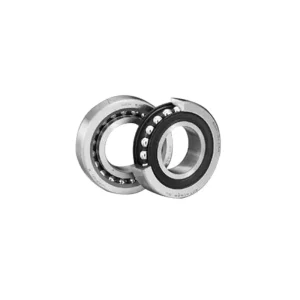
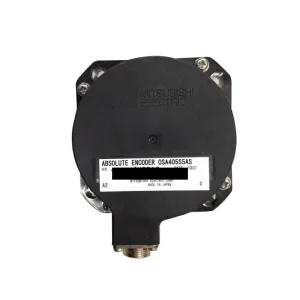
In the era of advanced smart manufacturing, computer numerical control (CNC) platforms and industrial robotics represent the nerve system of global automated production lines. Among global technology leaders, FANUC Corporation maintains an extraordinary footprint across automotive manufacturing, aerospace engineering, precision electronics assembly, semiconductor fabrication, and heavy metalworking industries. Understanding the operational ecosystem of FANUC products—ranging from legacy control architecture to cutting-edge AI-driven servo amplifiers—is essential for procurement executives, system integrators, and plant operations engineers worldwide.
As factories shift toward Industry 4.0 paradigms, the demand for verified, high-precision OEM FANUC components, replacement modules, and qualified third-party supply chain partners has escalated dramatically. Unplanned downtime on a 5-axis machining center or a high-speed ROBODRILL cell can cost manufacturers upwards of tens of thousands of dollars per hour. Consequently, establishing a resilient, technical-grade procurement strategy for FANUC hardware is no longer just a purchasing routine—it is a strategic necessity for maintaining uninterrupted productivity.
The international supply chain for CNC spare parts faces unique challenges, including supply bottlenecks for silicon microprocessors, legacy hardware obsolescence, and counterfeit module proliferation. Qualified suppliers must offer complete technical verification, transparent component traceability, and comprehensive engineering support to guarantee that every deployed module seamlessly integrates into existing machine tool architectures without triggering signal mismatch, parameter corruption, or safety bus faults.
To properly navigate procurement and maintenance across the FANUC catalog, engineering personnel must differentiate between distinct component families, communication protocols, and power management units. Below is an in-depth breakdown of the foundational hardware modules that compose modern FANUC CNC and motion systems:
Ranging from the high-reliability FANUC Series 0i-Model F Plus to the ultra-complex multi-axis Series 30i/31i/32i-Model B. These main units house the system CPU, PMC (Programmable Machine Controller) ladder processing architecture, high-resolution color LCD displays, and high-speed optical fiber communications interfaces (FSSB).
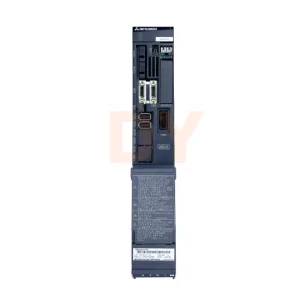
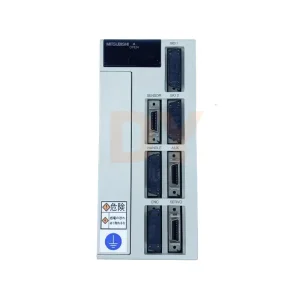
FANUC’s αi-Series and cost-effective βi-Series servo amplifier modules (SVM) and spindle amplifier modules (SPM) feature modular DC bus power supply configurations (PSM), integrated dynamic braking, Dual Check Safety (DCS), and low heat-loss IGBT power switching technology.
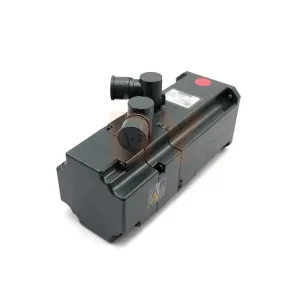
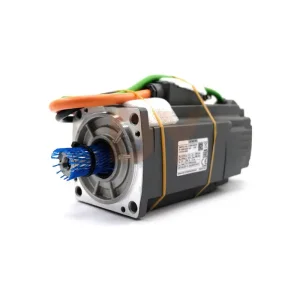
AC Servo Motors (αiS / βiS series) deliver exceptional torque-to-inertia ratios, coupled with ultra-high resolution serial feedback units (αiAR / αiAS Pulsecoders). Absolute encoder feedback eliminates the need for reference point return procedures upon system startup.
Modern FANUC CNC architectures rely heavily on proprietary high-speed fiber-optic bus networks. The FANUC Serial Servo Bus (FSSB) connects the main CNC control card to individual multi-axis servo amplifiers via noise-immune optical cables. This allows micro-second dynamic path interpolation, reduced electrical interference, and simplified electrical cabinet wiring. When sourcing replacement amplifiers or main boards, verifying FSSB chip generation (e.g., FSSB Type 1 vs. Type 2 high-speed communication chips) is critical to prevent hardware handshake mismatches.
Industrial automation demands vary across geographic manufacturing hubs and specific application domains. FANUC products are engineered to adapt to localized manufacturing standards, multi-voltage environments, and stringent environmental ratings (IP65/IP67 enclosure protection).
In North American and European aerospace production environments, FANUC 30i-B controllers operate multi-axis simultaneous milling centers machining titanium and composite structures. Features such as Smooth AICC (Artificial Intelligence Contour Control II) and 5-axis machining point control drastically minimize surface roughness errors and dynamic contouring delays.
Automotive manufacturing relies heavily on automated transfer lines, FANUC R-2000iC series robots, and ROBODRILL machining centers. Integrated via PROFINET or Ethernet/IP networks, these cells utilize FANUC Dual Check Safety (DCS) to protect personnel while maintaining peak cycle times for EV battery tray machining and engine block line boring.
Dominant throughout Asian manufacturing hubs (China, Vietnam, Taiwan), compact FANUC systems drive thousands of high-acceleration tapping and milling machines. High-resolution absolute Pulsecoders guarantee sub-micron positioning repeatability required for smartphone enclosures and micro-semiconductor test sockets.
Deep-cavity die-sinking and mold surface finishing require continuous high-torque output under thermal expansion variables. Thermal Displacement Compensation technology integrated within FANUC controllers dynamically adjusts axis offsets using localized temperature sensor feedback.
As industrial ecosystems transition toward fully digitalized, carbon-neutral production, FANUC’s engineering roadmap focuses on three main pillars: artificial intelligence integration, edge computing ecosystem expansion, and extreme power efficiency.
Navigating the global market for FANUC products requires rigorous quality control procedures. Procurement teams must guard against refurbished units sold as new, unauthorized board repairs, and counterfeit electronic modules. A trustworthy FANUC spare parts supplier employs a structured, multi-tier inspection protocol prior to dispatching components:
Verification of original FANUC part numbers (e.g., A06B-6114-H209, A02B-0320-B500), manufacturing date codes, firmware revisions, and original holographic serial tags against official production databases.
Servo drives and main control boards undergo full-load dynamic testing on dedicated FANUC simulator rigs. Drive modules are verified for noise tolerance, encoder pulse reading, thermal stress resistance, and zero-loss communications under maximum rated axis acceleration.
Delicate printed circuit boards (PCBs) and optical components are sealed in moisture-barrier anti-static bags (ESD safe), encased in high-density shock-absorbing foam, and packed in reinforced export-grade wooden cases for international air freight safety.
Practical technical answers compiled by field maintenance experts and senior CNC application engineers to help keep your machinery operational.
Explore additional verified automation components, linear feedback scales, HMI touch panels, and servo drive units.