Industrial Automation & CNC Motion Intelligence

Fanuc Servo Amplifiers Products & Service

Architectural Engineering, Multi-Axis Motion Control Systems, Preventive Diagnostics, and Global Supply Chain Integration for High-Precision CNC Manufacturing.

99.9%
Original Sourcing Accuracy
< 24h
Technical Dispatch Response
100%
Pre-Shipment Full-Load Bench Test
12 Mo.
Global Warranty Coverage
Strategic Industry Note: Modern multi-axis CNC machine tools demand seamless synchronization between the numerical controller (CNC), power supply module (PSM), servo amplifier module (SVM), and spindle amplifier module (SPM). A failure in a single Intelligent Power Module (IPM) or DC bus smoothing capacitor can trigger machine shutdown, incurring significant downtime costs. Sourcing certified factory-original modules with verified parameter configurations is critical to plant operational resilience.
Whitepaper & Technical Deep-Dive

Architectural Engineering & Topology of Fanuc Servo Amplifiers

A comprehensive analysis of physical design, power module switching dynamics, optical communication protocols, and control loop execution.

In high-precision Computer Numerical Control (CNC) automation, Fanuc Servo Amplifiers represent the neuromuscular execution layer connecting the digital intelligence of the CNC core to the mechanical motion axes. Whether configured in standalone turning centers, complex 5-axis machining gantries, or high-speed robotic transfer arms, FANUC's drive architectures—most notably the Alpha ii) and Beta ii) series—are recognized worldwide for their ultra-low thermal dissipation, high power density, and zero-drift dynamic response.

1. Modular System Architecture: PSM, SVM, and SPM Configurations

The flagship FANUC Alpha i drive system uses a modular topology designed to separate AC-to-DC rectification from DC-to-AC pulse-width modulation (PWM). This physical separation maximizes electrical efficiency across multi-axis machine tool cabinets:

  • Power Supply Modules (PSM / PSM-HV): Responsible for converting 200–240V or 380–480V three-phase AC input voltage into a stabilized 300V DC or 600V DC link bus. High-voltage (HV) variants utilize active line regeneration technologies to return kinetic energy generated during axis deceleration directly back to the facility grid, reducing overall energy consumption by up to 33%.
  • Servo Amplifier Modules (SVM / SVM-HV): Available in single-axis (SVM1), dual-axis (SVM2), and triple-axis (SVM3) configurations. These units draw power directly from the common DC link bus and employ state-of-the-art Intelligent Power Modules (IPM) featuring integrated gate-driver ICs, over-temperature sensing, and short-circuit protection circuits.
  • Spindle Amplifier Modules (SPM / SPM-HV): Engineered specifically for high-inertia high-speed spindle operations, supporting flux vector control, sensorless velocity observer algorithms, and seamless switching between velocity mode and C-axis positioning mode.
Amplifier Platform Input Voltage Rating DC Bus Potential Communication Protocol Target Application Spectrum
FANUC Alpha ii-SV) 200 – 240V AC (3-Phase) 300V DC Nominal FSSB Optical Fiber (272 Mbps) High-Precision Milling, Turning Centers, Multi-Axis Machining
FANUC Alpha i-HV (αi-SV HV) 380 – 480V AC (3-Phase) 600V DC Nominal FSSB High-Speed Fiber Link Heavy-Duty Aerospace Gantries, Large Stamping Presses
FANUC Beta ii-SV) 200 – 240V AC (Single/3-Phase) 300V DC Integrated I/O Link / FSSB Serial Bus Cost-Optimized Standard CNC Lathes, Auxiliary Axes, Tool Changers
FANUC Beta i-SV SVU 200 – 240V AC Integrated Unit 300V DC Integrated Direct CNC Bus / High-Speed Serial Compact 3C Electronic Tapping & Micro-Drilling Centers

2. FSSB Optical Communication & High-Response Vector (HRV4) Control

A core technological differentiator of FANUC servo drives is the FANUC Servo Serial Bus (FSSB). Utilizing noise-immune optical fiber cables, FSSB links the CNC position controller to multiple servo amplifier modules in a high-speed daisy-chain topology. This eliminates ground loop interference, reduces control cabinet wiring by up to 75%, and ensures deterministic data transmission cycles operating down to 62.5 microseconds.

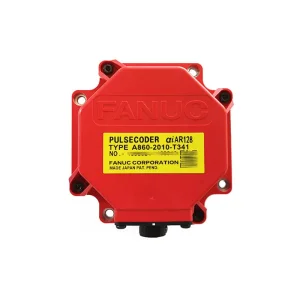
Combined with FANUC's proprietary HRV4 (High Response Vector) control software algorithm, current loop calculations are executed at extreme speeds. By continuously modulating the PWM current waveform based on high-resolution encoder feedback (such as the 32-million-count/rev αiAR128 absolute encoder), position error is minimized during high-feedrate contouring, virtually eliminating quad-burst surface artifacts on machined molds.

Ecosystem Dynamics

Global Commercial Landscape & Industrial Market Reality

Understanding maintenance backlogs, OEM lead time constraints, and cross-platform component interoperability across global production lines.

Post-Pandemic Maintenance Dynamics & Operational Asset Aging

Global manufacturing facilities across North America, Europe, and Asia-Pacific operate under tight margins and continuous production schedules. Crucial sectors such as Tier-1 automotive powertrain manufacturing, aerospace structural frame machining, and semiconductor capital equipment fabrication rely heavily on legacy CNC installations powered by FANUC Alpha (A06B-6079/6089/6096 series) and early-generation Alpha i (A06B-6114/6141/6200 series) amplifiers.

As these assets reach 50,000 to 100,000 operational hours, thermal aging of internal components—such as electrolytic DC link capacitors, optocouplers, and IGBT gate-drive resistors—leads to unpredictable machine alarms (e.g., FANUC Alarm 401, 414, 433, or 449). When OEM factory lead times for replacement modules stretch to weeks or months, factory managers face severe financial losses due to unpredicted downtime.

Cross-Brand Architecture Comparison

Comparing key drive parameters across top global CNC component manufacturers:

  • FANUC Alpha i Series: FSSB Fiber Interface, HRV4 Control, High Active Line Regeneration Efficiency, Zero Parameter Tuning Requirement on Standard Replacement.
  • Siemens SINAMICS S120: DRIVE-CLiQ Communication, Flexible Multi-Axis Booksize Format, Complex Engineering Tooling Setup.
  • Mitsubishi MDS-E/EJ Series: SSCNET III/H Optical Bus, Dedicated Twin-Motor Drive Units, Integrated Safe Torque Off (STO).
  • Delta ASDA-B3 Series: High-Performance Vector Control, EtherCAT Bus Support, Cost-Effective General Automation Integration.
Application Engineering

Localized Industrial Application Scenarios

Specific field implementations demonstrating how specialized amplifier tuning solves complex real-world machining challenges.

Scenario A: High-Speed Automotive Powertrain Machining

Environment: 24/7 continuous aluminum engine block and transmission housing line.

Technical Challenge: Extreme rapid-traverse acceleration/deceleration cycles (up to 1.5G) causing thermal overload on servo drive power stages and DC bus voltage spikes during deceleration.

Implemented Solution: Integration of FANUC Alpha i Servo Amplifiers (A06B-6200 series) with high-capacity Power Supply Modules featuring Active Line Regeneration (PSM-HV). The active front-end converts deceleration energy back to 400V AC grid power, preventing DC link voltage overshooting (Alarm 430) while maintaining cool operating cabinet temperatures.

Scenario B: 5-Axis Aerospace Structural Component Milling

Environment: Large-gantry titanium alloy and carbon composite structural part milling.

Technical Challenge: Low-frequency structural resonance chatter causing surface blemishes and premature spindle tool wear during heavy cutting passes.

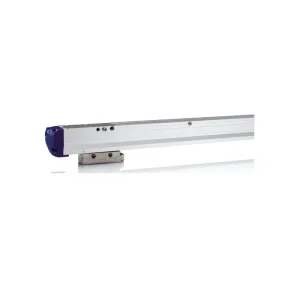
Implemented Solution: Deployment of FANUC αi-SV series drives operating under HRV4 control algorithms. Utilizing real-time dual-position feedback (motor rotary encoder plus direct-measuring Fagor or Heidenhain linear glass scales), custom notch filters were activated within the amplifier firmware to cancel mechanical resonance at 120Hz, resulting in sub-micron positioning repeatability.

Scenario C: 3C Micro-Drilling & Smartphone Chassis Tapping

Environment: Mass-production Robodrill fleets producing precision anodized aluminum frames.

Technical Challenge: High tool-change frequency and intense C-axis spindle orientation cycles demanding ultra-fast drive response without overshoot.

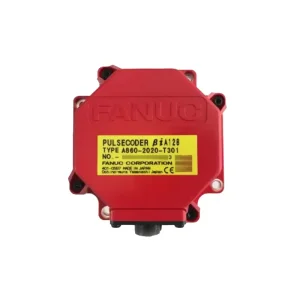
Implemented Solution: High-density FANUC Beta i SVU integrated servo amplifier units coupled with high-resolution FANUC pulse encoders (A860-2010/2020 series). The streamlined servo loops allowed spindle rigid tapping speeds exceeding 6,000 RPM with perfect thread depth control.

Scenario D: Heavy-Duty Lathe Live-Tooling Synchronized Turning

Environment: Multi-axis turning-milling centers producing complex petroleum valve stems.

Technical Challenge: Synchronization of main spindle speed with auxiliary live tooling driven by secondary servo modules under varying torsional loads.

Implemented Solution: Dual-axis FANUC Servo Amplifier Modules paired with Mitsubishi/Siemens auxiliary motion controllers via high-speed serial bus, enabling dynamic load-torque feedforward control that compensates for cutting tool engagement resistance in real time.

Technology Horizon

Technical Roadmap & Future Technology Outlook (2025–2035)

Key technological shifts reshaping modern servo amplifier engineering over the next decade.

1. Wide Bandgap (SiC/GaN) Power Semiconductor Integration

Traditional silicon-based IGBT power modules are rapidly approaching their physical performance limits regarding switching frequency and thermal management. The next evolution in FANUC and industrial servo drive architecture centers on Silicon Carbide (SiC) and Gallium Nitride (GaN) MOSFET devices. Wide Bandgap semiconductors allow switching frequencies to increase from typical 4kHz–8kHz limits up to 32kHz or higher. This dramatic rise in switching frequency yields three immediate advantages:

  • Ultra-Low Harmonic Distortion: Near-perfect sinusoidal motor current waveforms reduce acoustic motor hum and magnetic core losses.
  • Miniaturized Heat Sinks: Conduction and switching losses decrease by up to 45%, allowing physical drive volume to shrink by over 30%.
  • Extreme Dynamic Velocity Bandwidth: Current loop response times drop into single-digit microseconds, enabling ultra-precision diamond turning systems.

2. AI-Driven Edge Diagnostics & Predictive Maintenance

Unplanned drive failures often stem from gradual component degradation. Modern drive roadmaps integrate artificial intelligence directly onto the amplifier control board. By continuously sampling high-frequency phase current waveforms, DC bus ripple voltages, and power stage temperature transitions, embedded AI microcontrollers can detect:

  • Incipient motor winding insulation breakdown prior to hard grounding faults.
  • Electrolytic DC bus capacitor dry-out by calculating real-time Equivalent Series Resistance (ESR).
  • Mechanical bearing spall or ball screw pitch wear via motor current signature analysis (MCSA) without requiring external vibration sensors.

3. Multi-Protocol Interoperability & Smart Microgrid DC Sharing

Future industrial manufacturing environments require seamless communication between heterogeneous CNC platforms. The industry is moving toward open Time-Sensitive Networking (TSN) industrial Ethernet standards alongside proprietary buses like FSSB. Simultaneously, green factory initiatives are driving multi-cabinet common DC bus coupling, where braking energy from high-inertia spindles is instantly routed to power adjacent linear feeding axes across a factory-wide microgrid.

Global Supply Chain Resilience

China Manufacturing Ecosystem & Ningbo Supply Chain Advantages

How Ningbo DingYan Machinery Co., Ltd. leverages world-class port infrastructure and massive regional inventory buffers to eliminate global factory downtime.

When a specialized CNC servo amplifier or spindle module fails on an international production line, receiving a replacement component rapidly is a primary financial priority. Based in Ningbo, Zhejiang Province, China, Ningbo DingYan Machinery Co., Ltd. occupies a strategic hub within Asia's largest industrial control and precision machinery supply network.

The Ningbo Strategic Hub Advantage

  • Proximity to Ningbo-Zhoushan Port: Directly adjacent to the world's largest container seaport by cargo tonnage, enabling rapid ocean freight dispatch for large OEM machinery shipments alongside daily express air freight channels (DHL, FedEx, UPS, TNT).
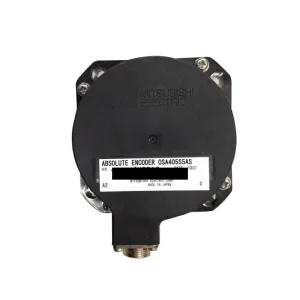
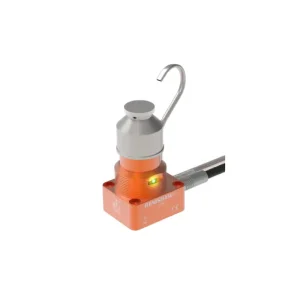
  • Massive Original Inventory Stockpiles: DingYan Machinery maintains extensive warehouse reserves of 100% genuine, brand-new components—ranging from FANUC Alpha/Beta servo amplifiers (A06B-6200, A06B-6141 series), Siemens SINUMERIK controls (828D), Mitsubishi encoders (OSA405S5AS), Renishaw probes, to Delta drives and NSK bearings.
  • Official Channel Verification: All components are sourced through official distribution channels, guaranteeing complete authenticity, pristine factory packaging, original serial numbers, and un-tampered firmware levels.

Rigorous 4-Step Pre-Shipment QA Protocol

  1. Visual & Serial Audit: Comprehensive verification of nameplate ordering numbers, hardware revision tags, and component sealing.
  2. Dynamic Full-Load Bench Test: Amplifiers and drives are connected to dedicated CNC test rigs and run under load to verify switching stability and thermal response.
  3. Optical Signal & Communication Check: FSSB optical power levels and encoder feedback signal integrity are analyzed with specialized diagnostic oscilloscopes.
  4. ESD Export Protective Packaging: Moisture-barrier anti-static packaging with custom foam cushioning to withstand rugged air and ocean transit.
Diagnostics & Compliance

Localized Technical Support, Alarm Matrix & Compliance

Practical diagnostic procedures for fast troubleshooting alongside international regulatory safety standards.

Common FANUC Servo Amplifier Alarm Troubleshooting Matrix

When a FANUC CNC system triggers an alarm, the digital display on the front panel of the servo amplifier module displays a two-digit hexadecimal status code. The table below outlines key diagnostic codes, underlying hardware root causes, and recommended engineering remedies:

CNC / LED Alarm Code Fault Designation Hardware Root Cause Analysis Recommended Field Corrective Action
Alarm 401 / LED: SV VRDY OFF (Servo Ready Signal Missing) Main magnetic contactor (MCC) failed to energize; 24V DC control power missing; FSSB communication optical link interrupted. Verify 24V supply voltage; inspect emergency stop string; check FSSB fiber cable for micro-fractures or optical power loss.
Alarm 414 / LED: 8, b, c Digital Servo System Axis Fault IPM power module overcurrent, current sensor failure, short circuit in motor phase windings or power cable. Perform megger insulation test on motor phase cables (U/V/W to ground); check IPM output transistors with digital multimeter.
Alarm 433 / LED: 4 DC Link Low Voltage Main AC power loss; phase imbalance; line reactor fault; PSM pre-charge circuit contactor or resistor failure. Check incoming 3-phase AC voltage; inspect AC input line reactor; replace faulty PSM power supply module if DC bus fails to charge.
Alarm 449 / LED: 9, A, b, C IPM Overcurrent / Short Circuit Direct phase-to-phase or phase-to-ground short circuit at output terminals; IPM gate driver breakdown; high motor inductance mismatch. Disconnect motor power plug; clear alarm and re-power. If alarm persists immediately, replace the internal Servo Amplifier board/IPM module.
Alarm 608 / LED: 01 Spindle Module Overcurrent Spindle motor winding insulation breakdown; abrupt mechanical spindle lock; damaged SPM transistor switching stage. Inspect spindle mechanical free movement; test spindle motor stator resistance across phases; verify dynamic brake unit.

International Regulatory & Safety Compliance

All industrial motion control hardware supplied by DingYan Machinery complies strictly with international electrical and functional safety benchmarks:

  • CE Compliance & Low Voltage Directive (LVD): Conforming to EN 61800-5-1 safety requirements for adjustable speed electrical power drive systems.
  • Electromagnetic Compatibility (EMC Directive): Meeting EN 61800-3 standards for industrial noise immunity and radiated emission limits when installed with proper line filters.
  • UL / cUL Listing: Certified under UL 508C (Power Conversion Equipment) for safe integration within North American control panels.
  • Functional Safety (Safe Torque Off - STO): Supporting SIL3 (IEC 61508) and PLe (ISO 13849-1) emergency safety circuits to safely remove drive torque without disconnecting main control power.
Technical Knowledge Base

Frequently Asked Questions (Q&A)

In-depth engineering answers addressing search intent, hardware installation, compatibility, and diagnostic procedures.

What are the structural differences between FANUC Alpha ii) and Beta ii) Servo Amplifiers?
The Alpha ii) series is FANUC's modular high-performance drive platform designed for complex, multi-axis CNC machine tools. It utilizes separate Power Supply Modules (PSM), Servo Modules (SVM), and Spindle Modules (SPM) connected via an FSSB optical fiber bus, delivering maximum energy recovery and ultra-precise HRV4 control loops. The Beta ii) series is an integrated, compact drive system combining power rectification and axis control into single-axis or dual-axis units. Beta i drives are ideal for standard 2-axis or 3-axis CNC machines, entry-level turning centers, and auxiliary linear axes where footprint optimization and cost-efficiency are paramount.
Can I swap a faulty FANUC Servo Amplifier module without re-entering parameter data into the CNC controller?
Yes. In almost all FANUC CNC architectures (such as 0i-MF, 0i-TF, 31i-B, 18i-MB), motion parameters, motor tuning coefficients, and pitch error compensation data are stored securely inside the CNC control unit's non-volatile memory—not within the servo amplifier module itself. When you replace a damaged amplifier with an identical ordering number (e.g., swapping a faulty A06B-6114-H208 with a new unit), the CNC automatically initializes the drive via FSSB upon power-up. However, you must verify that dip switches, rotary axis ID selection switches, and optical fiber port connections match the original unit exactly.
How do I troubleshoot a FANUC Alarm 414 (Servo Axis Fault) on an Alpha i Series Amplifier?
Alarm 414 indicates a digital servo system error. To isolate the root cause: 1. Inspect the 7-segment LED display on the front panel of the corresponding Servo Amplifier Module (SVM). 2. If the display shows code 8, b, or c, an IPM overcurrent or current detection anomaly has occurred. 3. Disconnect power and perform an insulation test (using a 500V Megger) between the motor phase leads (U, V, W) and the machine ground. Resistance must be > 50 MΩ. 4. Measure phase-to-phase winding resistance with a precision micro-ohm meter to ensure balanced motor phase impedance. 5. Inspect the power cable for mechanical chafing or coolant ingress inside the terminal junction box. If the cable and motor test clean, the internal IPM transistor module within the amplifier is damaged and requires replacement.
What primary factors cause DC Link Overvoltage Alarms (Alarm 430 / Alarm 434) on FANUC Power Modules?
DC Link Overvoltage occurs when the DC bus voltage exceeds safe operational thresholds (typically > 415V DC for 200V systems or > 760V DC for 400V HV systems). Common root causes include: 1. Rapid deceleration of heavy machine components or spindles where regenerated kinetic energy exceeds the discharge capacity of the regenerative discharge resistor or line regeneration module. 2. High incoming AC line voltage exceeding the upper tolerance limit (+10%). 3. Faulty or open-circuit external dynamic discharge resistors. 4. Blown internal fuses or damaged switching transistors within the PSM active line regeneration circuit.
Why is optical FSSB superior to traditional copper analog drive interfaces?
FANUC Servo Serial Bus (FSSB) transfers high-speed digital control data over fiber optic cables. Unlike traditional multi-core copper cables that carry sensitive ±10V analog velocity signals, optical fiber is 100% immune to electromagnetic interference (EMI), high-voltage spikes, and electrical noise emitted by adjacent spindle motors or plasma cutters. FSSB also dramatically simplifies cabinet assembly by replacing thick wire bundles with light, single-strand optical cables.
How does Ningbo DingYan Machinery ensure component authenticity and quality before worldwide dispatch?
DingYan Machinery sources components directly through authorized agent distribution networks. Every unit undergoes strict quality assurance before shipping: visual component nameplate inspection, serial number validation, static semiconductor junction testing with digital multimeters, and dynamic full-load diagnostic bench testing on specialized CNC test stations. High-resolution photographs of the component, ordering label, and serial number are provided to the buyer for verification prior to export dispatch.
What is the typical operational lifespan of DC Link electrolytic capacitors in FANUC amplifiers, and how can failure be prevented?
Large electrolytic capacitors used for DC bus voltage smoothing typically have an operational rated life of 50,000 to 70,000 hours (approx. 5 to 7 years under continuous 24/7 factory operation at 40°C cabinet ambient temperature). Over time, liquid electrolyte evaporation increases Equivalent Series Resistance (ESR), causing elevated capacitor operating temperatures and voltage ripple spikes. Preventive maintenance includes checking control cabinet cooling fan operation, replacing dust filters regularly, measuring DC bus ripple voltage during heavy machining cuts, and replacing capacitor banks proactively after 6 years of continuous operation.
What warranty and technical assistance does DingYan Machinery provide for international orders?
All brand-new, original FANUC, Siemens, Mitsubishi, Renishaw, Heidenhain, Fagor, and Delta components supplied by DingYan Machinery carry a comprehensive 12-month basic warranty covering functional component failure under standard operational conditions. Our dedicated team of senior CNC application engineers provides 24/7 online technical support—assisting international maintenance teams with alarm code interpretation, wiring schematics verification, parameter cross-referencing, and firmware compatibility checks.
All Fanuc Servo Amplifiers Products