For global manufacturers, choosing a reliable Cnc Spare Part supplier in 2026 requires more than comparing prices. A replacement spindle bearing may look identical online, yet differ in steel grade, sealing accuracy, or service life. One small mismatch can create vibration, poor surface finish, and hours of unexpected downtime. Serious buyers need evidence, not attractive promises.
W. Edwards Deming, a respected manufacturing quality expert, said, “Quality comes not from inspection, but from the improvement of the production process.” That principle remains highly relevant to CNC sourcing. The strongest suppliers document material certificates, dimensional tolerances, inspection procedures, and batch traceability. They also understand controller compatibility, axis specifications, lubrication requirements, and international shipping conditions. A dependable partner should answer technical questions clearly and provide drawings before production begins.
This guide examines the 2026 best Cnc Spare Part suppliers for global buyers. It considers product range, manufacturing experience, quality systems, response speed, customization, warranty support, and delivery reliability. Practical details matter. Can the supplier identify a servo alarm from a photograph? Can it match a ball screw to the machine’s pitch and stroke? Can it protect delicate encoder components during a long sea shipment?
No supplier is perfect. Even established companies may miss a lead-time estimate or communicate poorly across time zones. Buyers should verify claims independently and test critical parts carefully. The final choice should balance price, engineering confidence, and long-term operating risk. That balance is often less visible than a discount, but it protects the machine.
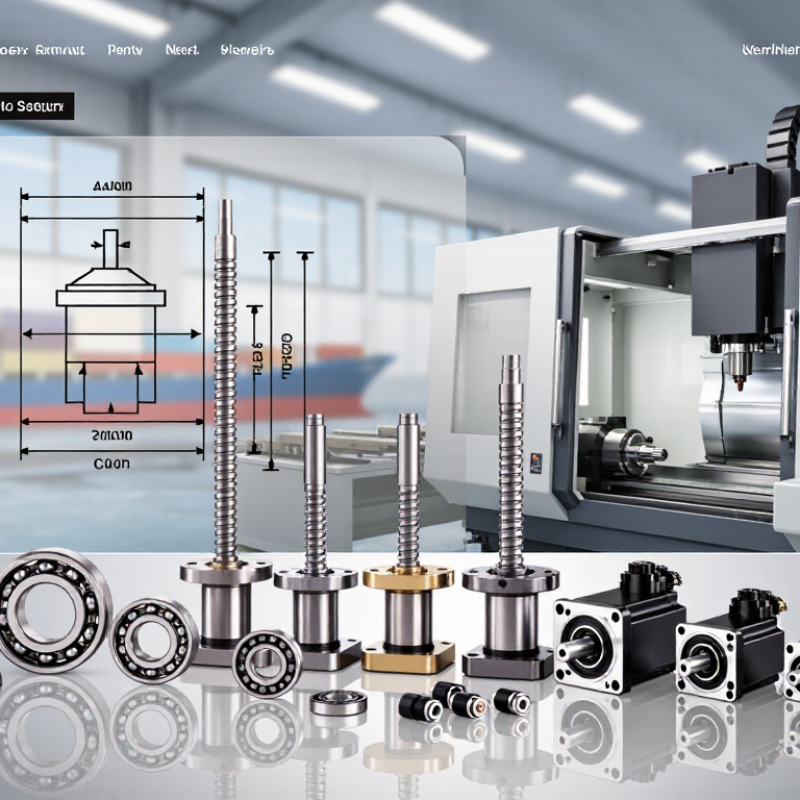
2026 Best CNC Spare Parts Suppliers for Global Buyers
CNC Spare Parts Suppliers: Definition, Roles, and Market Scope
CNC spare parts suppliers provide replacement components for machining systems, including bearings, servo cables, sensors, filters, and control modules. Their role extends beyond selling parts. Reliable suppliers identify compatibility, verify specifications, and support maintenance teams during urgent repairs. In practice, a good supplier may compare a worn spindle bearing with machine drawings before shipping. That small step prevents expensive fitting errors. However, no supplier fits every machine, and product descriptions can still contain gaps.
The market serves factories, repair contractors, equipment distributors, and small workshops across many regions. Its scope includes original-compatible parts, refurbished components, custom-made items, and maintenance kits. Professional suppliers should explain material grades, tolerance ranges, lead times, and testing methods. They should also provide traceable invoices and clear warranty conditions. Buyers need evidence, not confident promises. A low price can hide uncertain origin, poor packaging, or limited technical support.
Tips: Share the machine model, part number, drawings, and operating conditions before requesting a quote. Ask how the supplier checks dimensions and electrical ratings. Inspect packaging when the shipment arrives, especially around fragile encoders and glass scales. Keep photos and inspection records. This habit helps resolve disputes. It also reveals weak suppliers, although even careful buyers sometimes miss a detail.
CNC spare parts suppliers support machine uptime by providing replacement components for motion control, spindle systems, control electronics, and mechanical transmission. The chart presents an indicative 2026 buyer-priority index based on common CNC maintenance requirements, replacement criticality, and cross-machine applicability rather than company or brand sales data.
Suppliers provide original, compatible, refurbished, or made-to-order components used to repair and maintain CNC equipment.
Their roles include parts identification, technical matching, inventory support, quality verification, and international fulfillment.
The market covers electrical, electronic, mechanical, lubrication, cooling, and machine-safety components for global CNC users.
2026 Best CNC Spare Parts Suppliers for Global Buyers
Key Criteria for Evaluating Global CNC Spare Parts Suppliers
Global CNC spare parts buying in 2026 requires more than a low unit price. A dependable supplier proves technical ability through records, not polished promises. Ask for material certificates, dimensional reports, batch numbers, and clear compatibility data. For a spindle bearing, confirm speed rating, preload, lubrication, and storage conditions. Small details matter. A reliable supplier should explain tolerances in practical language.
During supplier checks, request sample photos, inspection methods, and recent delivery evidence. A video call can reveal whether staff understand drawings or simply read catalog text. Check response times, export documents, packaging standards, and replacement procedures before placing a trial order. Trial orders expose weaknesses. One shipment may arrive correctly, while the next contains mixed batches. That possibility deserves attention.
Compare total cost, including downtime, rework, urgent freight, and rejected parts. Suppliers with traceable inventory and calibrated inspection equipment offer stronger accountability. Confirm whether technical staff can identify substitutes without changing machine performance. Ask about minimum order quantities, production capacity, and written warranty terms. Forecasting support can also reduce emergency purchasing during maintenance periods.
Still, no checklist is perfect. I have seen a supplier provide accurate measurements but weak protective packaging. Another delivered quickly but answered technical questions slowly. These flaws may seem minor until a machine stops. Clear communication, consistent inspection, and honest limitation reporting often reveal more than a competitive quotation.
A practical, brand-neutral evaluation framework for comparing CNC spare parts suppliers across technical capability, quality, logistics, compliance, and after-sales support.
| Evaluation Dimension | Weight | What Global Buyers Should Verify | Recommended Benchmark or Acceptance Level | Suggested Evidence |
|---|---|---|---|---|
| Technical Compatibility | 20% | Ability to match the part to the CNC machine model, control system, electrical rating, mechanical interface, and software or firmware requirements. | 100% of quoted items should include a verified part number, compatible machine series, revision level, and installation requirements. | Technical datasheet, compatibility matrix, dimensional drawing, wiring diagram, and pre-order engineering confirmation. |
| Quality Management | 20% | Consistency of manufacturing, inspection, incoming-material control, process control, and final testing. | A documented quality-management system; inspection records available for critical parts; defined acceptance criteria before shipment. | Valid quality certificate where applicable, inspection plan, test report, calibration records, and nonconformance procedure. |
| Dimensional Accuracy and Performance | 15% | Conformance of dimensions, tolerances, surface finish, electrical performance, and functional output to the approved specification. | Critical dimensions and performance parameters must meet the drawing or manufacturer specification; tolerance values must be stated rather than assumed. | CMM or measurement report, electrical test data, functional test report, material certificate, and approved sample. |
| Traceability and Documentation | 10% | Ability to trace the product from raw material or component batch through production, inspection, packing, and shipment. | Each shipment should have a traceable lot or serial reference linked to the purchase order and inspection documentation. | Lot number, serial number, certificate of conformity, production date, inspection record, and packing-list reference. |
| Lead Time and Availability | 10% | Stock accuracy, production capacity, order-confirmation speed, and ability to communicate realistic delivery dates. | Stocked standard parts: normally quoted with a clear dispatch date; custom parts: milestone-based schedule with written production updates. | Live or dated stock confirmation, production schedule, order acknowledgment, and historical on-time delivery data. |
| Export Logistics | 10% | International shipping capability, export documentation, packaging quality, customs support, and delivery-term clarity. | Quotation should state the applicable Incoterms® 2020 rule, shipping origin, estimated transit time, package dimensions, and insurance responsibility. | Commercial invoice, packing list, certificate of origin when required, shipping record, export classification, and packaging specification. |
| Regulatory and Material Compliance | 5% | Material composition, restricted substances, safety documentation, and destination-market requirements. | Compliance documentation should match the destination market and product category; material declarations should be available for regulated components. | Declaration of conformity where applicable, material declaration, safety data sheet, RoHS or REACH-related documentation when relevant. |
| Warranty and Returns | 5% | Clarity of warranty coverage, exclusions, return authorization, replacement procedure, and responsibility for verified defects. | Written warranty terms should define coverage period, defect criteria, response process, replacement or repair obligations, and freight responsibility. | Warranty policy, return-material-authorization procedure, service ticket record, and sample corrective-action report. |
| Technical Support and Communication | 5% | Engineering response quality, language coverage, troubleshooting capability, and escalation process for production-critical issues. | A named technical contact, documented escalation route, and clear response commitment for urgent machine-down situations. | Pre-sales technical answers, troubleshooting guide, service contact list, escalation chart, and case-resolution records. |
| Total Evaluation Score | 100% | Weighted score calculated from the buyer’s verification results for each dimension. | Recommended interpretation: 85–100 = preferred supplier; 70–84 = conditionally acceptable; below 70 = additional verification required. | Completed supplier questionnaire, document review, sample approval, reference checks, and pilot-order performance. |
CNC spare parts suppliers usually fall into several practical categories. Machine-tool service divisions specialize in model-specific assemblies, including spindle cartridges, tool changers, and control modules. Precision component distributors often stock ballscrews, linear guides, couplings, and bearing sets. Their strength is faster shipment across multiple machine types.
Electrical and automation suppliers focus on servo motors, drives, encoders, relays, and operator panels. These parts require careful voltage, connector, and firmware checks.
Hydraulic and pneumatic specialists provide pumps, valves, cylinders, filters, and sealing kits. A small mismatch can stop a production line.
Regional MRO exporters can combine sourcing, inspection, and consolidated shipping. Remanufacturing workshops may offer tested spindle motors or repaired circuit boards. Ask for test records, serial traceability, material certificates, and clear warranty terms. Reliable suppliers also provide dimensional drawings and cross-reference data.
I have seen attractive prices hide uncertain compatibility. That mistake becomes expensive after installation. No supplier is perfect. Buyers should check packaging quality, response time, customs documents, and technical support before payment. A supplier’s real expertise appears when a part number is incomplete or an older machine lacks current documentation.
International sourcing now demands more than a low unit price. The United Nations Conference on Trade and Development reports that maritime shipping carries over 80% of global merchandise trade by volume. A delayed bearing or servo cable can therefore create costs far beyond its invoice value. Buyers should compare lead times, transport routes, packaging standards, and documented emergency capacity. Ask for production photos, dimensional inspection records, and a sample before approving a larger order. Small details matter.
Quality control should follow a traceable process. The ISO Survey 2023 recorded more than 1.2 million ISO 9001 certificates worldwide. Certification helps, but it does not replace evidence. Request material certificates, batch numbers, calibration records, and test results linked to each shipment. For precision parts, check tolerance reports with actual measurements, not only stated specifications. A supplier may pass an audit and still miss a critical fit. That uncomfortable possibility deserves attention.
Compliance requirements vary by destination and product category. Confirm HS classification, country-of-origin documents, restricted-material declarations, and applicable electrical or machinery requirements before payment. The World Bank’s Logistics Performance Index 2023 evaluates customs, infrastructure, shipment quality, and timeliness across 139 economies. These factors can expose weak handovers between factories, brokers, and carriers. Keep digital records for drawings, revisions, inspections, and approvals. No system is perfect. A practical sourcing team reviews failures openly and updates its supplier scorecard after every shipment.
Selecting a CNC spare parts supplier in 2026 starts with technical fit, not attractive advertising. Ask for evidence of machining experience, inspection methods, and production capacity. A dependable supplier should read drawings accurately and confirm tolerances before quoting. Request material certificates, dimensional reports, and clear part numbering. These documents reduce mistakes when several similar components are ordered.
Check how the supplier controls quality. Probe measurement records, calibration dates, and inspection steps for critical surfaces. For example, a spindle component may require precise concentricity, surface finish, and heat treatment. The supplier should explain each control in practical terms. Vague answers deserve caution. A sample order can reveal more than a polished presentation. Inspect threads, edges, coating, packaging, and actual dimensions when the parts arrive.
Reliability also depends on communication and traceability. Confirm lead times, replacement procedures, export documents, and packaging for long-distance transport. Ask whether each batch carries a traceable code or inspection record. That small detail matters when a machine stops unexpectedly. I have found that the cheapest quote can create hidden costs through rework and downtime. Still, no supplier is perfect. Delivery estimates can slip, and specifications may need clarification. Leave room for that reality, while requiring honest updates and corrective action. Evaluate performance over several orders, not one successful shipment.
Request material certificates, dimensional reports, batch numbers, and compatibility details. These records help verify what you actually receive. Keep every document.
Ask the supplier to explain tolerances in practical language. A video call can reveal genuine drawing knowledge. Do not accept catalog wording alone.
Check threads, edges, coatings, dimensions, and packaging. Compare the parts with the approved drawing. Small defects can create expensive rework.
Confirm speed rating, preload, lubrication, and storage conditions. Also check concentricity and surface finish requirements. Technical details matter here.
Traceable batch codes link parts with inspection records. They help identify problems after a machine stops. This detail feels small, but it matters.
Include downtime, rework, urgent freight, and rejected parts. A low unit price may hide higher operating costs. Cheap is not always efficient.
Confirm lead times, export documents, protective packaging, and replacement procedures. Ask how delays are reported. Honest updates are essential.
No. Evaluate performance across several orders. One shipment may arrive correctly, while another contains mixed batches. No checklist catches everything.
A supplier may measure accurately but use weak packaging. Another may deliver quickly but answer technical questions slowly. I may notice these flaws too late.
The 2026 CNC spare parts market serves manufacturers, maintenance teams, system integrators, and international buyers who need reliable components to keep machining equipment accurate and productive. A Cnc Spare Part may include mechanical, electrical, hydraulic, pneumatic, or control-related components, depending on the machine and application. Effective suppliers do more than provide products: they support compatibility checks, technical consultation, inventory planning, replacement guidance, and after-sales service. The market includes original-equipment channels, specialized manufacturers, independent distributors, and custom-part producers, each offering different advantages in availability, customization, and cost.
Global buyers should evaluate suppliers according to product quality, dimensional accuracy, material traceability, documentation, delivery capability, communication, and technical support. Quality control should cover inspection procedures, testing records, packaging, and consistency between batches. International sourcing also requires attention to export documentation, applicable safety standards, customs requirements, and responsible business practices. In 2026, the best supplier is not simply the cheapest option, but a dependable partner that offers verified compatibility, transparent service, stable supply, and long-term value.