Linear Bearings rarely draw attention until a carriage begins to chatter, a shaft collects dust, or a production line stops. These components guide motion and carry loads, but their accuracy depends on fit, lubrication, alignment, and the working environment. Small details matter. A polished rail can still fail early if contamination enters its recirculating elements.
The U.S. Department of Energy’s 2014 United States Industrial and Commercial Motor System Market Assessment estimated that motor-driven systems account for about 68% of U.S. manufacturing electricity use. That figure does not measure bearing performance, but it highlights the scale of industrial motion systems—and the value of reducing friction and avoidable downtime. Engineering author Henry Petroski offers a useful design principle: “Science is about knowing; engineering is about doing.” For bearing selection, doing means checking real loads, stroke length, speed, mounting stiffness, and maintenance access, not relying on catalogue ratings alone.
This guide compares 10 Linear Bearings for industrial applications, from compact profile rails to robust roller designs. It considers load capacity, rigidity, accuracy, sealing, lubrication needs, and installation demands. A bearing that excels in a clean packaging machine may struggle beside grinding dust or washdown spray. There is no universal winner. Even careful comparisons have limits: supplier ratings use defined test conditions, while factory conditions rarely stay so tidy. Use the shortlist as a starting point, then verify each choice against the machine’s actual duty cycle and environment.
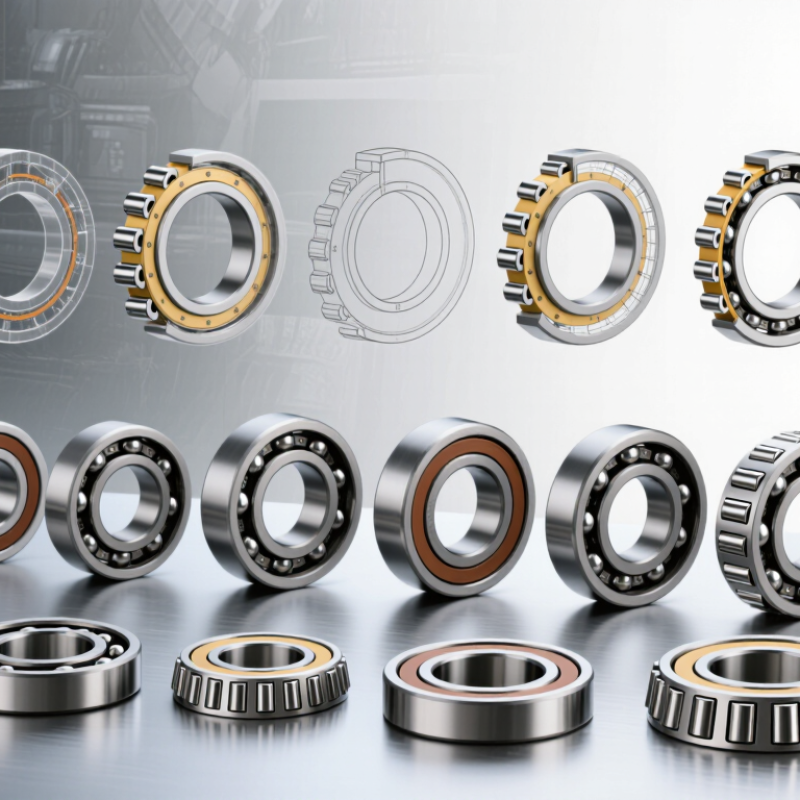
Linear bearings guide moving parts along a straight path while reducing friction and unwanted sideways motion. In a common ball-bearing design, hardened balls roll between a shaft and a bearing block. The balls carry loads through small contact points and circulate through return channels. Smooth travel depends on alignment, lubrication, and clean surfaces. Even a thin layer of dust can make motion rough.
Other designs use sliding contact rather than rolling elements. Plain bearings can run quietly and tolerate some contamination, while recirculating ball bearings often suit precise, frequent movement. Neither option is perfect. A shaft that appears straight may shift under load, and small alignment errors can shorten service life. Check load direction, speed, stroke length, temperature, and mounting stiffness before selecting a bearing. Actual machine conditions rarely match catalog examples exactly.
Tips: Keep rails clean and lubricate as specified for the bearing material. Move the carriage by hand before powering the machine. It should feel even. Changing resistance may signal poor alignment or uneven mounting surfaces. Measurements matter, but hands-on checks can reveal problems too.
| Linear Bearing Type | How It Works | Load and Rigidity Characteristics | Key Advantages | Considerations | Typical Industrial Applications |
|---|---|---|---|---|---|
| Recirculating Ball Bushing on a Round Shaft | Rows of balls roll along a hardened round shaft and recirculate through internal return paths. | Provides low-friction linear motion and moderate load capacity; performance depends on shaft hardness, fit, and support. | Compact, widely available in different sizes, and suitable for relatively long strokes. | Needs a properly finished shaft and suitable alignment. Dirt can damage rolling surfaces, so seals and lubrication may be needed. | Packaging machinery, automation equipment, and light- to medium-duty positioning systems. |
| Supported-Shaft Ball Bushing | A recirculating ball bushing travels on a round shaft mounted along a support rail. | Support beneath the shaft reduces bending compared with an unsupported shaft, particularly over longer spans. | Offers a straightforward way to build longer linear axes using standard shaft components. | Requires accurate mounting and alignment. The support rail can limit access or mounting options. | Material-handling equipment, assembly machines, and long-stroke automation axes. |
| Profile-Rail Recirculating Ball Guide | Recirculating balls run between shaped raceways in a rail and a carriage block. | Can carry loads in multiple directions; rigidity and load capacity depend on rail size, block arrangement, and preload. | Compact, precise, and suitable for high-speed motion and multi-axis machine designs. | Installation surfaces must be sufficiently flat and aligned. Lubrication and protection from contamination are important. | CNC equipment, industrial robots, precision automation, and machine tools. |
| Profile-Rail Recirculating Roller Guide | Cylindrical rollers recirculate between the carriage and rail raceways instead of balls. | Typically offers higher rigidity and load capacity than a similarly sized ball guide, depending on design and operating conditions. | Well suited to applications requiring high stiffness or carrying substantial loads in a compact space. | Requires careful mounting, alignment, and lubrication. Roller guides may be less tolerant of installation errors. | Heavy-duty machine tools, presses, and high-load industrial automation. |
| Crossed-Roller Linear Guide | Alternating cylindrical rollers are arranged at right angles and roll between precision-ground guide surfaces. | Supports loads from several directions and can provide high rigidity and accurate, short-stroke motion. | Compact design with good stability for precision movement. | Often used for shorter strokes; cleanliness, mounting accuracy, and correct preload are important. | Inspection equipment, precision stages, optical instruments, and compact machine mechanisms. |
| Recirculating Roller Bearing on a Round Shaft | Rollers travel along a round shaft and return through a recirculation path within the bearing assembly. | Roller contact can support heavier loads and greater stiffness than comparable ball-based shaft bearings. | Combines round-shaft layouts with roller-based load support. | Needs a suitable hardened shaft, accurate alignment, and effective lubrication; availability and fit depend on the system design. | Industrial transport equipment, loaded automation systems, and heavy-duty linear mechanisms. |
| Polymer Plain Linear Bushing | A sliding polymer liner moves directly along a compatible shaft without recirculating rolling elements. | Load capacity and friction depend on the polymer, shaft, speed, temperature, and operating conditions. | Can run without external lubrication in designs made for dry operation and can tolerate some contamination better than exposed rolling guides. | Sliding friction and wear may be higher than with rolling-element bearings; check temperature and chemical compatibility. | Food-processing equipment, packaging machinery, and applications where reducing routine lubrication is useful. |
| Bronze Plain Sleeve Bushing | A bronze sleeve slides along a shaft, typically using a lubricant film to reduce friction and wear. | Can support substantial loads at suitable speeds when correctly sized and lubricated. | Simple, robust construction and good resistance to impact in appropriately designed systems. | Usually needs a lubrication plan; friction and wear depend on shaft finish, load, speed, and lubricant supply. | Slow-moving slides, heavy equipment, and industrial mechanisms exposed to shock loading. |
| Sintered Oil-Impregnated Bronze Bushing | Porous sintered bronze contains oil that can migrate to the sliding surface during operation. | Suitable for relatively light or moderate loads and speeds within the material’s operating limits. | Can provide self-lubricating operation in suitable conditions and has a simple, compact form. | Not appropriate for every load, speed, temperature, or environment; avoid conditions that remove or degrade the oil. | Small industrial actuators, guide mechanisms, and equipment needing low-maintenance sliding supports. |
| Porous Air Linear Bearing | Clean, regulated compressed air passes through a porous surface and forms a thin film that separates the bearing from its guide surface. | Non-contact motion can provide very low friction and high precision; load capacity depends on bearing area, air pressure, and design. | No rolling or sliding contact during normal operation, which minimizes mechanical wear. | Requires a continuous supply of clean air and very accurate, clean guide surfaces; air loss can cause contact or damage. | Metrology equipment, semiconductor manufacturing systems, and precision positioning stages. |
It guides a moving part along a straight path while reducing friction and sideways movement. A carriage should travel smoothly. Not perfectly, perhaps.
Hardened balls roll between a shaft and bearing block, then return through internal channels. Clean surfaces and proper lubrication help maintain smooth travel.
Plain bearings use sliding contact and can run quietly in dusty or washdown areas. Check material and temperature limits carefully.
Record moving mass, speed, acceleration, stroke length, and cycle rate. Also check load direction, moment capacity, stiffness, and operating temperature.
No. Real service life depends on installation, lubrication, contamination, and operating conditions. A comfortable rating can still mislead.
Move the carriage by hand before powering the machine. Uneven resistance, noise, or play may point to alignment or mounting issues.
Dust can make travel rough, while coolant and moisture may affect materials and lubrication. Seals or protective covers may help. They are not magic.
Measure alignment and temperature before replacing parts. Record findings over several maintenance cycles; this may still miss the root cause.
Linear Bearings support smooth, controlled motion in industrial equipment by guiding components along a straight path while managing friction and load. Choosing the right option involves more than comparing size or cost: engineers should consider load direction and weight, travel speed, accuracy, operating temperature, contamination, available space, and expected service life. Common designs differ in how they make contact and handle movement, so each offers distinct advantages under particular working conditions.
Matching a bearing type to the application helps prevent excessive wear, vibration, and unnecessary downtime. Once selected, correct alignment and installation are essential for reliable operation. Appropriate lubrication reduces friction, while routine inspection can reveal contamination, looseness, or damage before these issues interrupt production. By evaluating operating needs, selecting a suitable design, and following consistent maintenance practices, facilities can improve the performance and longevity of their linear motion systems.