China Top CNC Machine Tool Manufacturers for Global Buyers

Time:2026-10-28 Author:Charlotte
0%

China has become a serious sourcing base for global CNC machine tool buyers. According to Gardner Business Media’s 2024 World Machine Tool Survey, China remained the world’s largest machine tool producer and consumer in 2023. Its reported market value exceeded 30 billion U.S. dollars, despite weaker global demand. That scale matters.

But scale does not guarantee suitability.

A reliable Cnc Machine Tool supplier must prove accuracy, repeatability, service capacity, and export experience. Buyers should inspect spindle speed, positioning accuracy, thermal compensation, controller brands, and after-sales response times. A machine cutting aluminum may perform differently when machining hardened steel for eight hours daily. Factory photographs cannot reveal that difference. Trial parts can.

The China Machine Tool Industry Association has continued reporting structural upgrades across China’s sector, including higher-end CNC systems, automation, and intelligent manufacturing. CECIMO’s European market reports also show how uneven demand remains across regions. These findings suggest a practical lesson: buyers need evidence, not impressive brochures.

Peter Zelinski, editor-in-chief of Modern Machine Shop, has said, “The machine tool is the platform for innovation in manufacturing.” That perspective is useful here. A Cnc Machine Tool is not merely a purchase; it becomes part of a production system involving operators, software, tooling, maintenance, and training.

No ranking is perfect.

This guide evaluates China’s leading manufacturers through a buyer-focused lens. It considers product capability, quality control, customization, certifications, service networks, and real operating risks. Some conclusions may remain imperfect, because supplier data is not always equally transparent. That uncertainty deserves attention, not concealment.
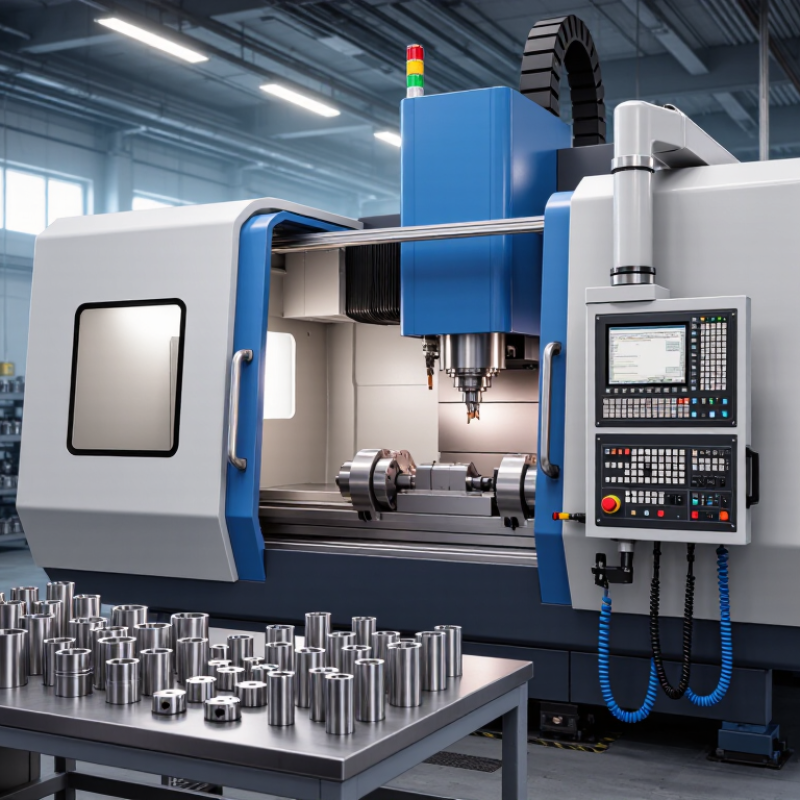
China Top CNC Machine Tool Manufacturers for Global Buyers

China’s CNC Machine Tool Industry and Its Role in Global Manufacturing

China’s CNC machine tool industry now sits at the center of global manufacturing. UNIDO’s 2024 Industrial Statistics Yearbook indicates that China generated roughly one-third of global manufacturing value added in 2022. That scale creates constant demand for turning centers, machining centers, grinders, and automated production lines.

Gardner Intelligence’s 2024 World Machine Tool Survey identified China as the world’s largest machine tool consumer, with annual consumption above US$25 billion. This demand supports a deep supplier network. It includes casting, linear guides, control systems, cutting tools, and precision inspection equipment. For global buyers, the advantage is practical: shorter sourcing distances, broader configuration choices, and faster access to replacement components. A typical evaluation should examine spindle runout, positioning accuracy, thermal stability, and five-axis interpolation. Factory videos are not enough.

Performance can vary between suppliers. That matters. Some factories provide clear inspection records, ISO 230 test results, and sample machining data. Others offer attractive specifications but limited evidence from real production. The International Organization for Standardization’s ISO 9001 framework can support process consistency, but certification alone does not guarantee cutting performance. Buyers should request machine acceptance reports, component traceability, software support terms, and operator training plans. A machine may cut aluminum smoothly during a demonstration, yet struggle with hardened steel after several hours. This is where careful testing becomes more valuable than polished sales language. China’s industry is advancing quickly, but reliability still depends on verification, communication, and after-sales engineering capacity.

Core CNC Machine Categories and Their Typical Industrial Applications

For global buyers, CNC categories should match geometry, tolerance, material, and production volume. Turning centers rotate the workpiece against fixed or live tooling. They suit shafts, bushings, threaded parts, and hydraulic components. A typical cell may include bar feeding, probing, chip evacuation, and in-process gauging.

Milling centers hold the workpiece while tools move across several axes. They handle dies, housings, brackets, and five-axis aerospace structures.

The difference is practical. According to AMT’s 2024 USMTO data, United States manufacturing technology orders reached about USD 4.6 billion. That figure signals continued capital demand, but it does not prove every factory needs a high-end machine.

Grinding machines remove tiny amounts of material after turning or milling. They are selected for bearing races, seals, molds, and hardened shafts requiring stable surface finishes. EDM uses controlled electrical discharges instead of direct cutting contact. It suits hardened steel, narrow slots, and intricate cavities.

Laser and waterjet systems cut sheet or plate without conventional cutting forces. Grand View Research estimated the global CNC machine market at USD 83.2 billion in 2023, with strong growth projected through 2030. Market forecasts vary. Buyers should check the assumptions.

Application decisions also depend on labor, floor space, coolant handling, and service access. The International Federation of Robotics reported 541,302 industrial robot installations worldwide in 2023. This matters when CNC cells share robots, pallet systems, and inspection equipment.

Still, automation can expose weak fixturing or unstable cutting data. A neat category chart can mislead. A turning center may outperform a milling machine on rotational parts, even when both offer similar axis counts. Buyers should request sample cuts, measured cycle times, and tolerance records. Real production data matters more.

Leading Chinese CNC Machine Tool Manufacturers and Product Strengths

China Top CNC Machine Tool Manufacturers for Global Buyers

Chinese CNC machine tool manufacturers now compete through engineering depth, production scale, and practical customization. Gardner Research’s 2023 World Machine Tool Survey placed China at roughly one-third of global machine tool consumption in 2022. That demand supports broad experience in automotive, aerospace, electronics, and general machining.

Leading manufacturers commonly offer vertical machining centers, turning centers, and five-axis systems. Their strengths include rigid cast structures, high-speed spindles, automatic tool changers, and integrated factory automation. Many suppliers also adapt control interfaces, fixtures, and electrical standards for overseas plants. ISO 230-2 testing can verify positioning accuracy and repeatability. However, a polished specification sheet does not guarantee stable production. Service response, thermal control, software compatibility, and spare-part availability deserve equal attention. Some factories still vary in documentation quality. That matters.

Tips: Ask for a sample machining report, acceptance-test results, and a live production demonstration. Check cycle time, surface finish, tool wear, and operator access. The 2024 International Federation of Robotics report highlights China’s strong manufacturing automation demand, but CNC buyers should not confuse automation investment with automatic reliability. A realistic audit remains necessary.

Key Evaluation Criteria for International Buyers

International buyers should evaluate CNC machine tools beyond purchase price. Dimensional accuracy, repeatability, spindle stability, and thermal control deserve documented evidence. Ask for test-cut results, calibration records, and acceptance standards. ISO 230-2 supports practical positioning-accuracy verification. ISO 10791 is relevant for machining-center testing. A polished brochure is not technical proof.

Production fit matters just as much. The International Federation of Robotics reported 541,302 industrial robot installations worldwide in 2023. That figure shows why robot interfaces, probing systems, and data connectivity require careful review.

Buyers should check controller compatibility, remote diagnostics, safety circuits, and software update procedures. However, automation readiness can become expensive complexity. I would test the complete workflow, not only the machine.

Service reliability often decides the real cost. Compare warranty coverage, spare-part response times, technician training, and language support across regions. Energy consumption also deserves measurement. The International Energy Agency identifies industry as responsible for roughly 37% of global final energy use, making efficient motors and standby controls commercially important.

Request verified power data under realistic cutting conditions. No estimate is perfect. Freight, installation, operator training, and downtime should enter the total-cost model. A supplier may appear cheaper, yet weak local support can quietly erase that advantage.

Export Services, Compliance Requirements, and Supplier Selection Steps

Buying CNC machine tools from China requires more than comparing prices. Export support should include commercial invoices, packing lists, certificates of origin, and accurate HS classification. Ask whether the supplier can arrange safe export packing, container loading photos, and shipment tracking. Small details matter. A wooden crate with moisture protection can prevent costly corrosion during a long sea journey.

Compliance must be checked for both exporting and importing countries. Request machine specifications, electrical standards, manuals, and verified test records before payment. Depending on the destination, safety marking, energy rules, or import permits may apply. Confirm requirements with customs authorities or an independent compliance specialist. Do not rely on copied certificates. Their validity should be checked with the issuing organization.

Supplier selection should combine factory evidence with technical judgment. Review machining accuracy reports, inspection equipment, operator training, and after-sales response times. A video call is useful, but an on-site audit reveals more. Ask for a sample part and define acceptance tolerances in the contract. Include installation support, spare parts, warranty limits, and response deadlines. I would also check two recent export references, although references can be selective. A low quotation may hide weak service coverage. No checklist is perfect. Keep records, challenge unclear answers, and compare suppliers using the same requirements.

China Top CNC Machine Tool Manufacturers for Global Buyers

Export Services, Compliance Requirements, and Supplier Selection Steps

This neutral procurement-planning model illustrates how global buyers can prioritize supplier evaluation. Technical capability, quality compliance, total cost of ownership, export documentation, delivery performance, and after-sales support should be verified through specifications, certificates, contracts, and shipment records.

FAQS

Why is China important in the global CNC machine tool market?

China produces roughly one-third of global manufacturing value added. Its large domestic market supports turning centers, grinders, and automated production lines. Buyers can often access broad configurations and replacement components quickly.

Which machine types are commonly available from Chinese suppliers?

Common options include vertical machining centers, turning centers, and five-axis systems. Many suppliers offer rigid cast structures, high-speed spindles, and automatic tool changers. Customization may include fixtures, control interfaces, and overseas electrical standards.

How should buyers verify a machine’s actual performance?

Request positioning tests, repeatability records, calibration data, and sample machining reports. Check spindle runout, thermal stability, cutting time, surface finish, and tool wear. Factory videos are not enough. A live production test reveals more.

Can certification guarantee reliable cutting performance?

No. Certification can support process consistency, but it cannot prove every cutting result. A machine may cut aluminum smoothly yet struggle with hardened steel after several hours. Real acceptance testing remains necessary.

What should buyers inspect during a production demonstration?

Watch the complete workflow, including loading, probing, tool changes, cutting, and unloading. Measure cycle time and inspect the finished surface with suitable equipment. Test the intended material, not only an easy sample. That matters.

How important are service and spare-part arrangements?

They can determine the machine’s real cost. Review warranty coverage, technician response times, training, language support, and spare-part availability. Ask how software problems and urgent breakdowns will be handled. Weak support can quietly erase a low purchase price.

What automation features should international buyers review?

Check robot interfaces, probing systems, safety circuits, controller compatibility, and data connectivity. Test remote diagnostics and software update procedures before purchase. Automation can add expensive complexity. Test the workflow.

How should buyers calculate total ownership cost?

Include freight, installation, operator training, energy use, maintenance, spare parts, and possible downtime. Request power measurements during realistic cutting conditions. Efficient motors and standby controls may reduce operating expenses. No estimate is perfect.

Conclusion

China’s CNC machine tool industry has become an important part of global manufacturing, supporting industries such as automotive, aerospace, electronics, energy, medical equipment, and general engineering. The market includes CNC machining centers, turning centers, milling machines, grinding machines, laser equipment, and specialized production systems, each designed for different levels of precision, material processing, and production volume. With improving automation, digital control, and manufacturing efficiency, Chinese suppliers can offer a broad range of solutions for international buyers.

When selecting a Cnc Machine Tool, global customers should evaluate machining accuracy, structural stability, spindle performance, control systems, energy efficiency, customization options, after-sales support, and total operating cost. Buyers should also review supplier experience, quality management, technical documentation, inspection procedures, export capability, warranty terms, installation support, and staff training. Compliance with destination-country safety, electrical, environmental, and trade requirements is essential. A careful process of technical comparison, factory communication, sample testing, contract review, and delivery planning can help buyers choose a reliable supplier and achieve long-term manufacturing value.


Charlotte

Charlotte

Charlotte is a seasoned marketing professional with a deep understanding of the company's portfolio and a passion for elevating its presence in the market. With a keen eye for detail and a commitment to excellence, she ensures that our professional blog is regularly updated with insightful articles......