China has become a major source of high-precision components for robotics, aerospace systems, medical equipment, machine tools, and electric vehicles. This guide examines China Top 10 Precision Bearing Manufacturers for Global Buyers, focusing on practical purchasing evidence rather than attractive catalog language.
Tedric A. Harris, a respected bearing-analysis authority, wrote, “The bearing is the heart of the machine.” That sentence remains relevant on a factory floor. A spindle may rotate thousands of times per minute, while a microscopic contamination mark can create noise, heat, and early failure. Precision Bearings therefore require more than polished steel. Buyers should examine tolerance grades, internal clearance, material quality, heat treatment, cage design, lubrication options, inspection equipment, and batch traceability.
Small details matter.
The selected manufacturers are assessed through their technical capabilities, export experience, product range, quality systems, and ability to support customized applications. Evidence may include ISO certifications, test reports, dimensional inspection records, and documented customer industries. However, certification alone does not guarantee consistent field performance. That assumption deserves caution.
Supplier location, lead time, communication quality, packaging, and after-sales support also influence total purchasing risk. A bearing that arrives late can stop an automated line, even when its specification is correct. Some manufacturers may excel in miniature bearings, while others perform better with tapered rollers, slewing rings, or ultra-high-speed products.
This overview is not a permanent verdict. Manufacturing capabilities change, and public information can remain incomplete. Global buyers should verify current certifications, samples, inspection standards, and contractual quality requirements before placing production orders. The strongest choice is not always the largest supplier. It is the manufacturer that repeatedly delivers the required performance under real operating conditions.
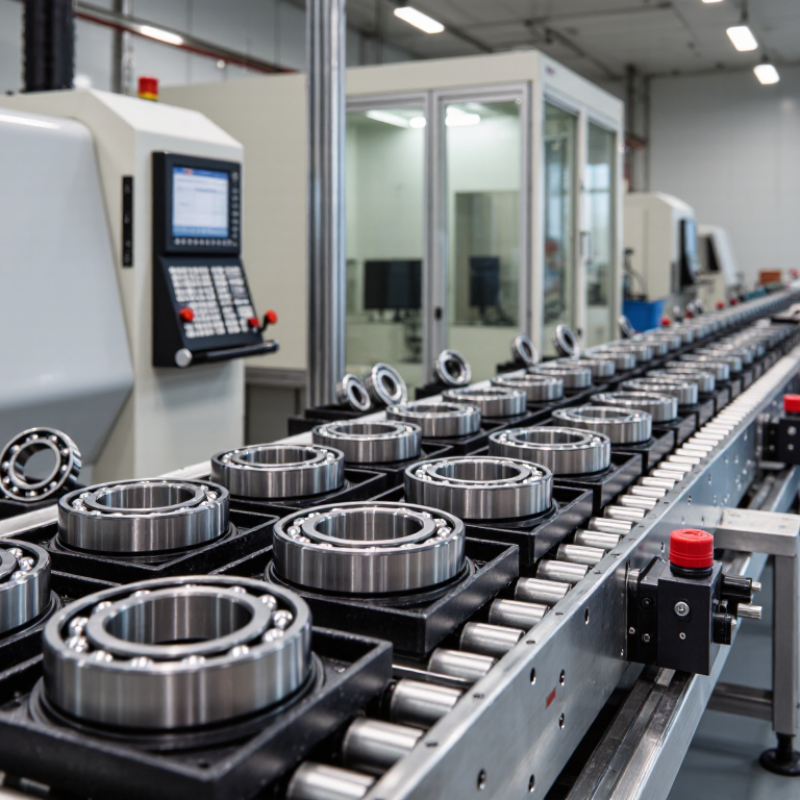
Precision bearings reduce friction while guiding rotating or moving parts with controlled accuracy. Their performance depends on clearance, roundness, material quality, lubrication, and installation. A bearing may look simple, but a tiny surface error can cause vibration, heat, or early failure. In practical maintenance work, noise often appears before visible damage. That clue should not be ignored.
Common types include deep-groove ball bearings, angular-contact bearings, cylindrical roller bearings, tapered roller bearings, and thrust bearings. Ball bearings suit many electric motors and compact machines. Roller bearings handle heavier radial loads. Angular-contact designs support combined loads, especially in machine-tool spindles. Tapered rollers work well in vehicle hubs and gear systems. Applications include robotics, medical equipment, pumps, wind turbines, conveyors, and semiconductor machinery. The boundary between types is not always neat. Selection still requires careful calculation.
Tips: Check load direction, speed, operating temperature, shaft size, and available space. Confirm the required tolerance class before ordering. Keep packaging sealed until installation. Use clean tools and the specified lubricant. Overlooking contamination remains a common mistake. I would also review service conditions again, because laboratory ratings may not match dusty, wet, or frequently shocked environments. A technically correct bearing can still perform poorly when installation habits are careless.
Choosing a Chinese precision bearing manufacturer requires more than comparing catalog prices. Check its experience with your load, speed, temperature, and installation conditions. A factory producing miniature bearings may not handle large, high-speed assemblies reliably.
Request material certificates, heat-treatment records, and inspection data for each production batch. Confirm whether the supplier measures radial runout, roundness, noise, and vibration with calibrated equipment. A coordinate measuring machine, surface tester, and controlled clean area provide useful evidence. Ask for sample reports, not broad quality promises. Traceability should connect each bearing to steel, operators, machines, and inspection results.
Review the manufacturer’s quality system and technical staff. Certifications matter, but current process control matters more. Visit the plant when possible, and observe storage, washing, packaging, and final inspection. Dust on a sealed bearing is a warning sign. So is inconsistent documentation. Evaluate tooling maintenance, failure analysis, and corrective-action records. A capable supplier should explain tolerance changes without hiding behind technical language.
Price can expose weak assumptions. Lower cost may reflect different steel grades, grease, seals, or testing limits. Define acceptance criteria in writing before requesting quotations. Include drawings, tolerance classes, operating life, packaging, and delivery requirements. Start with a controlled trial order and measure performance in your own equipment. Factory presentations can look impressive. They are not proof of field reliability. Allow room to revise your evaluation after real operating data appears.
China’s precision bearing sector serves robotics, machine tools, medical equipment, aerospace systems, and high-speed automation. A useful top-ten comparison should examine more than production volume. Buyers need evidence of dimensional control, material traceability, and stable batch performance.
During supplier evaluations, request inspection reports for bore diameter, radial runout, vibration, preload, and rotational torque. Ask how each factory controls heat treatment and grinding accuracy. ISO 9001 certification supports process discipline, but it does not guarantee every bearing will perform perfectly. Sample testing remains essential.
A strong manufacturer should provide clear drawings, tolerance data, packing details, and replacement procedures. Look for laboratories equipped with roundness testers, coordinate measuring machines, and vibration-analysis systems. Factory experience matters too. A supplier familiar with clean assembly rooms may better support demanding applications.
Communication can reveal practical reliability. Can the technical team explain grease selection in plain language? Can it respond quickly when a batch shows abnormal noise? These details matter after shipment. No shortlist is perfect. Some manufacturers may excel in miniature bearings, while others handle large, heavily loaded designs. Buyers should match factory capability with operating speed, load, temperature, and service conditions. A low quotation may appear attractive, yet unstable tolerances can increase downtime and inspection costs. Personally, I would treat impressive catalog claims as a starting point, not final proof. Trial orders and documented acceptance criteria provide stronger confidence.
China Top 10 Precision Bearing Manufacturers for Global Buyers
Manufacturing standards separate reliable precision bearing suppliers from ordinary producers. Experienced factories usually align production with ISO 492 dimensional and running accuracy requirements. They also control steel cleanliness, heat treatment, grinding temperature, and assembly conditions. These details affect noise, friction, service life, and rotation stability. A strong supplier can explain tolerance grades clearly. Vague answers deserve caution.
Quality control should continue beyond final inspection. Inspectors may review incoming steel certificates, monitor furnace records, and measure raceway geometry with calibrated equipment. Clean rooms, controlled humidity, and filtered assembly areas reduce contamination risks. Each bearing should carry traceable batch information. Sampling plans help, but critical orders may require full inspection. No factory is flawless. Even good systems can produce occasional variation, especially during tool changes.
Export capability involves more than shipping speed. Global buyers should check export documentation, packaging design, labeling accuracy, and communication after dispatch. Sealed moisture-resistant packaging protects bearings during long sea routes. Wooden cases may require compliant treatment and clear markings. Suppliers with multilingual technical teams usually handle drawings and inspection reports more efficiently. Request sample reports before placing a large order. Certificates alone are not proof. An on-site audit, independent inspection, or trial shipment can reveal practical weaknesses. Some purchasing decisions still rely too heavily on attractive pricing, and that remains a costly mistake.
Global buyers commonly evaluate precision bearing suppliers across manufacturing standards, quality control, technical capability, and export readiness. The chart below presents an illustrative procurement-weighting model rather than company-specific rankings or audited market-share data.
Quality control and manufacturing standards receive the highest weighting because dimensional accuracy, material consistency, process stability, and traceability directly influence bearing performance and service life.
Selecting a precision bearing supplier requires more than comparing unit prices. Define the application first: radial load, axial load, speed, temperature, noise limits, and expected service life. A bearing for a medical instrument needs different controls from one used in a high-speed machine tool. Ask for drawings, tolerance grades, material specifications, and heat-treatment records. Numbers can mislead.
During supplier evaluation, inspect process control rather than showroom appearance. Review incoming inspection, grinding accuracy, assembly cleanliness, lubrication procedures, and final testing methods. Request sample bearings from the planned production line, not a special laboratory batch. Check runout, vibration, hardness, and dimensional reports against your own acceptance criteria. Ask for serial-level traceability and clear corrective-action records. That matters.
I have learned that quick communication often reveals practical reliability. Can the supplier explain failure risks in plain language? Can engineers respond with measured data instead of optimistic promises? Consider a factory audit, independent testing, and a small pilot order before signing a long-term agreement. Confirm lead times, packaging protection, export documents, warranty terms, and change-control procedures. My own mistake was trusting a perfect sample without checking repeatability. A second audit may feel excessive, but inconsistent batches can cost far more than the audit itself. Leave room for review. Supplier performance should be measured after delivery, through defect rates, operating noise, service life, and response speed.
Check experience with your load, speed, temperature, and installation conditions. A miniature-bearing factory may not suit large, fast assemblies. Ask for sample inspection reports, not broad promises. The choice may need revision after testing.
Request steel certificates, heat-treatment records, and batch inspection data. Records should cover radial runout, roundness, noise, and vibration. Each bearing should connect to its materials, machines, operators, and test results. Missing traceability is a serious weakness.
Ask whether calibrated equipment measures critical dimensions and running accuracy. Useful tools include coordinate measuring machines and surface testers. Request recent measurement samples with actual values. Impressive equipment alone proves little.
Steel cleanliness and heat treatment influence friction, noise, fatigue life, and rotation stability. Lower prices may reflect different steel grades or processing limits. Compare technical specifications, not only catalog prices. Cheap can become expensive.
Observe storage, washing, assembly, packaging, and final inspection areas. Dust on a sealed bearing deserves attention. Check tooling maintenance and corrective-action records. Documentation may look neat but remain incomplete.
Include drawings, tolerance classes, operating life, packaging, and delivery requirements. Define acceptance criteria before comparing prices. Specify required seals, grease, inspection levels, and labeling. Ambiguous requirements create avoidable disputes.
No. Quality control should also cover incoming steel, furnace records, grinding, and assembly conditions. Sampling can help, but critical orders may require full inspection. Even strong systems produce occasional variation.
Start with a controlled trial order and measure performance in your own equipment. Record temperature, noise, vibration, speed, and service time. A factory presentation is not field evidence. Sometimes the first evaluation is wrong.
Check export documents, labels, packaging, and communication after dispatch. Moisture-resistant packaging helps during long sea routes. Treated wooden cases may need clear markings and compliant preparation. Shipping speed is only one part.
Watch for vague tolerance explanations, inconsistent documents, and missing inspection samples. Be cautious when pricing seems unusually low without technical reasons. An independent inspection or trial shipment can expose practical weaknesses. No supplier is flawless.
This article provides a practical overview of Precision Bearings, explaining their definition, main types, performance characteristics, and applications in industries such as automation, robotics, aerospace, medical equipment, machine tools, and renewable energy. It also outlines the key factors global buyers should consider when evaluating Chinese manufacturers, including dimensional accuracy, load capacity, material selection, production technology, customization capabilities, testing procedures, and consistency in quality.
The guide introduces China’s top 10 precision bearing manufacturers as a representative group of suppliers with diverse production strengths and market experience, without focusing on any individual brand. It further examines manufacturing standards, quality control systems, inspection methods, packaging, documentation, delivery reliability, and export support. Finally, it offers a practical selection framework to help international buyers compare suppliers, verify technical and commercial capabilities, assess total purchasing value, and build stable, long-term cooperation.