China Top 10 CNC Parts Manufacturers for Global Buyers

Time:2026-10-23 Author:Charlotte
0%

Choosing a reliable CNC machining partner can shape an entire product launch. Small errors often become expensive delays.

This guide introduces China’s top 10 Cnc Parts manufacturers for global buyers. It focuses on practical purchasing evidence, not attractive company slogans. Each manufacturer is considered through machining capability, material range, inspection systems, communication, and export experience. Buyers may need aluminum brackets, stainless steel shafts, brass connectors, or complex five-axis components. Different factories suit different production realities.

A dependable supplier should explain tolerances clearly and provide measurable inspection records. Useful evidence may include CMM reports, material certificates, sample approvals, and documented process controls. Buyers should also examine equipment age, surface-finishing options, packaging methods, and realistic lead times. A polished website is not enough.

The selection process remains imperfect. Public information can change, and supplier performance may vary by project. A factory that handles 10,000 simple parts well may struggle with a tight-tolerance prototype. That distinction matters. Requesting drawings, sample parts, and a written quotation can reveal more than broad marketing claims. Buyers should verify certifications independently and confirm whether production is handled in-house or through subcontractors. Clear communication also deserves attention, especially when revisions cross time zones. This overview offers a practical starting point, not a substitute for technical audits. Careful comparison still matters.
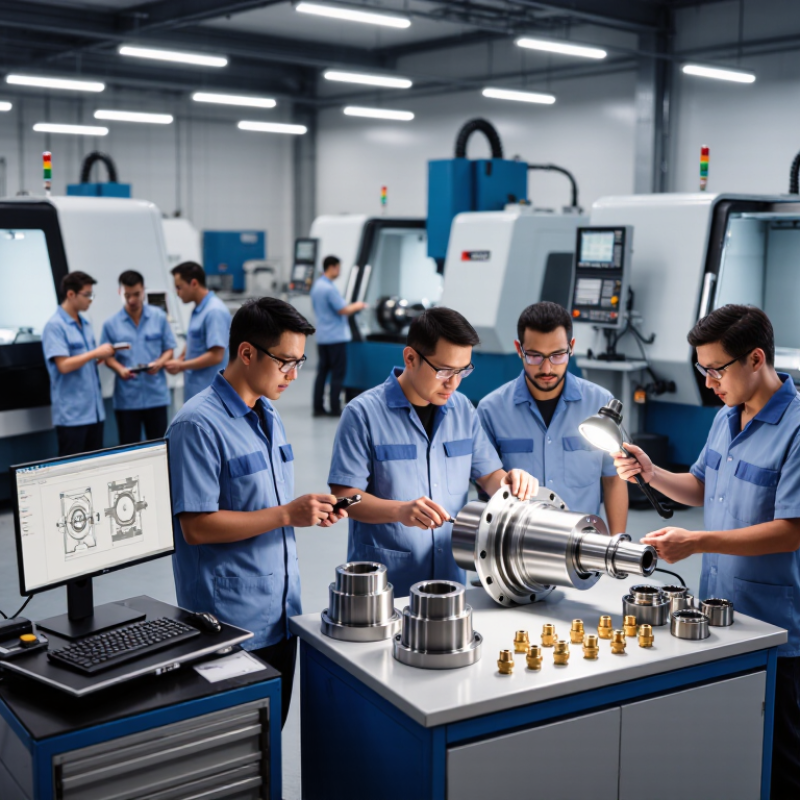
China Top 10 CNC Parts Manufacturers for Global Buyers

What Defines a Leading CNC Parts Manufacturer in China

A leading CNC parts manufacturer in China is defined by repeatable evidence, not polished promises. Experienced engineers study drawings, tolerances, surface requirements, and intended use before quoting. They ask difficult questions about datums, wall thickness, tool access, and inspection points. This practical exchange often prevents expensive revisions later. A useful supplier can explain why a tolerance is necessary, not simply accept every number.

Production control should be visible. Material certificates, heat numbers, and process records should follow each batch. Modern equipment helps, but skilled operators still matter. Coordinate measuring machines, gauges, and documented first-article checks support reliable results. Independent inspection can add confidence for critical components. Quality systems such as ISO 9001 are useful, yet a certificate alone proves little. Buyers should review sample reports, corrective-action records, and actual response times. Small details reveal discipline.

Trust also depends on communication after the purchase order. A strong manufacturer reports deviations early, protects approved revisions, and gives realistic shipping dates. It should understand export packaging and documentation for the destination market. No factory is perfect. Problems can occur. What matters is whether the supplier admits them, identifies the cause, and prevents repetition. In my experience, the best partnerships grow from transparent feedback, not flawless sales language. Buyers should still test samples, verify capacity, and challenge optimistic promises. That extra caution may feel slow, but it protects quality when production becomes busy.

Key CNC Parts Manufacturing Capabilities and Quality Standards

China’s leading CNC parts manufacturers serve global buyers through milling, turning, grinding, and multi-axis machining. Their strongest facilities handle aluminum, stainless steel, brass, titanium, and engineering plastics. Experienced teams read complex drawings carefully and confirm datum points before production begins. This reduces errors around holes, threads, flatness, and surface finish.

Reliable manufacturers use calibrated CMMs, micrometers, height gauges, and surface roughness testers. Inspection records should connect each measurement to a specific batch and drawing revision. Quality systems may follow ISO 9001, while material certificates and process reports support traceability. Export buyers should also confirm tolerance control, packaging methods, and document accuracy. Small details matter.

Tips: Request a first-article inspection before approving mass production. Ask for material certificates, dimensional reports, and clear photos of finished parts. Confirm whether quoted tolerances match the actual production process. A very tight tolerance may require extra operations and higher costs. Do not assume every factory interprets standards identically. Misunderstandings still happen, even with professional suppliers. Clear drawings and written acceptance criteria remain essential.

How the Top 10 Chinese CNC Parts Manufacturers Compare

China Top 10 CNC Parts Manufacturers for Global Buyers

The top ten Chinese CNC parts manufacturers differ more in process control than in machine count. Some excel at tight-tolerance aluminum housings, while others handle stainless steel shafts, brass fittings, or engineering plastics. A buyer should compare repeatability, not impressive equipment lists. Ask for sample inspection reports, tolerance records, and material certificates before approving production.

Several manufacturers offer five-axis machining, surface finishing, and rapid prototyping under one roof. This can reduce transport delays and protect design consistency. However, integrated services may cost more than using separate suppliers. Others provide competitive pricing for large batches but require clearer drawings and higher minimum quantities. Lead times also vary. A realistic supplier should explain setup time, machining time, inspection stages, and shipping arrangements.

Quality systems matter. Look for documented first-article inspection, calibrated measuring tools, and traceable production records. Reliable factories usually communicate problems early, especially when a drawing contains conflicting dimensions. That experience is valuable. Still, no ranking stays perfect. Capacity changes, engineers leave, and a supplier that performs well on brackets may struggle with medical-grade surface requirements. Buyers should test one small order, review dimensional results, and examine packaging before expanding cooperation. Quiet details count. A clean report is useful, but consistent parts matter more.

China Top 10 CNC Parts Manufacturers for Global Buyers

This aggregated benchmark compares the buyer-relevant capabilities commonly used to evaluate leading Chinese CNC parts manufacturers. Scores are normalized from 0 to 100 and focus on precision, equipment capability, material range, finishing options, and production scalability rather than individual company data.

Industries and Applications Served by These Manufacturers

China Top 10 CNC Parts Manufacturers for Global Buyers

China’s leading CNC parts manufacturers serve automotive, aerospace, medical, electronics, energy, and industrial equipment sectors. Their work ranges from aluminum housings and steel shafts to miniature surgical components. Automotive demand remains especially strong. The International Federation of Robotics reported 541,302 industrial robots installed worldwide in 2023. This figure reflects rising demand for precise machined parts, fixtures, and automated production hardware.

Aerospace buyers usually require lightweight alloys, strict traceability, and stable performance across repeated batches. Medical manufacturers need clean surfaces, tight tolerances, and careful documentation. Electronics production depends on small connectors, heat sinks, and protective enclosures.

The International Energy Agency reported that global electric car sales exceeded 14 million in 2023. This growth creates more demand for battery trays, motor parts, cooling systems, and charging equipment.

Industrial machinery remains another major application. Manufacturers produce gearbox components, hydraulic blocks, sensor mounts, and custom replacement parts. Global buyers should check material certificates, inspection methods, and process capability before placing large orders.

A supplier may achieve excellent sample results but struggle with long-term consistency. That risk deserves attention.

The best evaluation combines factory experience, engineering communication, dimensional reports, and controlled trial orders. Data helps, but it never replaces direct verification.

How Global Buyers Can Select the Right CNC Parts Supplier

How Global Buyers Can Select the Right CNC Parts Supplier

Selecting a CNC parts supplier requires more than comparing unit prices. Review machining experience, material control, inspection methods, and export communication. Ask for sample drawings, tolerance records, and recent inspection reports. A reliable supplier should explain how it controls dimensions from raw material to final packing.

Request material certificates, calibration records, and clear evidence of process control. For tight-tolerance parts, check whether the factory uses coordinate measuring machines, optical systems, or calibrated gauges. Ask how operators handle tool wear during long production runs. Small details matter. A 0.02 mm error can affect assembly, sealing, or movement.

Communication also reveals operational maturity. Send one technical drawing and observe the response. Does the supplier identify unclear tolerances? Does it confirm surface finish, packaging, and delivery terms? Experienced buyers often arrange a pilot order before approving large volumes. This reduces risk, although it may increase the initial cost. That trade-off is easy to underestimate.

Our first supplier audit may look impressive but still miss weaknesses in subcontracted processes. Ask which operations happen in-house and which do not. Review corrective-action records, not only polished certificates. A supplier should admit occasional defects and explain the root cause. Perfect claims deserve caution. Global buyers should also verify payment terms, intellectual property controls, logistics capacity, and compliance with destination-country requirements before production begins.

China Top 10 CNC Parts Manufacturers for Global Buyers — How Global Buyers Can Select the Right CNC Parts Supplier
An anonymized buyer-comparison table based on common CNC manufacturing capabilities, quality requirements, and procurement benchmarks. Supplier names and brands are intentionally omitted.
Rank Anonymous Supplier Profile Primary CNC Capability Suitable Materials Typical Production Fit Common Tolerance Range to Verify Quality Evidence to Request Typical Buyer Application Key Selection Consideration
1 Profile A — High-Precision Milling Specialist 3-axis milling 5-axis milling Prototype support Aluminum alloys, stainless steel, titanium, engineering plastics Prototype to low-volume production Approximately ±0.01–±0.05 mm, depending on geometry, material, and inspection method Dimensional inspection report, material certificate, calibration records, first-article report Complex housings, brackets, tooling components, precision fixtures Confirm multi-axis programming capability, machine condition, and inspection equipment
2 Profile B — CNC Turning and Shaft Parts Supplier CNC turning Live tooling Swiss-type turning Steel, brass, copper, aluminum, stainless steel, plastic rods Small turned parts and repeat production Approximately ±0.01–±0.05 mm for selected dimensions Material traceability, runout inspection, thread inspection, sample approval records Shafts, pins, bushings, connectors, threaded components Evaluate concentricity control, bar-feeding capability, and cycle-time stability
3 Profile C — Rapid Prototype and Low-Volume Partner CNC milling CNC turning DFM review Aluminum, stainless steel, ABS, POM, nylon, acrylic One-off prototypes to several hundred pieces Typically ±0.05 mm for general features; tighter tolerances require confirmation Prototype inspection report, drawing review, process feedback, photographic inspection records Product development, engineering validation, pilot builds Check engineering communication, quotation speed, and revision-control procedures
4 Profile D — Aluminum Parts and Surface-Finishing Specialist High-speed milling Anodizing coordination Cosmetic inspection 6061 aluminum, 7075 aluminum, magnesium alloys, engineering plastics Medium-volume commercial and industrial parts Approximately ±0.02–±0.05 mm for controlled features Color or finish approval sample, coating thickness record, dimensional report Electronic enclosures, consumer-product components, equipment panels Verify color consistency, masking control, edge protection, and cosmetic standards
5 Profile E — Stainless Steel and Industrial Components Supplier Heavy-duty milling Turning Deburring 304 and 316 stainless steel, carbon steel, alloy steel Small to medium industrial batches Approximately ±0.03–±0.08 mm for general machined features Material heat or lot certificate, hardness report, passivation record, inspection report Pumps, valves, automation equipment, industrial machinery Assess cutting-tool management, burr control, corrosion protection, and material traceability
6 Profile F — Medical and Precision-Device Component Supplier Fine milling Micro turning Clean handling Stainless steel, titanium, cobalt-chrome alloys, PEEK, medical-grade polymers Prototype, validation, and controlled production batches Feature-specific tolerance commonly specified at ±0.01–±0.05 mm Process validation records, material certificates, inspection plan, batch traceability Medical instruments, laboratory equipment, precision mechanisms Confirm regulatory experience, cleanliness controls, document retention, and traceability
7 Profile G — Aerospace-Grade Machining Partner 5-axis machining Thin-wall parts In-process inspection 7075 aluminum, titanium, nickel alloys, stainless steel Low to medium volume with strict documentation Approximately ±0.01–±0.05 mm for controlled critical features First-article inspection, material traceability, calibration records, nonconformance procedure Aerospace fixtures, structural components, satellite and aircraft hardware Review five-axis accuracy, fixture strategy, inspection capability, and export documentation
8 Profile H — Large-Part CNC Machining Supplier Large-format milling Large turning Welded-part machining Steel, cast iron, aluminum, stainless steel, fabricated assemblies Medium and large components in low to medium quantities Approximately ±0.05–±0.15 mm for general large-part features Machine capability data, dimensional inspection report, weld inspection records where applicable Machine bases, frames, tooling plates, energy and construction equipment parts Confirm work envelope, lifting capacity, datum control, and transportation arrangements
9 Profile I — High-Volume Production Supplier CNC cells Automation Statistical process control Aluminum, steel, brass, stainless steel, selected plastics Hundreds to tens of thousands of repeat parts Typically ±0.03–±0.10 mm for production features, subject to drawing requirements Process capability data, control plan, sampling records, lot traceability Automotive subcomponents, appliances, hardware, industrial assemblies Evaluate capacity planning, changeover time, yield rate, and supply continuity
10 Profile J — Integrated Machining and Assembly Supplier CNC machining Surface treatment coordination Subassembly Aluminum, steel, stainless steel, copper alloys, engineering plastics Prototype through finished subassembly production Approximately ±0.03–±0.10 mm for general features; critical dimensions require agreement Assembly work instructions, final inspection report, packaging specification, supplier-chain records Automation modules, enclosures, mechanisms, ready-to-install assemblies Verify responsibility boundaries, outsourced-process control, final testing, and packaging quality
Buyer verification note: Tolerance, lead time, minimum order quantity, surface finish, certification, and production capacity vary by part design and contract scope. Global buyers should request a current quotation, material documentation, sample inspection report, quality-system evidence, and a written confirmation of delivery terms before placing an order.

FAQS

Which machining processes are commonly available from Chinese CNC parts manufacturers?

Common processes include milling, turning, grinding, and multi-axis machining. Some facilities also provide finishing and rapid prototyping.

Which materials can these manufacturers usually process?

Typical materials include aluminum, stainless steel, brass, titanium, and engineering plastics. Material choice affects machining time, surface finish, and cost.

How can buyers verify dimensional quality?

Request inspection reports linked to the batch and drawing revision. Useful tools include CMMs, micrometers, height gauges, and surface roughness testers.

What should a buyer check before production begins?

Confirm datum points, hole sizes, threads, flatness, and surface requirements. Clear drawings reduce misunderstandings.

Is a large machine inventory enough to identify a reliable supplier?

Not necessarily. Repeatability, inspection records, and material certificates matter more than impressive equipment lists.

Should buyers request a first-article inspection?

Yes, especially before mass production. Review measurements, finished-part photos, material documents, and packaging details.

Why can very tight tolerances increase the quoted cost?

Tight tolerances may require extra machining, repeated inspections, or special process control. The price should match the actual production method.

How should buyers compare supplier lead times?

Ask for separate estimates for setup, machining, inspection, packaging, and shipping. A vague delivery promise needs more discussion.

Can integrated machining and finishing services reduce production risks?

They may reduce transport delays and preserve design consistency. However, one supplier may cost more than several specialized suppliers.

What is a practical way to test a new supplier?

Start with a small order and inspect the parts, reports, and packaging. A clean report helps, but consistent parts matter more.

Conclusion

China has become a major source of precision Cnc Parts for global buyers, supported by advanced machining equipment, experienced engineering teams, and flexible production systems. A leading manufacturer is defined not only by modern CNC machines, but also by its ability to maintain consistent tolerances, provide reliable material control, follow documented quality procedures, and deliver clear technical communication. Key capabilities may include milling, turning, drilling, surface treatment coordination, prototype development, and high-volume production, supported by inspection tools and internationally recognized quality practices.

The top 10 manufacturers can be compared through their machining accuracy, production capacity, industry experience, customization support, lead times, pricing transparency, and after-sales service. Their applications may cover automation, automotive components, electronics, medical equipment, industrial machinery, and other lawful commercial fields. Global buyers should evaluate drawings, materials, tolerances, certifications, sample quality, communication efficiency, and total supply reliability before selecting a supplier. The right partner should offer a balanced combination of technical expertise, stable quality, competitive value, and dependable delivery for long-term cooperation.


Charlotte

Charlotte

Charlotte is a seasoned marketing professional with a deep understanding of the company's portfolio and a passion for elevating its presence in the market. With a keen eye for detail and a commitment to excellence, she ensures that our professional blog is regularly updated with insightful articles......