How to Choose the Right Ball Bearing in 2026?

Time:2026-09-17 Author:Oliver
0%

Choosing the right Ball Bearing in 2026 requires more than matching bore size and load rating. Modern equipment runs faster, hotter, and with tighter energy targets. The U.S. Department of Energy reports that motor systems can represent a major share of industrial electricity use, making friction reduction commercially important. Meanwhile, the SKF Annual Report 2024 recorded approximately SEK 98.7 billion in net sales, showing the scale of demand across automotive, energy, aerospace, and industrial markets. These figures provide context, but they do not select a bearing for your machine.

Bearing specialist Tedric A. Harris wrote, “A bearing is a machine element that permits relative motion between two parts with minimum friction.” His definition remains practical. A technician still needs to inspect shaft fit, housing tolerance, lubrication, vibration, contamination, and operating temperature. A sealed deep-groove bearing may suit a clean electric motor, while a spherical roller bearing may better handle misalignment and heavy loads. Small details matter. A dusty conveyor is not a laboratory.

This guide uses principles from ISO 281, manufacturer catalogs, and current industry research to compare bearing types, materials, seals, clearances, and life calculations. Market forecasts differ because their categories and assumptions differ. That uncertainty deserves attention. Real service conditions often punish an elegant specification. The best Ball Bearing is not always the most expensive option. It is the one that survives the actual load, speed, environment, maintenance schedule, and human mistakes.
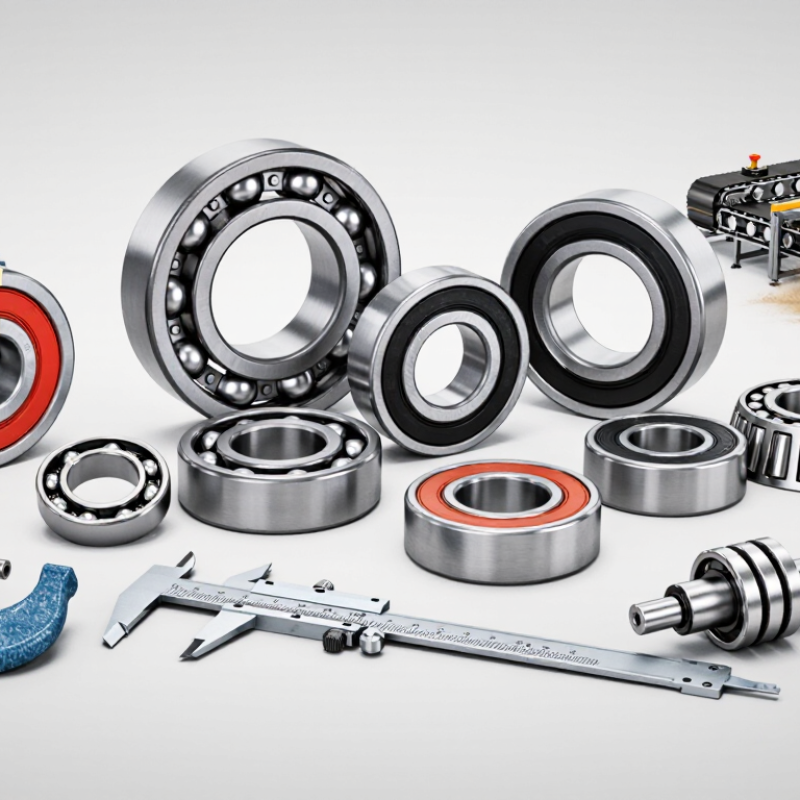
How to Choose the Right Ball Bearing in 2026?

Map 2026 Duty Conditions: Load, Speed, Temperature, and Contamination

How to Choose the Right Ball Bearing in 2026?

Map 2026 Duty Conditions: Load, Speed, Temperature, and Contamination

Choosing the right ball bearing starts with the real duty cycle, not a single catalog number. In 2026, record radial and axial loads across normal operation. Include shock, reversing motion, belt tension, and moments caused by misalignment. A steady 2 kN load may hide brief impacts several times per hour. I have seen premature failures caused by ignored start-up loads. Measure them.

Speed needs equal attention. Calculate continuous rpm and acceleration during starts and stops. At high speed, frictional heat can matter more than static capacity. Check lubrication, cage limits, internal clearance, and shaft fit together. Temperature records should cover cold starts, normal running, and nearby heat sources. Do not trust one room-temperature reading. A calculated life can still disappoint when heat changes lubricant viscosity.

Contamination often decides the bearing’s actual service life. Map dust, metal particles, water, cleaning fluids, and humidity around the housing. Fine dust can enter through seals, while washdown may force moisture inward. Specify the expected cleanliness level and inspection interval. Seal selection must balance protection against torque and heat. Ask maintenance staff what they find inside failed units. Their evidence may challenge the original design assumptions. Real machines are rarely perfect. Test the actual assembly.

Select Bearing Architecture: Radial, Thrust, Angular-Contact, or Self-Aligning

How to Choose the Right Ball Bearing in 2026?

Select Bearing Architecture: Radial, Thrust, Angular-Contact, or Self-Aligning

Start with the load. Radial bearings suit forces acting perpendicular to the shaft, such as conveyor rollers and electric motors. Thrust bearings handle axial forces, including pressure from screws, pumps, and rotating tables. Their raceways are designed for pushing loads, not careless side loading. Angular-contact bearings support combined radial and axial forces. They work well in machine-tool spindles, pumps, and precision assemblies. Contact angle matters. A larger angle generally improves axial capacity, but may reduce speed capability. Check the actual force direction, not just the catalogue drawing.

Self-aligning bearings tolerate shaft or housing misalignment through a curved raceway design. They can rescue installations where mounting flexibility is unavoidable. Keep it practical. However, they are not a substitute for accurate alignment. In field inspections, vibration often comes from loose housings, poor fits, or contaminated lubricant. A perfectly selected architecture cannot correct every installation error. I have also seen designers choose angular-contact bearings for simple radial loads, adding cost and preload sensitivity without a clear benefit. Consider speed, temperature, stiffness, clearance, lubrication, and expected service life together. A load calculation may look convincing, yet real vibration, shock, and mounting distortion can change the result. When conditions remain uncertain, test the assembly under representative operating loads before finalizing the bearing architecture.

How to Choose the Right Ball Bearing in 2026? - Select Bearing Architecture: Radial, Thrust, Angular-Contact, or Self-Aligning

Selection Dimension Radial Ball Bearing Thrust Ball Bearing Angular-Contact Ball Bearing Self-Aligning Ball Bearing
Primary Load Direction Radial loads; limited axial loads can be accommodated depending on the design and clearance. Axial loads in one direction for single-direction designs; double-direction designs support axial loads in both directions. Combined radial and axial loads; axial capacity increases with contact angle. Primarily radial loads, with limited axial load capability depending on the internal design.
Typical Contact Angle Usually near ; optimized mainly for radial loading. Designed with raceways oriented to carry axial loading rather than conventional radial contact. Commonly approximately 15°, 25°, or 40°; larger angles generally provide greater axial capacity. Usually comparable to radial designs, but the spherical outer-race geometry allows the bearing to accommodate shaft misalignment.
Radial Load Capability ★★★★★
Very good for general-purpose radial loading.
★☆☆☆☆
Generally unsuitable for substantial radial loads unless specifically supported by another bearing.
★★★★☆
Good, but the combined-load rating depends on contact angle, preload, and arrangement.
★★★★☆
Good radial capacity, often selected where alignment errors are expected.
Axial Load Capability ★★☆☆☆
Limited to moderate axial loads, subject to bearing type, clearance, and operating conditions.
★★★★★
Excellent for axial loads in the intended direction; radial loading should be minimized.
★★★★★
Excellent for combined loading; capacity increases with contact angle.
★★☆☆☆
Limited axial capacity compared with thrust or angular-contact designs.
Misalignment Tolerance ★☆☆☆☆
Low; shaft and housing alignment should be controlled carefully.
★☆☆☆☆
Low; angular misalignment can cause uneven loading and premature wear.
★☆☆☆☆
Low; precision alignment and proper mounting are important, especially in paired arrangements.
★★★★★
High; the spherical outer race allows the inner ring and rolling elements to self-align within the housing.
Speed Capability ★★★★★
Typically very good, especially in low-friction, light-load applications.
★★☆☆☆
Usually lower than radial and angular-contact types because axial loading increases friction and heat.
★★★★☆
High when preload, lubrication, cage design, and contact angle are correctly selected.
★★★☆☆
Moderate to good; allowable speed can be reduced by misalignment, load, and internal clearance.
Axial Stiffness ★★☆☆☆
Limited axial stiffness unless used in a suitable locating arrangement.
★★★★☆
Good axial stiffness under the designed thrust load.
★★★★★
Excellent, particularly with preload and matched bearing pairs.
★★☆☆☆
Generally selected for alignment tolerance rather than high axial stiffness.
Friction and Heat Generation Generally low friction and efficient operation when correctly lubricated and loaded. Can generate higher friction and heat, especially at higher speeds or with excessive preload. Moderate friction; preload, contact angle, speed, and lubricant viscosity strongly affect heat generation. Generally moderate friction; misalignment and increased internal clearance can influence operating temperature.
Mounting and Arrangement Simple mounting; often used as a fixed or locating bearing and may be paired with a floating bearing. Requires correct orientation and support; should not be subjected to significant radial load unless designed for it. Often installed singly or in back-to-back, face-to-face, or tandem pairs to control axial location and stiffness. Commonly mounted in housings that permit or accommodate alignment movement; suitable housing fits remain essential.
Best-Fit Applications Electric motors, fans, pumps, gearboxes, rollers, general machinery, and moderate-speed rotating shafts. Turntables, vertical shafts, screw mechanisms, indexing equipment, and applications dominated by axial force. Machine-tool spindles, pumps, compressors, precision drives, ball screws, and rotating assemblies with combined loads. Long shafts, agricultural equipment, conveyors, textile machinery, and installations with housing or shaft deflection.
Common Selection Risks Insufficient axial capacity, excessive clearance, poor fits, contamination, or uncorrected misalignment. Unexpected radial load, incorrect thrust direction, inadequate support, and excessive speed. Incorrect contact angle, unsuitable preload, improper pair arrangement, or insufficient alignment accuracy. Using the bearing to compensate for excessive shaft deflection, poor housing support, or loads beyond its capacity.
Choose This Architecture When... Radial load is dominant, alignment is controlled, and low friction with straightforward installation is required. The principal force acts along the shaft and radial loading is negligible or separately supported. Radial and axial loads act together, or high axial stiffness and accurate shaft location are required. Expected shaft or housing misalignment is more important than maximum axial capacity or extreme precision.

Note: Final bearing selection should also verify dynamic and static load ratings, required life, speed, operating temperature, lubrication, sealing, fits, clearance or preload, contamination level, and installation conditions.

Size for ISO 281 Life: L10 = (C/P)³ and 90% Reliability

How to Choose the Right Ball Bearing in 2026?

Bearing selection should begin with the load, not the catalog photograph. Record radial load, axial load, speed, operating temperature, and expected service hours. Then calculate the equivalent dynamic load, P, using the appropriate ISO 281 method. The basic rating life is L10 = (C/P)³, where C is the basic dynamic load rating. L10 is usually expressed in millions of revolutions.

This equation represents 90% reliability. In practical terms, 90 out of 100 identical bearings should reach or exceed the calculated life under defined conditions. It is not a promise for every bearing. A bearing carrying 2 kN with a 10 kN rating gives L10 = 125 million revolutions. At 1,200 revolutions per minute, that equals roughly 1,736 hours. The number looks precise. The machine is not.

I always check lubrication, contamination, shaft alignment, and mounting fit after calculating L10. A clean workshop test rarely matches a dusty conveyor or a vibrating pump. Excessive preload can increase P quickly. Poor sealing can shorten life before the formula becomes useful. If reliability above 90% is required, apply the relevant ISO 281 reliability adjustment factor rather than treating L10 as sufficient. I also verify static safety when shock loads exist. This step is easy to miss. Recheck the assumptions before selecting the final size.

Set Precision and Internal Clearance: ISO 492 and ISO 5753-1

Choosing a ball bearing in 2026 starts with two numbers: precision class and internal clearance. ISO 492 defines dimensional and running accuracy classes, including Normal, P6, P5, P4, and P2. Higher precision can reduce runout, but it will not automatically improve every machine. A slow conveyor may gain little from P5, while a high-speed spindle can expose errors within minutes. Check shaft tolerance, housing fit, speed, and vibration before selecting the class. The U.S. Department of Energy’s Motor Systems Market Assessment reported that motor systems consumed about 68% of U.S. manufacturing electricity. Small friction losses deserve attention.

Internal clearance needs equal discipline. ISO 5753-1 specifies how radial internal clearance is measured before mounting, without load. A C3 clearance is not universally “better.” It may suit thermal expansion, interference fits, or elevated operating temperatures. Too much clearance can increase vibration and uneven load distribution. Too little can cause heat, seizure, or premature fatigue. It depends.

ISO 281 defines L10 basic rating life as the life reached by 90% of identical bearings under stated conditions. This is a calculation, not a promise. In field checks, I would record shaft temperature, housing temperature, vibration, and actual speed. Then compare them with the design assumptions. A spreadsheet can look precise and still be wrong. Clearance labels also require careful verification because ranges vary with bearing size and product design. References: ISO 492, ISO 5753-1, ISO 281, and the U.S. Department of Energy Motor Systems Market Assessment.

Verify Speed, Lubrication, Sealing, and Material Compatibility

How to Choose the Right Ball Bearing in 2026?

Speed is more than a catalog number. Confirm whether the stated limit assumes oil or grease, open clearance, and a specific load. Contact seals usually improve contamination protection, but they also increase friction and heat. The U.S. Department of Energy’s Motor Systems Market Assessment estimates that motor-driven equipment uses about 68% of industrial electricity. Small bearing losses can therefore matter in continuous-duty machines. I would verify actual shaft speed, acceleration, temperature, and duty cycle before selecting a bearing.

Lubrication must match the environment. Grease viscosity, relubrication intervals, and thickener compatibility deserve written checks. Mixing two greases is a common mistake. It can soften the lubricant or block oil release. ISO 281:2007 defines basic rating life at 90% reliability, but contamination and poor lubrication can reduce real service life sharply. That calculation is useful, not magical. Sealing also needs testing against dust, washdown, pressure, and chemical exposure. A seal that works in a clean laboratory may fail beside abrasive powder.

Material compatibility is often underestimated. Check shaft hardness, housing material, corrosion risk, thermal expansion, and cage or seal chemistry. Ceramic rolling elements may reduce electrical damage, but they are not automatically the best choice. Stainless steel can resist corrosion, yet its load capacity may differ from standard bearing steel. My first selection would usually be provisional. I would inspect temperature, noise, and grease condition after installation, then revise the specification. ISO 15243 damage classifications help connect those field observations with probable failure causes.

How to Choose the Right Ball Bearing in 2026?

Verify speed, lubrication, sealing, and material compatibility before final selection.

The chart shows typical engineering screening priorities on a 100-point scale. Speed should be checked against the bearing’s limiting speed and load, lubrication against temperature and viscosity requirements, sealing against contamination and friction, and material compatibility against corrosion, chemicals, moisture, and operating temperature. Always confirm the final rating with the manufacturer’s technical data.

FAQS

What operating conditions should be recorded before choosing a ball bearing?

Record radial load, axial load, speed, temperature, shock, and reversing motion. Include belt tension and misalignment moments. A steady 2 kN load may hide brief impacts. Measure start-up loads, too.

Why is speed important in bearing selection?

Continuous rpm matters, but acceleration and stopping speed matter too. High speed creates frictional heat. Check lubrication, cage limits, internal clearance, and shaft fit together. One rpm value is not enough.

How can temperature affect bearing life?

Check cold starts, normal running, and nearby heat sources. Heat changes lubricant viscosity and may reduce protection. A room-temperature reading can mislead. It looks precise, but it is incomplete.

How should contamination risks be evaluated?

Map dust, metal particles, water, cleaning fluids, and humidity around the housing. Fine dust may enter through seals. Washdown can push moisture inward. Inspect failed bearings for real evidence.

Which bearing type suits radial forces?

Radial bearings suit forces perpendicular to the shaft. Common examples include conveyor rollers and motor assemblies. Confirm the actual force direction. Catalog drawings can encourage lazy assumptions.

When are thrust or angular-contact bearings appropriate?

Thrust bearings handle strong axial forces from screws, pumps, or rotating tables. Angular-contact bearings support combined radial and axial forces. A larger contact angle improves axial capacity but may reduce speed capability.

Can self-aligning bearings solve alignment problems?

They tolerate limited shaft or housing misalignment. However, they cannot replace accurate installation. Loose housings, poor fits, and contaminated lubricant may still create vibration. This distinction is easy to forget.

What does the L10 life calculation mean?

The calculation is L10 = (C/P)³, measured in millions of revolutions. It represents approximately 90% reliability under defined conditions. A 10 kN rating with a 2 kN load gives 125 million revolutions. The number looks exact; the machine is not.

What should be checked after calculating bearing life?

Recheck lubrication, sealing, contamination, alignment, mounting fit, and shock loads. Excessive preload can increase the equivalent load quickly. Verify static safety when impacts occur. I would test the actual assembly before final approval.

Conclusion

Choosing the right Ball Bearing in 2026 starts with accurately defining the operating environment. Evaluate radial and axial loads, rotational speed, temperature changes, shock, vibration, moisture, dust, and other contaminants before selecting a bearing. Then match the application with the appropriate architecture, whether radial, thrust, angular-contact, or self-aligning. The bearing’s size should be checked using the ISO 281 basic rating life equation, L10 = (C/P)³, which represents a 90% reliability target under defined conditions.

The selection process should also establish the required precision and internal clearance according to ISO 492 and ISO 5753-1. Confirm that the bearing’s limiting speed, lubrication method, sealing arrangement, and material compatibility suit the machine and service environment. A complete evaluation of these factors helps prevent premature wear, overheating, noise, and dimensional instability, resulting in dependable performance, easier maintenance, and a longer operating life.


Oliver

Oliver

Oliver is a seasoned marketing professional with a wealth of expertise in driving brand awareness and engagement. With a deep understanding of our company's product offerings, he consistently delivers high-quality content that enriches our professional blog. His insights not only shed light on......