Choosing the right Deep Groove Ball Bearing is rarely as simple as matching a catalog number. In real applications, a small selection error can create vibration, noise, heat, and premature failure. A bearing installed inside a conveyor motor may face dust, moisture, continuous rotation, and changing loads. Each condition matters.
This guide presents ten practical tips for making a more reliable choice. It considers load capacity, operating speed, internal clearance, sealing, lubrication, materials, and installation requirements. These factors should be checked against manufacturer specifications, not guesswork. Certified technical data and application experience provide a stronger foundation than price alone. Measure carefully.
Experienced maintenance teams also know that the “best” bearing depends on its working environment. A sealed bearing may protect against contamination, while an open design may support easier relubrication. Excessive clearance can increase noise, but insufficient clearance may cause overheating during operation. Small details often decide service life.
Some decisions remain imperfect. Real equipment may operate beyond its original design conditions, and records may be incomplete. That is why inspection, temperature monitoring, and vibration checks should support the initial selection. If uncertainty remains, consult a qualified bearing engineer or the manufacturer’s technical department. Reliable performance begins with honest evaluation, suitable evidence, and attention to how the machine actually works.
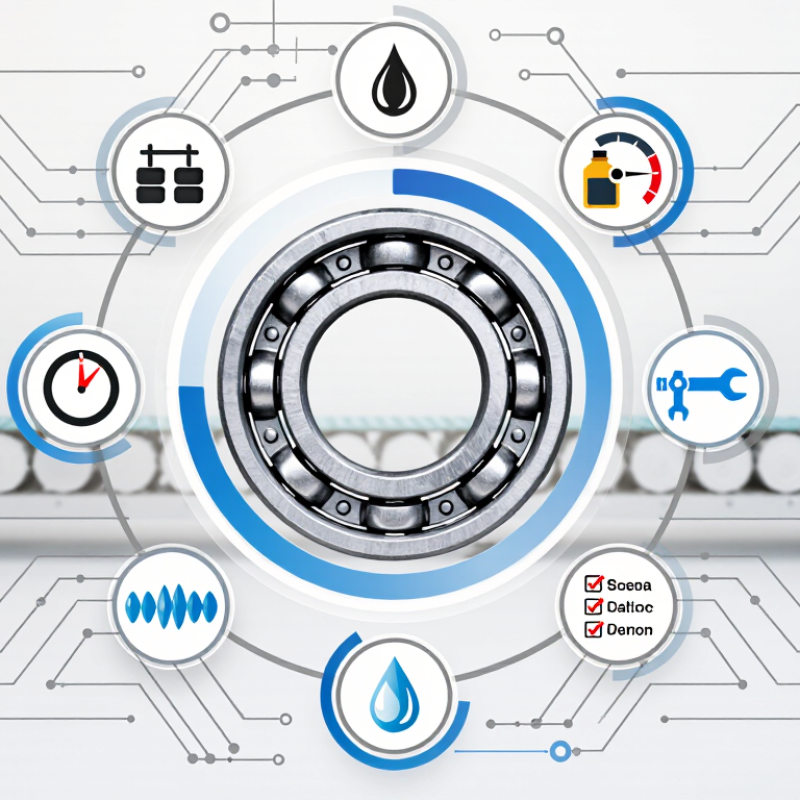
Deep groove ball bearings use two raceways and a full ring of balls. This geometry mainly carries radial loads, but it also handles moderate axial loads. The internal clearance affects heat, vibration, and operating temperature. ISO 281:2007 defines basic rating life, L10, at 90% reliability. That figure is useful, but it is not a promise. Real lubrication, mounting, and contamination can change performance sharply.
Application conditions matter more than catalogue dimensions. The U.S. Department of Energy’s Motor Systems Tip Sheet reports that motor-driven equipment uses about 70% of industrial electricity. Bearings in motors therefore need low friction, stable lubrication, and accurate alignment. Pumps may face moisture, while conveyors often encounter dust. Choose shields or seals according to the environment, not habit.
I still see selections made from bore size alone. That shortcut often fails. Review shaft fit, housing tolerance, thermal expansion, and installation force. A tight fit can reduce clearance and raise heat. Excessive force can mark the raceway before service begins.
Fitness for purpose matters.
10 Tips for Choosing the Right Deep Groove Ball Bearing
Tip: Start with the load. Separate radial and axial forces, then estimate the peak load near the shaft shoulder. ISO 281:2007 uses load rating and equivalent dynamic load to estimate bearing life. Do not size from average load alone. A short overload can damage raceways permanently. In field inspections, uneven marks often reveal forgotten shock loads.
Tip: Check speed and heat together. A bearing rated for high speed may still fail beside a hot motor. Confirm limiting speed, cage material, grease temperature range, and shaft balance. The U.S. Department of Energy reports that predictive maintenance can reduce maintenance costs by approximately 8–12%. Temperature and vibration checks support that approach. Keep records.
Tip: Examine the operating environment. Dust, moisture, washdown, misalignment, and vibration change the selection. Choose seals and clearance for the actual surroundings, not the catalog photograph. Tip: Match internal clearance to thermal expansion. Too little clearance creates heat; too much permits vibration. ISO 281 calculations also assume controlled conditions, which real machines rarely provide.
A practical installation check matters. Clean hands, correct fits, and even mounting force prevent early damage. Never press through the wrong ring. A perfect selection is uncommon. Experienced engineers still recheck speed, load, and temperature after testing. Small errors become expensive quickly.
Selecting the correct deep groove ball bearing starts with load, not shaft diameter. Measure the bore, outside space, and available width. Record radial and axial forces separately. ISO 281:2007 defines basic rating life as the revolutions that 90% of identical bearings can reach under controlled conditions. Its calculation uses dynamic load rating C and equivalent load P: L10 = (C/P)3 million revolutions for ball bearings. Small errors matter.
Tip: Convert the real duty cycle into an equivalent load. Include starts, stops, shock loads, and changing speeds. A bearing with a higher C rating usually offers longer calculated life, but it may demand more space or create higher friction. Check the static load rating C0 when heavy impacts or stationary loads occur. ISO 76:2006 provides the basis for static load evaluation. Do not select from bore size alone.
Tip: Review operating conditions before approving the size. Temperature, contamination, shaft fit, lubrication, and misalignment can reduce actual life sharply. In workshop selection, my first load estimate is often too optimistic. That shortcut can fail. Recheck the highest load, not the average load. Compare the calculated L10 life with the equipment target, then apply a sensible safety margin. A clean spreadsheet helps, but field evidence matters more.
10 Tips for Choosing the Right Deep Groove Ball Bearing
Tip 1: Check the operating load before comparing prices. Radial loads, axial loads, and shock loads affect bearing life. Tip 2: Match the seal to the environment. Rubber seals resist dust and moisture, while metal shields usually create less friction. Tip 3: Consider speed carefully. A tightly sealed bearing may run warmer at high speed. That detail is easy to miss.
Tip 4: Choose the cage material for the working temperature and speed. Steel cages handle many general applications, while polymer cages can reduce noise and weight. Tip 5: Review the lubricant specification, not just the word “greased.” Confirm viscosity, temperature range, and relubrication needs. Tip 6: Avoid mixing incompatible greases. Small chemistry differences can cause serious performance problems. I have seen clean assemblies fail after this simple oversight.
Tip 7: Select stainless or corrosion-resistant material for humid areas, but verify its load capacity. Tip 8: Use hardened bearing steel where fatigue resistance matters. Tip 9: Check dimensional tolerances and internal clearance against the shaft and housing. Tip 10: Inspect the actual application before final selection. A catalog calculation can miss vibration, misalignment, or frequent start-stop cycles. Keep records of noise, temperature, and wear. They provide more reliable evidence than assumptions. Sometimes, the “standard” option is not the safest choice.
| Tip | Selection Dimension | Key Comparison | Typical Data or Range | Recommended Choice | Practical Considerations |
|---|---|---|---|---|---|
| 1 | Load Capacity | Compare radial and axial load requirements with the bearing's dynamic and static load ratings. |
Radial load: primary
Axial load: moderate Deep groove ball bearings commonly support axial loads in both directions, but their axial capacity is generally lower than their radial capacity. |
Choose a bearing with a dynamic load rating comfortably above the calculated equivalent load. | Use the static safety factor for shock, vibration, standstill loading, or heavy intermittent loads. Avoid selecting by bore size alone. |
| 2 | Bearing Size and Fit | Match the bore, outside diameter, width, shaft tolerance, and housing fit to the application. |
Common metric bore range: approximately 3–100 mm for general-purpose applications. Typical shaft fits: normal, transition, or interference fits depending on rotating-ring load. |
Select the correct dimensional series first, then verify shaft and housing tolerances. | An overly tight fit can reduce internal clearance and raise operating temperature. An overly loose fit can cause creep, fretting, and vibration. |
| 3 | Internal Clearance | Compare normal radial clearance with increased or reduced-clearance options. |
Normal clearance is suitable for many standard conditions. Increased clearance is often considered for higher temperature, interference fits, or shaft and housing temperature differences. |
Use normal clearance unless heat, fit, speed, or thermal expansion calculations justify another class. | Too little clearance may cause overheating and premature failure; too much clearance may increase noise, vibration, and load concentration. |
| 4 | Seal and Shield Design | Compare open, shielded, and contact-sealed configurations. |
Open: lowest friction
Shielded: low friction
Contact seal: better exclusion Shields reduce contamination entry with minimal contact; contact seals provide stronger protection but usually increase friction and heat. |
Use contact seals in dusty, damp, or washdown environments; use shields in cleaner, higher-speed applications. | Sealed bearings are generally supplied with grease and may not be intended for relubrication. Confirm the seal temperature and speed limits. |
| 5 | Cage Material | Compare pressed steel, machined brass, and polymer cages for speed, temperature, vibration, and chemical exposure. | Pressed steel: economical Brass: robust under vibration Polymer: low mass and friction | Choose pressed steel for general service, brass for demanding vibration or high-load conditions, and polymer where low friction is important. | Cage compatibility depends on lubricant, temperature, solvent exposure, acceleration, and electrical conditions. Verify the cage rating for the operating environment. |
| 6 | Lubricant Type | Compare grease and oil according to speed, temperature, maintenance access, and contamination risk. |
Grease: simpler maintenance
Oil: better heat removal Grease is common for sealed, low-maintenance units; oil is preferred when heat dissipation and very high speed are major concerns. |
Use a compatible NLGI 2 grease for many standard industrial applications, unless speed or temperature requires a specific formulation. | Do not mix incompatible grease thickeners or base oils. Check viscosity, additive chemistry, water resistance, and the manufacturer's fill recommendation. |
| 7 | Operating Temperature | Compare standard bearing steel, heat-stabilized options, seal materials, cage materials, and lubricant temperature limits. |
Standard grease-lubricated bearings are often used around −20 to 120 °C, depending on the exact design and lubricant. Higher temperatures may require special steel, seals, cage materials, or high-temperature grease. |
Select the bearing and lubricant from the complete temperature range, including start-up and peak temperatures. | Continuous operation near the upper limit can shorten lubricant life. Temperature rise also depends on speed, load, clearance, fit, and cooling. |
| 8 | Material Options | Compare standard through-hardened bearing steel with corrosion-resistant steel and ceramic rolling elements. | Bearing steel: general purpose Stainless steel: corrosion resistance Ceramic balls: electrical insulation and low density | Use standard bearing steel for dry, clean environments; stainless steel for moisture or chemical exposure; hybrid ceramic designs for electrical-current or high-speed concerns. | Stainless steel usually has lower load capacity than comparable standard bearing steel. Ceramic options cost more and still require suitable races, seals, and lubrication. |
| 9 | Speed and Friction | Compare limiting speed, seal drag, lubricant churning, cage design, and heat generation. |
Open and shielded bearings generally produce less seal friction than contact-sealed versions. The permissible speed decreases as load, lubricant quantity, temperature, and seal contact increase. |
For high-speed service, prioritize low-friction seals, correct lubricant viscosity, adequate clearance, and effective heat removal. | Use the actual operating speed rather than the motor's rated speed when calculating bearing requirements. Frequent acceleration may impose additional cage stress. |
| 10 | Environment and Maintenance | Compare protection against dust, water, chemicals, vibration, electrical current, and maintenance access. | Clean/dry: open or shielded Dust/moisture: sealed Electrical current: insulated or ceramic option | Select the seal, material, lubricant, and maintenance plan as one complete system. | Correct installation, alignment, cleanliness, storage, relubrication intervals, and vibration monitoring can be as important as the bearing specification itself. |
Verify Compatibility, Quality, Installation, and Maintenance Needs
A deep groove ball bearing must match the shaft diameter, housing bore, load direction, and operating speed. Measure the shaft and housing instead of trusting old drawings. A small mismatch can create noise, heat, and early failure. Check radial load, occasional axial load, temperature range, and required internal clearance. Seals also matter. A sealed bearing suits dusty areas, while an open design may support easier relubrication.
Quality is more than a clean surface. Ask for material information, dimensional records, and traceability documents. Inspect the raceways for scratches, rust, or uneven finishing. Turn the bearing slowly by hand. It should feel smooth, not gritty. Still, hand rotation cannot reveal every defect. I once trusted that test too quickly. That was a mistake. Controlled inspection and reliable supplier records provide stronger evidence.
Installation should use the correct force path. Press against the fitted ring, never through the rolling elements. Keep tools, hands, and work surfaces clean. Align the shaft carefully, then apply lubricant recommended for the speed and temperature. Too much grease can raise operating temperature. Too little can cause rapid wear. After startup, record vibration, noise, and housing temperature. Recheck them after several operating hours. Maintenance intervals should reflect dust, moisture, load changes, and actual running conditions. Fixed schedules can be convenient, but they are not always accurate.
It mainly carries radial loads and moderate axial loads. Match the bearing with the actual load direction.
Internal clearance affects heat, vibration, and operating temperature. Too little clearance may increase friction and heat.
L10 represents the basic rating life at 90% reliability under ISO 281:2007. It is useful, but not a promise.
Use seals in dusty or damp areas. Open designs may support easier relubrication. Choose for conditions, not habit.
Measure the shaft and housing directly. Check fits, tolerances, thermal expansion, speed, temperature, and clearance.
Excessive force can mark the raceway before operation. Press against the fitted ring, never through the rolling elements.
Use lubricant suitable for the speed and temperature. Too much grease raises heat; too little causes rapid wear.
Review material details, dimensional records, and traceability documents. Look for scratches, rust, or uneven raceway finishing.
No. A bearing should feel smooth, not gritty. Hand rotation cannot reveal every defect. I once trusted it too quickly.
Record vibration, noise, and housing temperature after startup. Recheck after several hours. Adjust intervals for dust, moisture, loads, and real operating conditions.
Choosing the right Deep Groove Ball Bearing begins with understanding its design, typical applications, and the way it supports radial and moderate axial loads. Evaluate the equipment’s load, operating speed, temperature, vibration, moisture, contamination, and available space before selecting a bearing. Correct sizing and load ratings are essential for achieving reliable performance and a suitable service life, especially in systems that operate continuously or under changing conditions.
You should also compare sealing arrangements, cage designs, lubrication requirements, and material options according to the working environment. Sealed bearings can help protect against dust and moisture, while the appropriate lubricant supports smooth operation and controls heat. Before installation, verify dimensional and performance compatibility with the shaft and housing, confirm product quality, and follow proper handling procedures. Regular inspection, lubrication where required, alignment checks, and timely replacement can further reduce wear, prevent unexpected failures, and improve the overall efficiency and reliability of the equipment.