How to Choose the Right Needle Bearing?

Time:2026-09-23 Author:Ethan
0%

Choosing the right Needle Bearing begins with the machine, not the product catalogue. A compact bearing may fit the available space, yet fail under shock loads, poor lubrication, or shaft misalignment. Engineers must examine radial load, rotational speed, operating temperature, shaft hardness, housing support, and required service life.

Tedric A. Harris, a respected rolling-bearing researcher, offered a practical warning: “Bearing selection must begin with operating conditions, not catalogue dimensions.” That principle remains valuable. A Needle Bearing needs a hardened and accurately finished raceway. Its load rating must match real forces, including sudden impacts. Clearance also deserves attention. Excessive clearance can create noise and vibration. Insufficient clearance may cause overheating during operation.

Small details matter.

During selection, compare drawn-cup, machined-ring, and full-complement designs. A drawn-cup Needle Bearing suits many compact applications, while a machined type may provide greater rigidity. Full-complement designs carry heavy loads but often tolerate less speed. Lubricant choice should match temperature, contamination, and maintenance access. Seals can protect against dust, although they may increase friction.

This process is not perfectly predictable. Catalogue calculations assume controlled conditions, while factories rarely remain clean or perfectly aligned. A responsible choice therefore includes field experience, installation checks, and periodic inspection. Look for brinelling, scoring, discoloration, and unusual noise. When uncertainty remains, consult the manufacturer with complete operating data. The cheapest bearing can become the most expensive component after an avoidable shutdown.
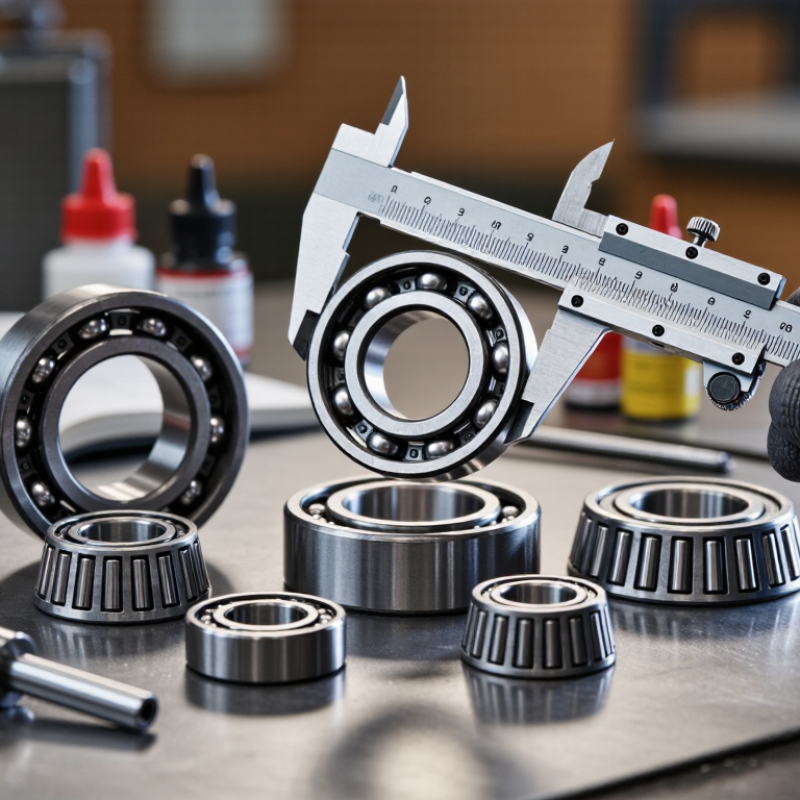
How to Choose the Right Needle Bearing?

Define the Application: Radial Load, Speed, Space, and Operating Temperature

How to Choose the Right Needle Bearing?

Define the Application: Radial Load, Speed, Space, and Operating Temperature

Choosing a needle bearing starts with the application, not just the available catalog size. Identify the radial load, load direction, and duty cycle. A conveyor roller may face steady loading, while a cam mechanism can create sharp impact forces. Record both the normal and peak loads. Small overloads can cause early brinelling. Keep measured data whenever possible.

Speed changes the bearing’s requirements. A compact bearing may fit the housing but still generate excessive heat at high rotational speed. Check the calculated speed rating, lubrication method, and cage design. Tight installation space also matters. Measure the shaft diameter, housing bore, shoulder width, and available radial clearance. Even a small misalignment can produce uneven contact across the needles.

Operating temperature deserves careful attention. Heat can reduce lubricant life, alter internal clearance, and weaken seals. Compare the actual temperature range with the bearing material and lubricant limits. Consider startup conditions, not only steady operation. In practice, I have seen suitable-looking bearings fail because the housing expanded more than expected. Engineering calculations help, but they are not perfect. Verify assumptions through alignment checks, temperature monitoring, and a controlled test run. Always confirm load, speed, clearance, and lubrication data against current technical documentation before final selection.

Choose Bearing Type: Caged, Full-Complement, Drawn-Cup, or Thrust Needle

How to Choose the Right Needle Bearing?

Choosing the bearing type starts with load, speed, space, and lubrication. A caged needle bearing separates rollers with a cage, reducing friction and roller contact. It suits higher speeds and continuous rotation. However, its lower roller count can reduce radial capacity. In practice, check speed limits before chasing maximum load ratings. ISO 281:2007 defines L10 life as the point where 90% of identical bearings are expected to survive. That figure is useful, but real contamination and misalignment can shorten life sharply.

A full-complement bearing uses more rollers and offers greater load capacity within the same diameter. It fits slow, heavily loaded mechanisms, especially where space is limited. More rollers also mean more sliding contact. Heat may rise. Drawn-cup bearings use a thin outer shell and usually provide economical, compact support. They work well in housings with limited machining, but housing hardness and bore accuracy remain critical. A poor press fit can distort the cup. I have seen this overlooked.

Thrust needle bearings handle axial loads, not ordinary radial loads. Select them when force travels along the shaft, such as in a screw mechanism or clutch assembly. Check washer flatness, shaft hardness, and lubrication access. ISO 16281 provides methods for evaluating bearing load distribution and modified rating life. Use those methods when misalignment or uneven loading matters. One practical mistake is selecting by static capacity alone. Test temperature, noise, and starting torque under real duty cycles. The catalog value may look perfect. Field conditions rarely are.

Size the Bearing with ISO 281 L10 Life: C/P and the 10/3 Exponent

How to Choose the Right Needle Bearing?

Needle bearing selection starts with load, speed, and available space. ISO 281:2007 defines L10 life as the rating life reached by 90% of identical bearings. For roller bearings, including needle bearings, use L10 = (C/P)10/3 million revolutions. C is the basic dynamic load rating. P is the equivalent dynamic bearing load. Keep both values in the same unit. A small error here can distort the result badly.

For example, a bearing with C = 12 kN and P = 3 kN gives about 101 million revolutions. At 600 rpm, that equals roughly 2,800 operating hours. This is not a guarantee. It is a statistical reference.

ISO 281:2007 also notes that lubrication, contamination, installation, and material quality can reduce practical life. In field inspections, poor alignment often appears before theoretical fatigue. I have seen clean calculations fail in dirty housings. That detail deserves more attention.

Tips: Use the real duty cycle, not the catalog peak load. Check radial clearance after assembly. Confirm shaft hardness and housing support. ISO 76:2006 provides static load guidance, which matters during shock loading or standstill. Recheck P when speed changes. A 10% load increase can reduce calculated life significantly because of the 10/3 exponent. Do not treat L10 as a promise. It is a useful estimate, but real machines remain imperfect.

Verify Shaft and Housing Fits, Raceway Hardness, and ISO 492 Accuracy

How to Choose the Right Needle Bearing?

Choosing a needle bearing starts with the shaft and housing, not the catalog number. Measure both components at several points with calibrated equipment. A shaft that looks smooth may vary by a few micrometres. That difference can change internal clearance and operating temperature.

Fit selection depends on load direction, ring rotation, and temperature. A tight shaft fit may reduce clearance after assembly. A housing fit can also distort the outer ring. Check the manufacturer’s tolerance tables and calculate the expected operating clearance. Do not rely only on nominal dimensions. That shortcut often creates avoidable noise.

Raceway hardness deserves equal attention. A soft shaft or housing raceway may develop dents under repeated needle contact. Hardened, ground raceways usually provide better support, but hardness alone is not enough. Check surface finish, roundness, and cleanliness. Even a small burr can damage the needles during installation. I have seen careful designs fail because the housing was measured before coating, not after it.

ISO 492 accuracy classes help verify dimensional and running accuracy. Confirm the required tolerance class on the drawing, then inspect bore, outside diameter, width, and runout. Use traceable gauges when the application carries high loads or speed. A final inspection may feel excessive. It is cheaper than correcting a bearing seat after production.

How to Choose the Right Needle Bearing? - Verify Shaft and Housing Fits, Raceway Hardness, and ISO 492 Accuracy

Selection dimension Typical engineering guidance Recommended verification Why it matters
Load type Needle bearings are suited to high radial loads and limited radial space. They are generally not intended to carry substantial axial load unless an appropriate thrust arrangement is added. Calculate radial load, speed, duty cycle, shock, and any axial load separately. Incorrect load direction or unaccounted shock can cause premature fatigue, skewing, or cage damage.
Shaft fit for a drawn-cup bearing The shaft normally acts as the inner raceway. Use the bearing manufacturer’s recommended shaft diameter tolerance; a precision ground shaft is commonly required for accurate running clearance. Measure shaft diameter, roundness, cylindricity, surface roughness, and runout over the complete raceway. An undersize shaft increases clearance and reduces load capacity; an oversize shaft can create excessive preload and heat.
Shaft fit for a machined outer-ring bearing Select the shaft fit according to the load direction, ring rotation, temperature, and required internal clearance. A rotating load on the inner ring generally requires a tighter fit than a stationary load. Confirm the fit against the applicable tolerance system and check the resulting operating clearance after assembly. Fit interference changes internal clearance and can affect fatigue life, friction, and temperature.
Housing fit The housing bore should provide secure support without distorting the outer ring. Press-fit requirements depend on ring design, load direction, housing material, temperature, and wall thickness. Inspect bore diameter, roundness, cylindricity, shoulder squareness, and housing distortion after installation. A loose fit can allow creep; excessive interference can reduce internal clearance or deform the bearing cup.
Raceway hardness For a hardened shaft or housing raceway, a commonly used target is approximately 58–64 HRC, subject to the bearing design, load, speed, and heat-treatment specification. Use a calibrated hardness test and verify hardness below the finished surface when case hardening is used. Insufficient hardness increases wear and brinelling risk; excessive or poorly supported hardness can increase brittleness and cracking risk.
Raceway case depth For case-hardened raceways, the hardened layer must be deep enough to support the maximum contact stress. The required depth depends on needle diameter, load, and design life; it should not be selected by hardness alone. Check the heat-treatment certificate or perform a hardness-depth profile on a representative sample. A shallow case may meet a surface hardness value while still allowing subsurface deformation or early fatigue.
Raceway surface finish Use a smooth, ground raceway suitable for rolling contact. The final roughness limit should follow the bearing specification and lubrication method rather than a single universal value. Measure roughness, waviness, lead, grinding marks, and surface damage in the rolling direction. Poor finish increases friction, heat, lubricant degradation, and surface-initiated fatigue.
ISO 492 accuracy class Use the normal accuracy class for most general machinery. Higher classes such as P6, P5, P4, and P2 provide progressively tighter dimensional and running-accuracy limits where required. Review the bearing drawing and inspection report against ISO 492 limits for bore, outside diameter, width, radial runout, and axial runout. Higher accuracy does not automatically increase load capacity; it is mainly used to control precision, vibration, and repeatability.
Operating clearance Set clearance for the actual fit, temperature difference, speed, lubrication, and shaft or housing material. Do not assume the nominal clearance remains unchanged after assembly. Check the assembled running clearance or starting torque at the intended operating temperature. Too little clearance causes heat and seizure; too much clearance increases vibration, noise, and load concentration.
Shaft and housing alignment Keep the shaft and housing axes aligned. Needle bearings have limited ability to accommodate angular misalignment unless specifically designed for it. Measure coaxiality, shoulder squareness, shaft deflection, and mounting-face alignment. Misalignment produces edge loading, uneven roller contact, cage wear, and reduced service life.
Lubrication and sealing Choose grease or oil according to speed, temperature, load, contamination, and relubrication access. Provide sealing or shielding where dirt or moisture is present. Confirm lubricant viscosity, compatibility, fill quantity, sealing arrangement, and contamination-control plan. Inadequate lubrication or contamination can cause rapid wear even when fits and accuracy are correct.
Installation method Apply mounting force only to the ring being fitted. Keep rollers, raceways, and seals clean; avoid impact loading and do not transmit press-in force through the rolling elements. Inspect for cup distortion, dents, seal damage, abnormal starting torque, and correct axial seating. Improper installation can create hidden raceway damage and shorten life before the bearing enters service.
Selection note: Final shaft and housing tolerances, operating clearance, raceway hardness, case depth, and ISO 492 accuracy class should be confirmed against the selected bearing design, load calculation, temperature range, and applicable technical drawing.

Confirm Lubrication, Sealing, Static Safety, and Manufacturer Load Ratings

Choosing the right needle bearing begins with its working environment, not only its bore and outside diameter. Confirm the required lubricant, operating temperature, speed, and relubrication interval. A thin oil may suit high-speed movement, while a suitable grease can protect slower, heavily loaded parts. Too much grease can raise heat.

Keep it practical.

Sealing deserves equal attention. A bearing exposed to dust, water spray, or metal particles needs protection that matches the contamination risk. Check the shaft finish and seal contact area carefully. A damaged seal can admit fine grit long before failure becomes visible. In clean housings, open designs may reduce friction, but they demand better maintenance discipline. Do not treat a seal as a permanent substitute for correct alignment.

Static safety requires more than checking the catalog load number. Calculate the highest stationary or shock load, then compare it with the manufacturer’s basic static load rating. Include weight, impact, vibration, and uneven load distribution. A generous safety factor is sensible when the load data is uncertain. Manufacturer ratings also depend on proper shaft hardness, housing support, lubrication, and installation accuracy. A bearing may carry the calculated load yet fail under edge loading from misalignment. During inspection, look for brinelling, polished raceways, heat marks, and looseness. These signs often reveal assumptions that were wrong. Recheck the selection after testing, because real operating conditions can expose weaknesses that drawings miss.

FAQS

What information should I collect before choosing a needle bearing?

Record radial load, peak load, speed, shaft diameter, housing bore, clearance, and operating temperature. Measure real conditions. Catalog dimensions alone can mislead.

How does load affect needle bearing selection?

Compare normal and peak loads, not only the average load. Cam mechanisms may create sharp impacts. Small overloads can cause early brinelling.

How is bearing life estimated?

Use L10 = (C/P)10/3 million revolutions. C is the dynamic load rating, and P is the equivalent load. For example, C = 12 kN and P = 3 kN gives about 101 million revolutions. This remains a statistical estimate, not a promise.

Does higher speed always require a larger bearing?

No. A compact bearing may fit physically but generate excessive heat at high speed. Check the speed rating, cage design, lubrication method, and heat behavior. The calculation may still miss real operating conditions.

Why are shaft and housing measurements important?

Measure shaft diameter, housing bore, shoulder width, and radial clearance. Small misalignment can create uneven needle contact. Check clearance again after assembly.

How does temperature influence bearing performance?

Heat can shorten lubricant life, change internal clearance, and weaken seals. Check startup temperature, not only steady temperature. Housing expansion can create unexpected failure.

What lubrication and sealing choices should I consider?

Thin oil may suit high-speed movement. Suitable grease may protect slower, heavily loaded parts. Too much grease can increase heat. Match seals to dust, water spray, and metal particles.

How should static and shock loads be checked?

Compare the highest stationary or shock load with the basic static load rating. Include impact, vibration, weight, and uneven loading. Use extra safety margin when data is uncertain. Hard truth: catalog ratings cannot correct poor support or alignment.

How can I confirm that the selected bearing is suitable?

Check shaft hardness, housing support, alignment, lubrication, and installation accuracy. Run a controlled test. Monitor temperature and listen for unusual noise. Inspect for brinelling, polished raceways, heat marks, or looseness. The selection may still need revision.

Conclusion

Choosing the right Needle Bearing begins with clearly defining the application. Evaluate the required radial or axial load, operating speed, available installation space, and expected temperature range. These factors help determine whether a caged, full-complement, drawn-cup, or thrust needle bearing is most suitable. The bearing’s dimensions should then be selected using the ISO 281 L10 life calculation, applying the appropriate C/P relationship and the 10/3 life exponent to estimate durability under dynamic loading.

Before final selection, verify that the shaft and housing fits are suitable and that the raceways provide adequate hardness and surface quality. ISO 492 accuracy requirements should also be considered when precision and smooth operation are important. Finally, confirm lubrication requirements, sealing arrangements, static safety, and the manufacturer’s published load ratings. A complete review of these factors helps ensure reliable performance, reduced wear, and a bearing solution that matches the application’s operating conditions.


Ethan

Ethan

Ethan is a seasoned marketing professional with a deep expertise in our company's innovative product line. With a passion for sharing knowledge and insights, he takes the lead in regularly updating our corporate blog, where he explores industry trends, product features, and effective marketing......