Explore verified, high-precision FANUC servo systems, Renishaw measurement probes, and compatible multi-brand automation spares ready for immediate international dispatch.
Analysis of market share, supply chain vulnerabilities, procurement strategies, and the technical necessity of maintaining low TCO in automated machining centers.
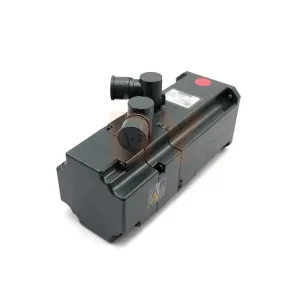
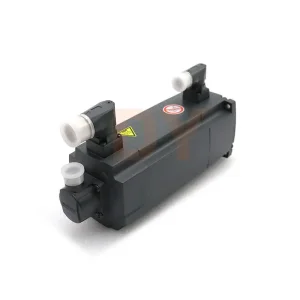
FANUC Corporation commands over 50% of the global CNC market share, making its Permanent Magnet Synchronous Motors (PMSM) and AC Servo drives the standard backbone of modern industrial automation. From automotive stamping plants in North America to high-precision die-and-mold facilities in East Asia, FANUC αi and βi series motors power critical machining, robotic arm articulation, and spindle orientation.
However, maintaining these systems often poses procurement bottlenecks. Equipment operators frequently face inflated lead times and rigid pricing structures through traditional regional distribution. The demand for discount Fanuc motor products has evolved from simple cost-cutting into a strategic imperative for continuous operation, enabling plant managers to secure genuine OEM hardware, surplus stock, and certified replacement modules without compromising operational integrity.
Unplanned downtime in automotive or aerospace production lines costs an estimated $22,000 per minute. When an axis servo motor encounters an isolation fault, encoder communication error (e.g., Alarm 350/351), or bearing seizure, immediate access to reliable replacement motors and servo amplifier modules is non-negotiable.
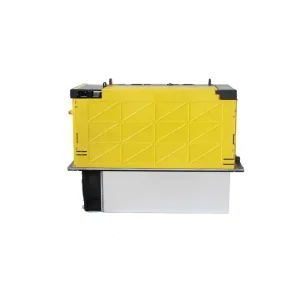
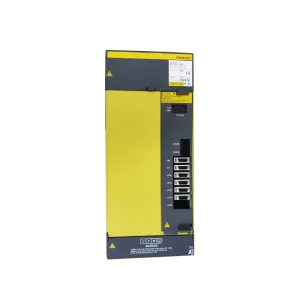
By leveraging strategic wholesale sourcing networks, industrial enterprises can build safety stocks of high-demand items—such as the FANUC A06B-6200 series amplifiers or A06B-6141 ALPHA i Spindle Modules—at 30% to 55% below list prices. This proactive inventory model guarantees rapid mean-time-to-repair (MTTR) metrics while curbing long-term operational expenditures.
Understanding the structural, electrical, and thermal parameters that govern FANUC motion performance to ensure flawless component selection and retrofit integration.
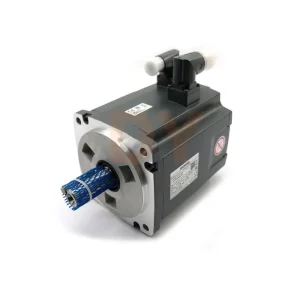
FANUC αi series servo motors utilize high-coercivity Neodymium-Iron-Boron (NdFeB) permanent magnets structured in an Interior Permanent Magnet (IPM) configuration. This delivers ultra-high torque density, rapid acceleration profiles, and minimized rotor inertia during dynamic contouring operations.
Equipped with proprietary serial Pulsecoders (up to 32 million pulses per revolution), FANUC motors provide nanometer-level positioning feedback directly to the CNC mainboard via high-speed optical fiber FSSB (FANUC Serial Servo Bus) interfaces.
Industrial environments demand robust ingress protection. FANUC motors feature oil-seal collars, liquid-tight junction boxes, and dual-layer stator winding insulation rated for continuous operation under heavy cutting fluid, oil mist, and metallic debris exposure.
| Series & Model Family | Target Machine Application | Feedback Mechanism | Peak Torque / Power | Protection Rating | Typical Driver Pairings |
|---|---|---|---|---|---|
| FANUC αiS Series | High-End 5-Axis Machining, Aerospace Milling | αiAR32K / αiA1000K Absolute Pulsecoder | 2 Nm to 3000 Nm | IP65 / IP67 with Oil Seal | A06B-6200 / A06B-6240 Servo Amplifiers |
| FANUC βiS Series | Standard Lathes, Entry-Level VMCs, Aux Axes | βiAR128K Serial Pulsecoder | 0.5 Nm to 40 Nm | IP65 Standard | A06B-6160 / A06B-6130 Servo Drivers |
| FANUC αiI Spindle | High-Speed Milling Spindles, Turning Centers | High-Resolution Magnetic / Optical Sensor | 3.7 kW to 100 kW Continuous | IP54 / IP65 Fluid Sealed | A06B-6141 / A06B-6151 Spindle Modules |
| Siemens SIMOTICS S-1FL6 | Cost-Effective Motion, Feed Drives | TTL / Absolute 20-bit Encoder | 0.32 Nm to 33.4 Nm | IP65 Construction | SINAMICS V90 Drive Controllers |
How industrial buyers can safely navigate wholesale channels, verify genuine OEM origin, and maximize budget allocation without sacrificing machine accuracy.
When search queries focus on "Discount Motor Fanuc Products & Supplier", procurement intent usually spans three core requirements: immediate emergency stock availability, 100% authentic OEM components, and substantial unit cost savings over list prices. Evaluating discount channels requires rigorous verification protocols to ensure secondary-market or wholesale units perform identical to direct factory shipments.
Every genuine FANUC motor features a laser-etched stainless steel nameplate displaying the exact A06B-XXXX-BXXX part code, serial numbers, rated voltage, phase current, and insulation class. Reputable suppliers provide high-resolution photo documentation of nameplates prior to logistics release.
Before shipping, wholesale components undergo Megger insulation testing (>100MΩ at 1000V DC), winding resistance balance checks, and back-EMF waveform analysis to confirm that internal stators have experienced zero thermal degradation.
Cross-border suppliers operating out of major industrial hubs like Ningbo leverage streamlined export documentation, customs HS-code optimization (8501.52.00), and air express partnerships (DHL/FedEx) to deliver critical motors within 72 hours worldwide.
Tailored motion control implementations spanning heavy industry, electronics assembly, automotive lines, and sub-micron measuring stations.
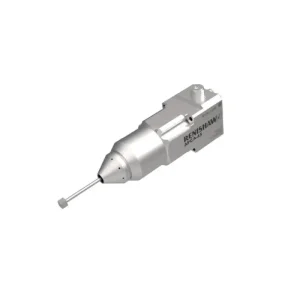
In high-throughput cylinder block transfer lines, FANUC αiF series servo motors drive rigid tapping and high-feed milling units. Paired with Renishaw TS27R contact tool setters, the system guarantees zero-defect tool length offset adjustments during tool changes.
Small footprint VMCs utilizing Siemens 1FK6 / 1FL6 servo motors or FANUC βiS units execute surface finish operations on aluminum phone frames. High-frequency speed feedback eliminates surface chatter, maintaining optical surface roughness levels.
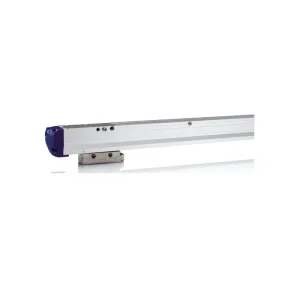
Large gantry machine tools combine high-torque FANUC αi Spindle Modules with direct-drive Fagor incremental linear scales to neutralize thermal expansion errors across 15-meter travel distances on titanium wing spars.
Where motion control is heading over the next decade—from IoT-enabled vibration telemetry to zero-loss regenerative power systems.
Next-generation FANUC motor platforms are integrating micro-MEMS vibration sensors and embedded temperature telemetry directly into the stator assembly. By processing real-time current signature analysis (MCSA) through AI algorithms at the CNC edge controller (such as FANUC 31i-B or Siemens SINUMERIK 828D), the machine predicts bearing race pitting or insulation breakdown weeks before a physical failure occurs.
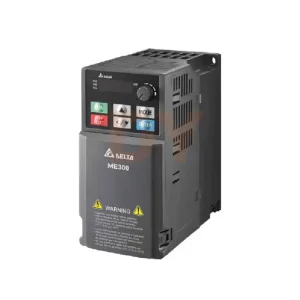
With global manufacturing focusing on carbon footprint reduction, high-efficiency servo drivers like the FANUC A06B-6200 series and Delta VFD ME300 compact drives utilize Silicon Carbide (SiC) MOSFET switches. These power modules feed kinetic deceleration energy back into the shop-floor AC grid with over 95% electrical efficiency, drastically reducing factory HVAC heat loads.
Standardized engineering troubleshooting steps for maintenance teams experiencing machine downtime.
| CNC Alarm Code | Root Cause Description | Diagnostic Action Protocol | Recommended Replacement Hardware |
|---|---|---|---|
| Alarm 401 (VRDY OFF) | Servo Amplifier ready signal requested but not returned by driver. | Check 24V DC control power, MCC magnetic contactor line, and emergency stop circuit continuity. | FANUC Servo Amplifier Module (A06B-6200-H037) |
| Alarm 414 (SERVO ALARM: X/Y/Z AXIS) | Digital servo software detected abnormal current, IPM fault, or overload. | Inspect motor power cable for ground shorts; measure phase resistance (U-V, V-W, W-U). | FANUC αiS / βiS Servo Motor or Power Cable |
| Alarm 350 / 351 (PULSECODER COMMUNICATION) | Serial feedback pulse transmission lost between motor Pulsecoder and CNC. | Check feedback cable shielding, connector pin tightness, and encoder optic status. | FANUC Replacement Pulsecoder (αiA1000K / βiAR128K) |
| Alarm SP9012 (SPINDLE OVERCURRENT) | Excessive current flow detected inside the main spindle drive inverter output. | Decouple motor load; execute insulation resistance test on spindle windings. | FANUC ALPHA i Spindle Drive (A06B-6141-H037#H580) |
Direct answers to critical procurement, verification, and installation questions encountered by maintenance supervisors and purchasing engineers.
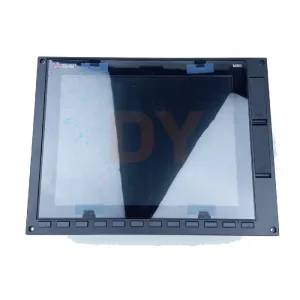
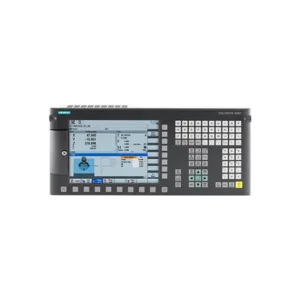
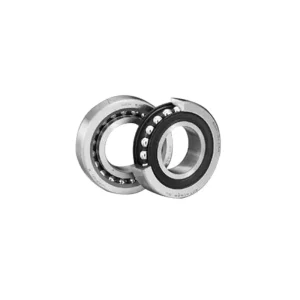
Browse further inventory including Mitsubishi controllers, Siemens SINUMERIK units, Delta compact drives, and high-precision NSK spindle bearings.