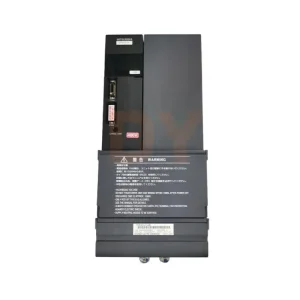
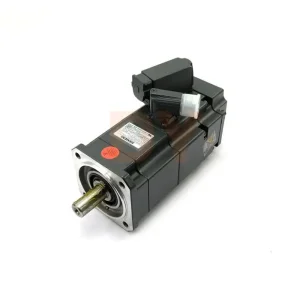
Direct from our Ningbo logistics hub to Seattle machine shops: verified original OEM power supply modules, regenerative converters, and high-capacity servo units in stock with 12-month warranty.
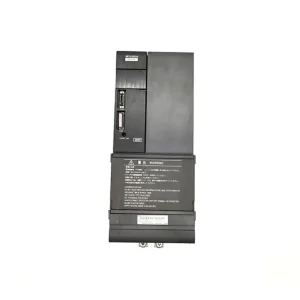
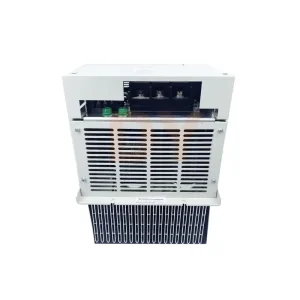
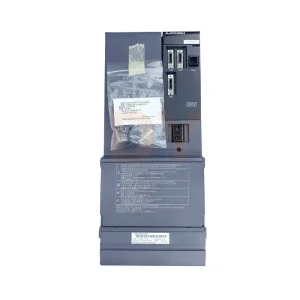
From the aerospace manufacturing corridors of Everett and Renton to the technological innovation hubs of Redmond and Kent Valley, Seattle represents one of North America’s most demanding industrial environments.
The Greater Seattle and Puget Sound industrial corridor operates at the absolute peak of modern precision engineering. As home to premier aerospace original equipment manufacturers (OEMs), Tier-1 commercial aviation suppliers, defense contractors, and specialized marine shipyards, the local manufacturing landscape leaves zero margin for equipment downtime. Machine tools operating across Snohomish, King, and Pierce counties regularly execute 5-axis simultaneous milling of titanium alloys, Inconel aircraft structures, carbon-fiber composites, and heavy marine propulsion hardware.
At the center of these multi-million-dollar CNC machining centers (including Mazak, Okuma, Mori Seiki, and customized Gantry mills) is the Mitsubishi Electric CNC Drive & Power Architecture. Power units such as the Mitsubishi MDS-D-CV-300, MDS-B-CVE-450, and MDS-D2-CV-300 act as the central energy heartbeat—converting three-phase AC input into stabilized DC bus voltage for servo drive amplifiers and high-kW spindle motors.
When a power supply module experiences dynamic thermal stress, component aging, or electrical grid fluctuations in Puget Sound facilities, immediate access to reliable replacement hardware is paramount to prevent catastrophic production delays.
Everett and Renton machining centers require unbroken peak current delivery. Mitsubishi MDS power units maintain sub-millivolt DC bus stability during aggressive heavy-roughing tool paths.
Shipyards along Elliott Bay and Bremerton depend on high-torque Mitsubishi MDS-B power converters for large-diameter shaft turning and heavy valve flange facing.
Understanding the electrical conversion mechanisms, regenerative power dynamics, thermal dissipation algorithms, and safety interlocks that govern Mitsubishi CNC power modules.
Mitsubishi MDS power units convert 200–240V AC 3-phase commercial utility power into a rigid 270–311V DC intermediate bus. Advanced bridge rectification and filtering capacitors shield servo amplifiers against line sag and phase unbalance.
During rapid spindle deceleration or z-axis tool retracts, severe kinetic energy feeds back into the system. Units like the MDS-D-CV-300 invert this surge back into the shop’s AC grid, drastically lowering heat accumulation and power bills.
Integrating high-speed IGBT transistors, internal thermistors, over-current cutoff circuits, and optical isolation barriers, Mitsubishi power units protect downstream drive hardware against short-circuits and thermal runaway.
Engineers and procurement managers can cross-reference power capacity, regeneration type, and mechanical cooling requirements below.
| Model Series | Continuous Rating | Regeneration Method | Nominal DC Bus | Cooling Architecture | Target Application in Seattle Shops |
|---|---|---|---|---|---|
| MDS-B-CVE-450 | 45 kW Peak | Power / Resistor Hybrid | 270V – 311V DC | Forced Air (Internal Fan) | Heavy Duty Turning & Marine Shaft Lathes |
| MDS-D-CV-300 | 30 kW Continuous | AC Power Regeneration | 270V – 311V DC | Extruded Aluminum Heat Sink | 5-Axis Aerospace High-Speed Machining Centers |
| MDS-D2-CV-300 | 30 kW Continuous | High-Efficiency AC Reg. | 300V DC (Stabilized) | Compact Sealed Heat Sink | Ultra-Precision Optical & Semiconductor Tooling |
| MDS-C1-CV-260 | 26 kW Continuous | AC Power Regeneration | 270V DC | External Duct Cooling | Legacy CNC Mill Retrofits & Fleet Standardization |
Providing Seattle maintenance teams with verifiable supply chain data, original OEM cross-referencing, and direct inventory reserves to bypass extended manufacturer backorders.
Across global industrial sectors, the demand for original Mitsubishi CNC automation components remains unprecedented. However, North American machine tool operators frequently face severe supply chain bottlenecks when sourcing legacy or specialized Mitsubishi MDS power units. Factory lead times through domestic channels for series like the MDS-B or early MDS-D modules can exceed 16 to 24 weeks due to phased-out production lines and global reallocation.
For a high-tier aerospace machine shop in Snohomish County executing scheduled deliveries, a machine sidelined for several months translates into hundreds of thousands of dollars in liquidated damages, idle labor, and missed contract milestones.
The Information Gain Advantage: As an authorized global stockist and specialized CNC spare parts exporter based in Ningbo, Ningbo DingYan Machinery bridges this critical void. By holding extensive physical reserves of brand-new, factory-sealed Mitsubishi power supplies and drive units, we provide instant dispatch options for Seattle maintenance personnel.
Leveraging Asia’s premier industrial manufacturing and logistics epicenter to deliver unmatched component availability and wholesale price advantages to Washington State buyers.
Situated in Ningbo, Zhejiang—a cornerstone of global machinery and industrial electronics export—our facilities maintain immediate stock of both active and discontinued Mitsubishi CNC power supplies, servo drives, and encoders.
Every Mitsubishi power supply unit undergoes full electrical static testing, insulation resistance validation, thermal loop checks, and optical encoder feedback checks prior to vacuum packaging and export bundling.
By bypassing multiple layers of regional broker markup in North America, we pass direct factory-tier pricing down to Seattle machine shops, system integrators, and independent machine repair technicians.
Ensuring seamlessly compliant installation of imported Mitsubishi power components within North American industrial electrical grids and machine safety frameworks.
Integrating imported CNC replacement power supplies into existing machine tools across Washington State requires strict adherence to North American electrical standards. Machinery installed in Seattle facilities must conform to local electrical safety ordinances and plant-level engineering codes.
Our supply catalog of Mitsubishi Power Supply Units (including MDS-D-CV, MDS-B-CVE, and MDS-D2-CV series) is fully compliant with international safety and electromagnetic compatibility benchmarks:
How next-generation semiconductor materials, digital twin analytics, and green manufacturing trends are transforming industrial power units in modern machine tools.
Next-generation Mitsubishi power conversion modules are transitioning from traditional Silicon IGBTs to Silicon Carbide (SiC) MOSFETs. SiC reduces internal switching energy losses by up to 55%, allowing smaller heat sinks and higher continuous output densities for compact machining cells.
Emerging power supplies feature real-time telemetry output tracking bus capacitor electrolytic degradation, cooling fan RPM degradation, and thermal cycling stress. Seattle plant managers can predict power unit failure weeks before a total shop outage occurs.
With clean hydroelectric power powering Puget Sound industrial grids, energy-regenerative Mitsubishi power units (MDS-D-CV series) assist manufacturers in achieving net-zero carbon initiatives and qualifying for local utility energy rebate programs.
Expert insights compiled by our CNC technical specialists regarding compatibility, alarm codes, lead times, and installation procedures for Mitsubishi power units.
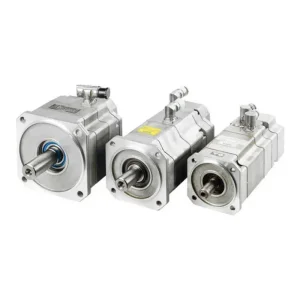
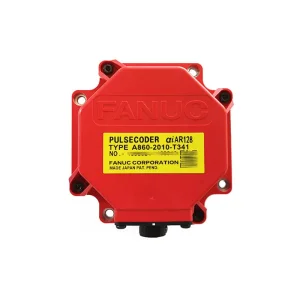
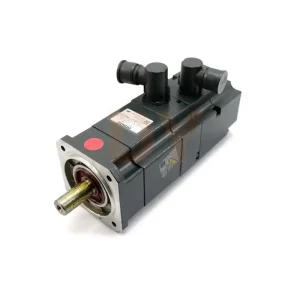
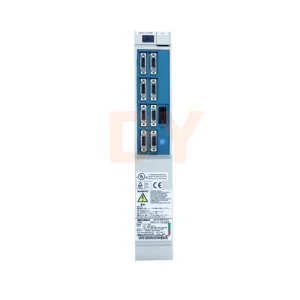
Explore our broader line of factory-fresh Siemens, Fanuc, and Mitsubishi spare parts—all held to the same rigid E-E-A-T quality verification and express dispatch protocols.
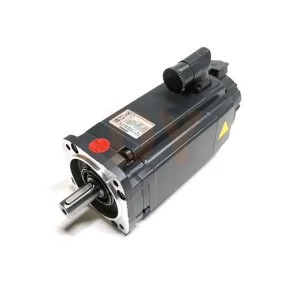
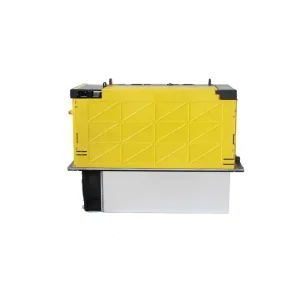
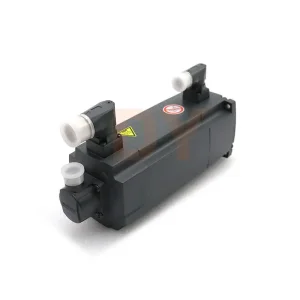
Whether you require an immediate replacement Mitsubishi MDS-D-CV power supply, a legacy MDS-B power module, or technical cross-referencing for an emergency alarm code, our senior engineers are ready to assist.