Enterprise Motion Control & Automation Whitepaper

Discount CNC Router Controller Service & Suppliers

Global Industrial Sourcing Guide: Architectural Motion Control, Multi-Axis Synchronization, Retrofitting Engineering & Certified Component Supply Chains.

Macro Industry Landscape & Global Procurement Trends for CNC Controllers

The global computer numerical control (CNC) machinery ecosystem is experiencing a fundamental paradigm shift driven by Industrial Internet of Things (IIoT) integration, high-speed micro-machining demands, and advanced material processing requirements. As manufacturing enterprises scale operations across aerospace, automotive, precision woodworking, and heavy mold-making industries, the procurement of CNC router controller systems has evolved from basic component replacing to strategic supply chain management.

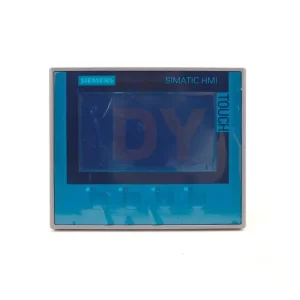
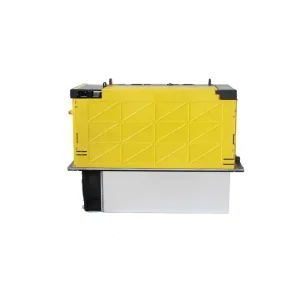
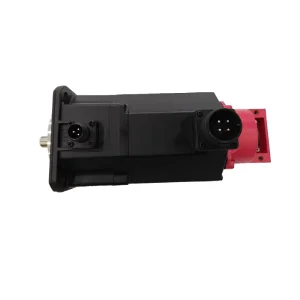
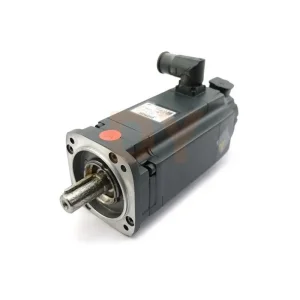
Modern manufacturing facilities operate on tight margins where unscheduled downtime can incur operational losses exceeding thousands of dollars per hour. Consequently, international buyers—ranging from original equipment manufacturers (OEMs) to system integrators and retrofit engineers—demand access to cost-effective, high-reliability motion control hardware. Sourcing discounted yet OEM-grade CNC controllers, servo drives, feedback encoders, and human-machine interfaces (HMIs) has become a primary operational metric for maintaining competitive advantage.

4.8kHz
Velocity Loop Bandwidth
100Mbit/s
Real-Time Industrial EtherCAT
< 0.1 µm
Nano-Interpolation Precision
MTBF > 50k
Controller Hardware Hours

Architectural Breakdown: Motion Control Computing & Bus Hardware

A high-performance CNC router controller is fundamentally a real-time heterogeneous computing network. The operational efficacy of a modern router depends on how rapidly the central processing unit calculates complex trajectory vectors, handles micro-step mathematical transforms, and executes closed-loop PID control signals to the digital servo drives.

1. Embedded Control Architectures: DSP vs. FPGA vs. Multi-Core ARM

Legacy controllers relied on single-core microcontrollers that executed sequential G-code parsing with significant processing latency. Modern enterprise-grade CNC controllers utilize a dual-architecture paradigm:

  • Field Programmable Gate Arrays (FPGAs): Dedicated to hardware-level pulse-generation, ultra-fast high-speed counter decoding, and high-frequency PWM signal output. FPGAs process real-time axis position loops with deterministic microsecond precision.
  • Digital Signal Processors (DSPs) & Multi-Core ARM Processors: Dedicated to executing complex 3D surface NURBS (Non-Uniform Rational B-Splines) interpolation algorithms, look-ahead trajectory buffering (up to 2000 blocks), kinematics transformations (rtcp - Rotation Tool Center Point for 5-axis), and Ethernet communication stacks.
Engineering Insight: Look-Ahead Trajectory Optimization
Advanced CNC controllers leverage dynamic velocity profiling algorithms. By analyzing hundreds of upcoming motion blocks in real-time, the controller calculates optimal acceleration and deceleration curves (Jerk-limited S-curve profiling), preventing mechanical shock on large-gantry wooden and composite routers while maintaining maximum cutting feedrates.

2. Real-Time Industrial Fieldbus Protocols

The shift from traditional analog ±10V voltage control interface to digital fieldbus architectures has revolutionized high-speed routing precision. Key industrial communications interfaces include:

Fieldbus Protocol Cycle Time (Synchronization) Jitter Deviation Primary Application Domain
EtherCAT ≤ 100 μs < 1 μs Multi-axis high-speed CNC routers, robotic machining arms
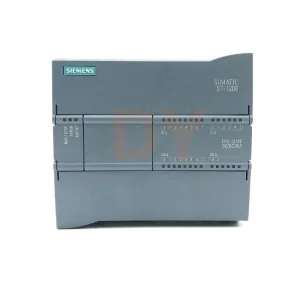
PROFINET IRT ≤ 250 μs < 1 μs Siemens SINUMERIK integrated automated manufacturing cells
Fanuc Serial Servo Bus (FSSB) Proprietary High-Speed Sub-microsecond Heavy-duty metal cutting & high-precision FANUC CNC routers
Mechatrolink-III ≤ 125 μs < 1 μs Yaskawa & Mitsubishi driven multi-axis servo systems

Strategic Sourcing: Discount CNC Controllers vs. Total Cost of Ownership (TCO)

When procurement directors search for discount CNC router controller service & suppliers, balancing upfront capital expenditure (CAPEX) with long-term operational expenditure (OPEX) is essential. A low-cost controller that lacks adequate electrical noise isolation or robust firmware can lead to catastrophic tool crashes, material scrap, and extensive downtime.

Enterprise buyers must evaluate certified secondary market suppliers, authorized distributor surplus, and OEM refurbishment channels to capture cost savings of 30% to 60% without compromising on hardware integrity.

Quality & Authenticity Audit

Sourcing genuine components from established global brands like Siemens, Fanuc, Mitsubishi, Delta, and Renishaw guarantees adherence to strict Mean Time Between Failures (MTBF) rates and electromagnetic compatibility (EMC) standards.

Legacy Retrofit Support

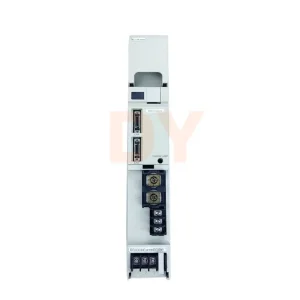
Maintaining older CNC machinery often requires obsolete hardware. Reliable global suppliers bridge the gap by providing tested stock of discontinued PLCs, servo amplifiers, and legacy encoder modules.

Express Rapid Logistics

Component failure requires immediate resolution. Specialized suppliers maintain comprehensive inventory in regional logistics hubs, enabling same-day packaging and priority air transport.

Industry-Specific Solutions & Motion Control Engineering

CNC router controllers operate across widely varying environments. The hardware requirements for routing flexible wood composite panels differ dramatically from high-speed aluminum aerospace component machining. Below is an engineering analysis of sector-specific control solutions:

Woodworking & High-Speed Nesting

Requires high-performance G-code processing speeds, automatic tool changer (ATC) logic management (carousel or linear), and seamless integration with multi-zone vacuum suction tables.

  • Optically isolated digital I/O for dust-proof control cabinet environments.
  • Dynamic tool length measurement integration via touch sensors.
  • High-speed spindle speed variation to eliminate chatter resonance.

Aerospace Non-Ferrous Milling

Focuses on extreme surface finish, tight dimensional tolerances (±0.005mm), and complex multi-axis simultaneous path execution for aluminum alloys and carbon composites.

  • Full 5-axis RTCP (Rotation Tool Center Point) dynamic vector compensation.
  • High-resolution encoder feedback (24-bit absolute systems).
  • Thermal growth expansion compensation for long-run machining cycles.

Stone, Granite & Heavy Glass Crafting

Demands maximum electrical and mechanical protection against severe vibration, abrasive slurry environment, and high coolant splash conditions.

  • IP67 fully sealed operator panel and controller enclosure design.
  • High-torque low-speed spindle drive acceleration monitoring.
  • Vibration sensor feedback integration for emergency feed hold.

Technical Roadmap: AI Edge Integration & Predictive Maintenance

The future of CNC router control architecture is inextricably linked with Artificial Intelligence (AI) at the edge and Cloud Digital Twin technologies. Modern controllers are transforming from passive instruction executors into active machine diagnostic platforms.

1. Real-Time Adaptive Load & Feedrate Tuning

Next-generation controllers incorporate machine learning models that continuously monitor spindle motor current draw and axial vibration levels. If a router bit experiences unexpected material density variation, the controller dynamically adjusts the feedrate per tooth in microseconds, preventing cutter breakage and optimizing tool life.

2. Cloud Digital Twin Simulation & Verification

By transmitting high-frequency motion metrics over secure MQTT or OPC UA industrial protocols, enterprise controllers allow off-line simulation software to build accurate digital twins. Operators can verify collision risks, calculate precise cycle times, and predict tool wear before a physical cut occurs.

Quality Assurance, Engineering Compliance & Support Safeguards

Procuring industrial automation components requires absolute assurance regarding functional validity, electrical compliance, and brand authenticity. Certified suppliers implement rigorous multi-stage quality control protocols prior to component warehousing and international dispatch:

1. Oscilloscope & Full-Load Bench Testing

Servo drivers and CPU modules undergo continuous thermal run-in testing inside burn-in chambers under simulated peak dynamic loads. Signal waveforms are validated using high-bandwidth digital storage oscilloscopes.

2. Global Safety Certification Compliance

All supplied hardware strictly aligns with international industrial safety mandates, including CE conformity, UL 508C (Power Conversion Equipment), ISO 13849-1 (Functional Safety), and RoHS compliance.

3. Traceable Serial Verification & Warranty

Components are cross-referenced with original manufacturing databases to prevent counterfeit circulation. Every hardware unit is backed by comprehensive 12-month replacement warranties and dedicated technical engineering support.

Frequently Asked Technical & Procurement Questions (Q&A)

Q1: How do I select between a standalone DSP handheld controller and a PC-based CNC control system for my router?
Standalone DSP controllers (e.g., RichAuto DSP) are ideal for 3-axis basic woodworking and advertising routers due to their compact form factor, immunity to OS crashes, and ease of operation. Conversely, PC-based or industrial CNC systems (e.g., Siemens SINUMERIK, Fanuc, or Weihong) are necessary for 4-axis/5-axis complex machining, requiring high-speed look-ahead, large G-code buffering, real-time 3D path visualization, and advanced network integration.
Q2: Are discounted CNC controllers and servo drives brand new, and how is authenticity guaranteed?
Reputable global suppliers stock both brand-new factory-sealed units and certified refurbished/surplus components sourced through official distribution channels and factory excess inventories. Authenticity is verified via original manufacturer serial barcode cross-referencing, factory hologram inspection, and rigorous functional bench testing before shipment.
Q3: What critical parameters are needed when replacing a faulty CNC servo motor or driver module?
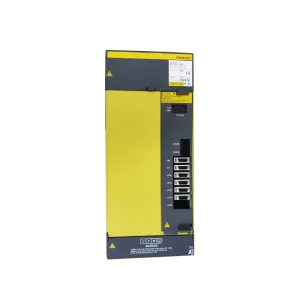
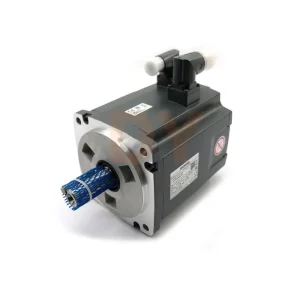
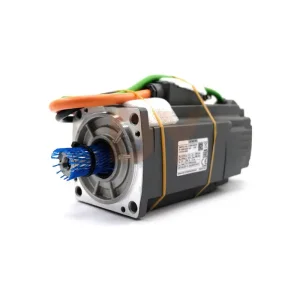
When sourcing a replacement, you must match: 1) Exact manufacturer part order number (e.g., Fanuc A06B series or Siemens 1FK7/1FL6 series); 2) Rated power output (kW), continuous torque (Nm), and max RPM; 3) Feedback encoder protocol and resolution (e.g., 20-bit absolute vs. incremental); 4) Shaft keyway dimensions, flange frame size, and electrical connector polarity.
Q4: Can I retrofit an older CNC router with modern EtherCAT-based controllers and digital drives?
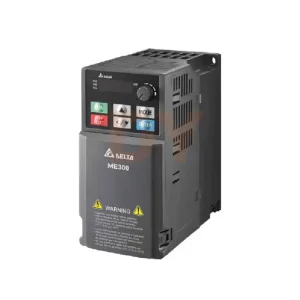
Yes. Retrofitting older mechanical CNC router frames with modern EtherCAT motion controllers and AC digital servo systems drastically improves processing speeds, position positioning accuracy, and reliability. The retrofit process involves rewiring control signals to an industrial Ethernet bus, updating limit/home sensor inputs, and configuring spindle inverter VFD parameters.
Q5: How does closed-loop stepper control compare to full AC servo control on industrial routers?
Closed-loop steppers utilize shaft encoders to prevent lost steps, offering high holding torque at low speeds at a lower price point. However, AC servo systems provide superior high-speed torque retention, significantly higher acceleration rates (often >1G), smoother dynamic motion, higher peak overload capacities (up to 300%), and advanced resonance suppression filters essential for precision industrial routing.
Q6: What causes CNC controller alarm errors related to servo lag or position deviation (e.g., 414/410 errors)?
Position deviation or servo lag alarms indicate that the actual physical position feedback from the motor encoder lags behind the command position calculated by the controller beyond set parameter tolerances. Common causes include mechanical axis binding, worn ball screws, insufficient servo drive current output, incorrect PID gain tuning, or faulty encoder feedback feedback cables.
Q7: What is the typical lead time and shipping protocol for emergency CNC component replacements?
Fast-moving spares, encoders, PLCs, and drives held in central warehouses typically dispatch within 24 to 48 hours via premium express air carriers (DHL, FedEx, UPS). Global transit times generally range between 3 to 5 business days, minimizing machine downtime.
Q8: How do optical probes and tool setters integrate with modern CNC router controllers?
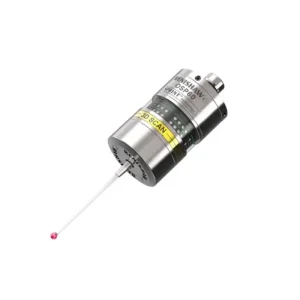
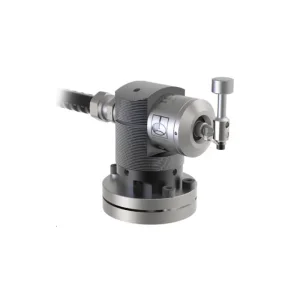
High-precision measurement probes (such as Renishaw TS27R or OSP60) connect directly to high-speed hardware interrupt inputs on the CNC controller. When the stylus triggers, the controller instantly latches current axis position values with micro-second accuracy, automating workpiece coordinate zeroing, tool offset setting, and tool break detection routines.