The global industrial motion control dynamic has undergone a fundamental architectural evolution. As computerized numerical control (CNC) machinery transitions toward hyper-automated, continuous multi-axis machining cells, the selection of permanent-magnet AC servo motors is no longer merely a component purchasing choice; it is a foundational capital investment in operational uptime and micro-meter trajectory accuracy. Within this landscape, wholesale Fanuc servo motor products represent the definitive standard for industrial reliability, high torque density, and rapid dynamic response across advanced manufacturing hubs in North America, Europe, and Asia-Pacific.
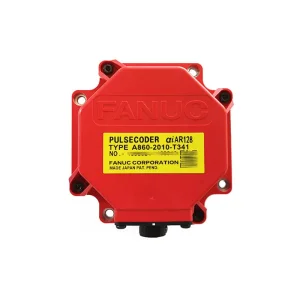
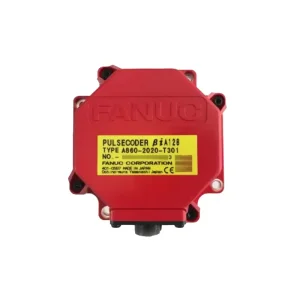
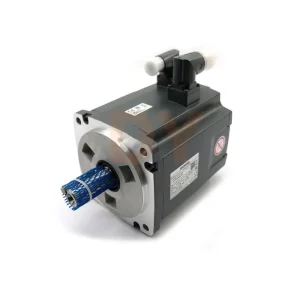
Modern CNC machine tools—spanning 5-axis vertical machining centers (VMC), high-speed gantry mills, precision CNC lathes, and automated robotic transfer lines—require drive systems capable of sustaining intense duty cycles while resisting severe environmental contamination from synthetic coolants, metallic chips, and ambient thermal fluctuations. The global market demand for premium Fanuc motor architectures, specifically the flagship Alpha i ($\alpha i$) and Beta i ($\beta i$) series, stems from their proprietary neodymium-iron-boron magnetic stator design, ultra-low cogging torque profiles, and seamlessly integrated optical encoders such as the A860-2020-T301 and A860-2010-T341 series.
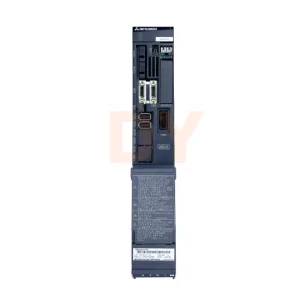
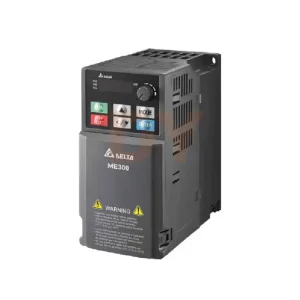
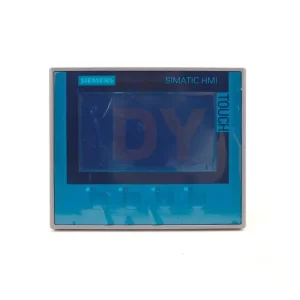
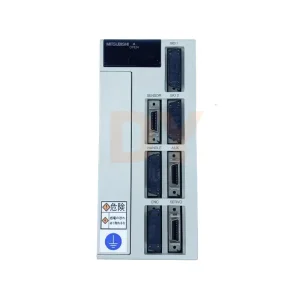
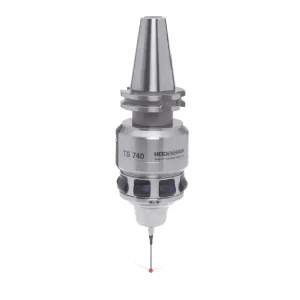
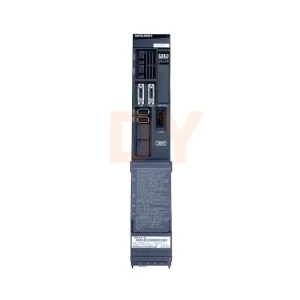
Furthermore, international manufacturing trends highlight an increasing degree of cross-platform hybrid integration. Enterprise facilities frequently operate complex machinery fleets where Fanuc CNC control units co-exist alongside Siemens SIMOTICS servo drives (e.g., 1FL6062-1AC61-2AA1), Mitsubishi motion controllers (e.g., FCA50M and MDS-D-V1-20/80 series), Heidenhain high-precision workpiece touch probes (TS740), Delta compact drives (ME300 series VFD0A8ME11ANNAA), and NSK precision spindle bearings (60/22DDUCM). Understanding the technical cross-compatibility, grounding isolation, and power matching between these sub-systems is essential for machine builders (OEMs) and field service engineering teams.
Utilizes sintered Nd-Fe-B magnetic rotors engineered for exceptional coercivity and thermal stability up to 180°C, suppressing demagnetization risks during extreme over-current acceleration phase duty cycles.
High-speed Frequency Response Vector (HRV4) drive algorithms process current loop closed feedback in under 62.5 microseconds, eliminating micro-vibrations during surface contouring.
Integrates ultra-high resolution serial encoders (up to 32,000,000 pulses/rev, such as ALPHA i-A 128 / A860-2010-T341) featuring internal optical drift compensation and absolute position memory.
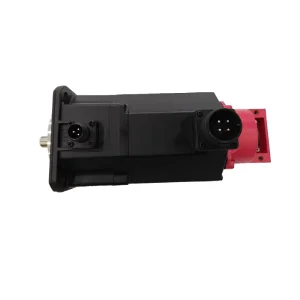
The structural longevity of a Fanuc AC servo motor rests upon its advanced stator winding technique and precision mechanical casing. Fanuc engineers employ concentrated slot winding configurations that minimize copper wire end-turns, substantially reducing internal phase resistance ($R_{ph}$) and thermal loss ($I^2R$). The rotor is dynamic-balanced to ISO 1940 Grade G1.0 standards, drastically reducing radial shaft vibration that could otherwise compromise the operational lifespan of high-precision spindle bearings or attached planetary reducers.
Crucial to position control is the serial pulse encoder system. For instance, the FANUC Alpha Servo Encoder Model A860-2020-T301 converts physical rotor angular displacement into differential RS-422 high-speed digital signals. The encoder electronics are isolated within a ruggedized die-cast housing featuring dual viton oil seals to block cutting fluids, fine dust, and ambient atmospheric condensation.
| Brand Platform | Model / Component Series | Primary Industrial Function | Interface / Communication Protocol | Enclosure & Protection Grade |
|---|---|---|---|---|
| Fanuc | A06B-0032-B175#7000 / A860-2020-T301 | Servo Drive & High-Res Pulse Feedback | FSSB (Fanuc Serial Servo Bus) / RS-422 | IP65 / IP67 Hermetic Seal |
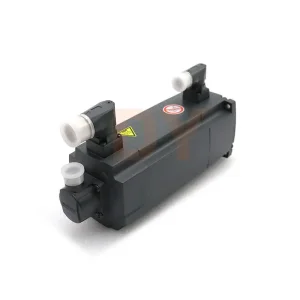
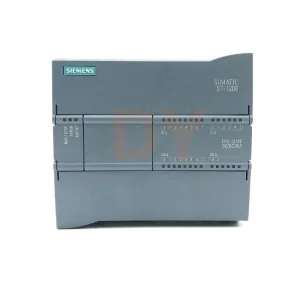
| Siemens | SIMOTICS S-1FL6 (1FL6062-1AC61-2AA1) | Synchronous AC Servo Drive Motor | DRIVE-CLiQ / Pulse-Direction 24V | IP65 Shaft Oil Seal Standard |
| Mitsubishi | MDS-D-V1-20 / MDS-D-V1-80 / FCA50M | Single-Axis Servo Drive & Control Unit | SSCNET III/H Optical Fiber Link | IP20 Control Cabinet Mount |
| Heidenhain | Workpiece Touch Probe TS740 | In-Process Inspection & Workpiece Setup | Infrared / Radio Frequency Transmission | IP68 Submersible Standard |
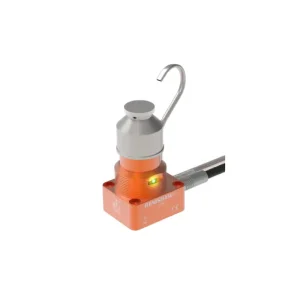
| Renishaw | Contact Tool Setter Model LTS | Automated Tool Breakage & Length Setup | Hardwired NPN/PNP Cable Output | IP68 Stainless Steel Body |
| Delta Automation | ME300 Series VFD (VFD0A8ME11ANNAA) | Compact Micro Vector Drive / Inverter | Modbus RTU / CANopen Built-in | IP20 / NEMA 1 Enclosure |
| NSK Bearings | Deep Groove Ball Bearing 60/22DDUCM | High-Speed Shaft Radial & Axial Support | Mechanical Contact Rubber Seals (DDU) | Internal C3 Clearance Specification |
In multi-axis motion planning, electrical engineers must guarantee proper ground-loop isolation when interfacing Fanuc servo amplifiers with third-party peripheral hardware. For example, installing a Renishaw Contact Tool Setter (Model LTS) or a Heidenhain Workpiece Touch Probe (TS740) into a Fanuc 0i-MF or 31i-MB control environment requires strict optocoupler signal isolation to prevent electrical noise generated by PWM switching inside high-current servo drives from corrupting delicate touch-trigger sensor pulses.
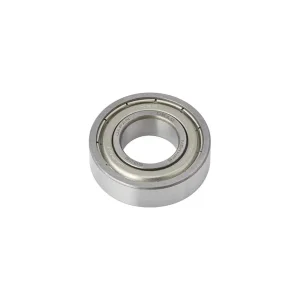
Similarly, precision mechanical alignment relies heavily on structural bearings. When replacing motor shaft bearings or ballscrew support units, using genuine NSK Single Row Deep Groove Ball Bearings (60/22DDUCM) ensures low-friction rotational operation up to 12,000 RPM, preventing thermal expansion from altering the zero-point baseline of the absolute optical encoder.
Utilizing high-torque Fanuc Alpha series servo motors on A/B tilting rotary tables. Constant torque output guarantees continuous surface finish quality during titanium alloy contouring without thermal shutdown.
Deploying heavy-duty Fanuc servo drives with regenerative braking units. Rapid acceleration/deceleration curves enable high-throughput sheet metal blank transfers with sub-millimeter positional repeatability.
Paired with high-resolution A860-2010-T341 ALPHA i-A 128 encoders, Fanuc micro-servos eliminate velocity ripple during ultra-fine cutting feed rates, preventing micro-fractures in silicon wafers.
In automated automotive machining cells operating 24/7/365, spindle failure or axis servo lockup creates an immediate bottle-neck across entire assembly operations. By standardizing on OEM-certified Wholesale Fanuc Servo Motor Products and maintaining hot-swappable replacement units in local spare parts depots, maintenance management teams can reduce Mean Time to Repair (MTTR) from days to under 45 minutes.
Every genuine Fanuc AC servo motor and amplifier module shipped through certified wholesale channels undergoes strict quality validation protocols aligned with international electrotechnical standards (IEC/EN 60034-1, CE Mark, UL 1004-1, and RoHS compliance). Prior to dispatch, each motor is subjected to rigorous electrical and mechanical testing:
Enterprise procurement departments must balance direct purchasing expenditure against potential downtime risk. While lower-cost non-OEM subassembly counterfeits may appear attractive on initial purchase orders, their field failure rate within 1,200 operating hours is significantly higher due to inferior wire insulation, uncalibrated optical encoders, and poor bearing seating tolerances.
By establishing long-term supply agreements for wholesale Fanuc servo motor products and associated drive modules (such as Siemens SIMOTICS 1FL6 or Mitsubishi MDS-D-V1-80), industrial facilities achieve multi-tiered financial and operational advantages:
Tiered wholesale pricing reduces unit acquisition cost by 15% to 32% compared to spot-market emergency purchases during machine outages.
Direct sourcing eliminates counterfeit risks, protecting expensive CNC drive amplifiers from short-circuit back-feed damage.
Consignment stock models allow high-wear components (encoders, power modules, bearings) to be stored locally at regional warehouse hubs for same-day dispatch.
The trajectory of motion control technology over the next decade is heavily defined by the convergence of edge computing, Artificial Intelligence (AI), and advanced material science. Future iterations of Fanuc AC servo motor platforms and cross-brand drive ecosystems are incorporating revolutionary developments: