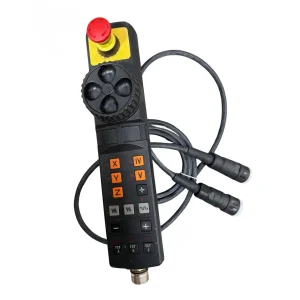
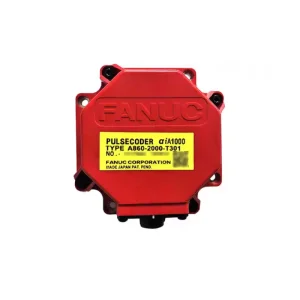
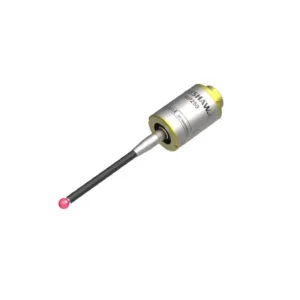
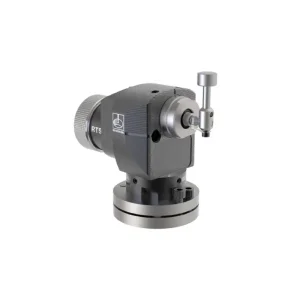
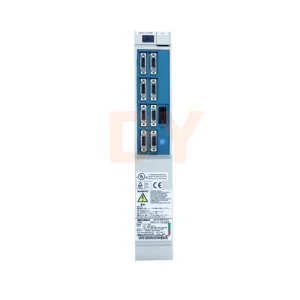
Factory-certified servo motors, spindle drives, high-accuracy probes, and feedback systems sourced directly for high-uptime manufacturing environment.
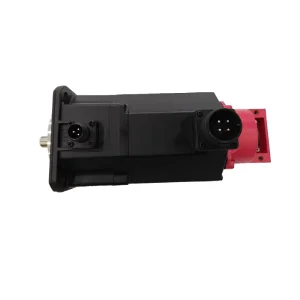
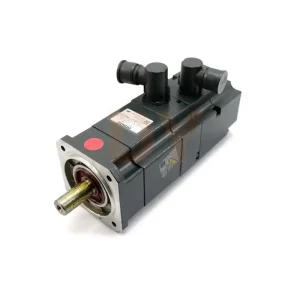
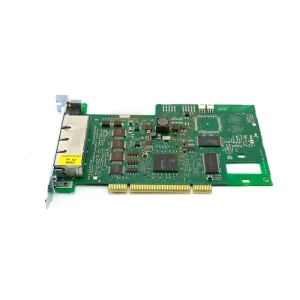
The main spindle of a Computer Numerical Control (CNC) machine tool represents the critical nexus where electrical energy converts into continuous, high-rigidity mechanical cutting force. Whether executing high-torque titanium alloy roughing operations at low speeds or ultra-precision micro-milling on aluminum aerospace structures at 40,000 RPM, the mechanical dynamics, thermal stability, and encoder feedback integrity of the CNC spindle directly dictate surface roughness ($Ra$), dimensional tolerance, tool longevity, and overall throughput. Procuring wholesale spindle CNC machine services and specialized spindle components requires an exhaustive evaluation of dynamic runout tolerance, bearing preload pre-configurations, motor-drive torque curves, thermal dissipation systems, and controller synchronization protocols.
Information Gain Insight: Modern high-speed motorized electro-spindles (Direct Drive Spindles - DDS) eliminate mechanical power loss associated with belt and gear transmission systems. However, eliminating external power transmission transfers all dynamic thermal expansion ($\Delta L = \alpha \cdot L \cdot \Delta T$) directly into the spindle nose, necessitating closed-loop vector control, oil-air micro-lubrication, and real-time sensor feedback.
Global original equipment manufacturers (OEMs), machine rebuilders, and facility maintenance leaders increasingly turn to China's advanced manufacturing hubs—specifically within Zhejiang, Ningbo, and the Yangtze River Delta industrial belts—for turnkey spindle CNC machinery, replacement parts, and maintenance services. This preference is driven by profound structural and technological advantages across the supply chain:
Utilizing high-grade Meehanite FC300 cast iron treated with multi-stage stress-relief thermal annealing guarantees long-term geometric stability, maximum damping capacity against chatter vibrations, and minimal thermal distortion.
Leading Chinese spindle manufacturers combine high-efficiency domestic stator/rotor assemblies with Tier-1 international components, including NSK/SKF ultra-precision P4/P2 ceramic hybrid bearings, Renishaw probing interfaces, and Fanuc/Siemens high-resolution encoders.
Streamlined supply chain integration drastically reduces lead times for bespoke spindle designs (such as customized flange layouts, dual-contact HSK geometry, or specialized internal coolant channels) while reducing total procurement costs by 30% to 50% relative to Western counterparts.
Selecting the optimal CNC spindle system for wholesale procurement requires analyzing speed thresholds, torque output characteristics, heat generation factors, and maintenance demands across three major design architectures:
| Spindle Design Architecture | Speed Range (RPM) | Peak Torque Characteristics | Dynamic Nose Runout | Primary Industrial Applications | Maintenance & Rebuild Complexity |
|---|---|---|---|---|---|
| Belt-Driven Spindle | 0 – 8,000 RPM | Very High (Gearbox Reduction Option) | < 0.003 mm | Heavy-duty steel machining, large-diameter boring, rough turning | Low (Separate motor replacement, low bearing stress) |
| Direct-Drive Spindle (DDS) | 0 – 15,000 RPM | Medium to High (Direct Coupling) | < 0.0015 mm | General vertical/horizontal machining, high-accuracy die & mold finishing | Moderate (Requires precise laser alignment upon reinstallation) |
| Built-in Electro-Spindle | 10,000 – 60,000+ RPM | High Power, Constant Torque at High Speed | < 0.001 mm | 3C micro-milling, titanium aerospace structural milling, high-speed routing | High (Requires dynamic balancing G0.4, oil-air chiller setup) |
A high-performance CNC spindle unit functions not in isolation, but as part of a tightly coupled mechatronic loop. Understanding these components is paramount for procurement engineers evaluating wholesale suppliers:
Spindle rotational accuracy and rigidity depend on bearing configuration. Suppliers typically implement matched sets of angular contact ceramic hybrid ball bearings ($Si_3N_4$ Silicon Nitride balls combined with steel rings). Silicon nitride ceramic elements possess 40% lower density than chrome steel, reducing centrifugal forces at ultra-high rotational velocities while maintaining exceptional hardness and thermal endurance. Preloading—categorized into light, medium, and heavy fixed-displacement or spring preloads—dictates the compromise between dynamic stiffness and heat generation.
Automatic Tool Changer (ATC) spindles utilize high-tensile disc spring stacks or hydraulic actuation systems to clamp tool holders (BT30, BT40, BT50, CAT40, CAT50, HSK-A63, HSK-E40). Dual-contact HSK interfaces engage both the taper and the flange face simultaneously, eliminating axial tool pull-in caused by centrifugal taper expansion at speeds exceeding 15,000 RPM.
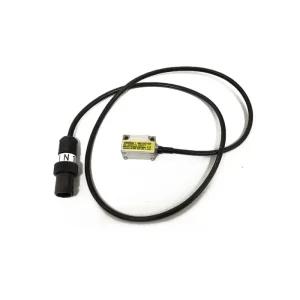
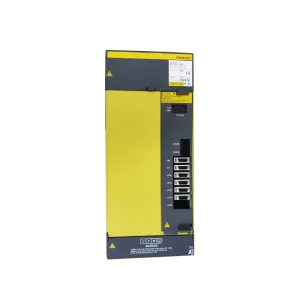
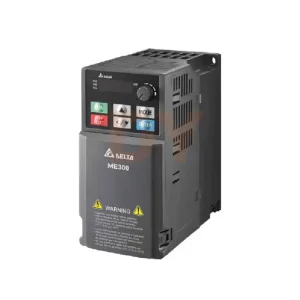
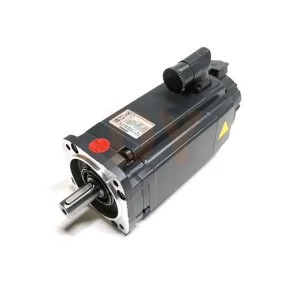
To perform rigid tapping, thread cutting, and 5-axis contour milling, spindles require precise rotary encoders (e.g., Fanuc Pulse Coders, Mitsubishi Encoders, or Heidenhain optical/magnetic sensor heads). These high-resolution encoders transmit real-time angular positions back to the servo drive (such as Fanuc ALPHA i, Siemens SINAMICS, or Delta ME300), enabling sub-degree orientation accuracy and constant speed control under variable cutting loads.
Industrial manufacturing is undergoing rapid technological updates. Suppliers and service providers must adapt to several macro industry developments:
Integrating tri-axial accelerometer sensors directly within the spindle housing allows real-time Fast Fourier Transform (FFT) analysis of bearing frequencies. Predictive algorithms alert operators to micro-flaking in bearing raceways before catastrophic spindle failure occurs.
High-pressure TSC systems (up to 70 bar / 1000 PSI) passing directly through the center of the spindle shaft flush chips from deep holes while cooling the tool tip. MQL systems deliver aerosol micro-droplets, drastically reducing coolant consumption in eco-conscious factories.
Different industrial sectors demand tailored spindle configurations. Wholesale buyers must align specification requirements with the intended end-user environment:
When selecting a China-based wholesale supplier or repair partner for CNC spindle assemblies and automation electronics, procurement officers should evaluate vendors against the following rigorous Total Cost of Ownership (TCO) protocol:
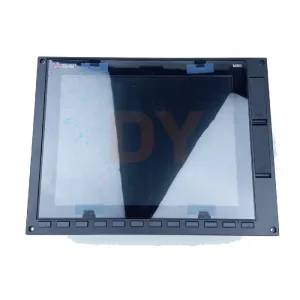
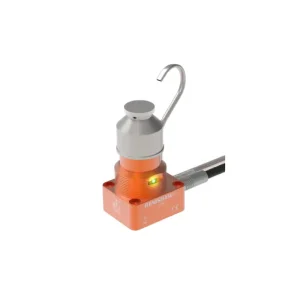
Complete your machinery ecosystem with tool setters, sensor encoders, CNC control panels, and drive modules stocked for fast worldwide shipment.
Engineered solutions to common questions faced by plant managers, machine retrofitters, and procurement specialists.