Pre-calibrated and tropicalized motion feedback, touch trigger probing, and drive units currently configured for deepwater marine lathes, heavy milling, and API thread re-cutting lines.
Analyzing the operational intersection of offshore exploration, Cap Lopez crude transshipment, Sogara refining, and high-precision CNC manufacturing under severe coastal humid conditions.
Port-Gentil occupies a distinct position within the West and Central African maritime industrial landscape. Anchored on Mandji Island at the mouth of the Ogooué River delta, this coastal stronghold serves as the undisputed operational epicentre of Gabon’s hydrocarbon wealth and timber export sector. However, because Mandji Island has no permanent road bridges connecting it directly to Libreville or the continental interior, every operational facility—from the SOGARA (Société Gabonaise de Raffinage) refinery to the deep-water support yards clustered around Cap Lopez—relies upon a hyper-resilient, maritime-and-aviation dependent supply framework.
In this demanding ecosystem, mechanical machine shops, offshore intervention fabricators, and heavy shipyard dry docks cannot tolerate unplanned machine spindle or metrology downtime. Modern manufacturing units deployed across Port-Gentil are tasked with machining subsea blowout preventers (BOPs), re-threading high-grade drill strings under API Spec 5CT / 7-1, dynamically rebalancing marine propulsion shafts, and milling complex rotary veneer slicers for the prized Okoumé timber trade. Precision demands in these critical assignments frequently escalate to the single-micron threshold.
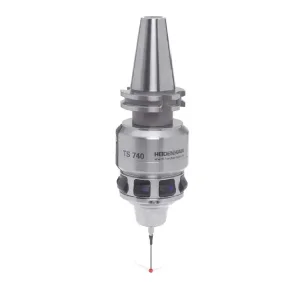
This is precisely where DR. JOHANNES HEIDENHAIN GmbH metrology systems—including optical linear encoders, high-resolution angle encoders, rotary feedback transducers, and workpiece touch probes such as the TS 740—become critical operational assets. In high-salinity equatorial conditions where relative humidity regularly exceeds 95% and salt-fog aerosol causes galvanic oxidation across unsealed mechanical assemblies, standard measurement encoders fail prematurely. Sourcing verified, high-protection-class (IP64 to IP67) Heidenhain assemblies from a reliable international supplier is not an engineering luxury; it is the ultimate safeguard against multi-million-dollar offshore intervention halts.
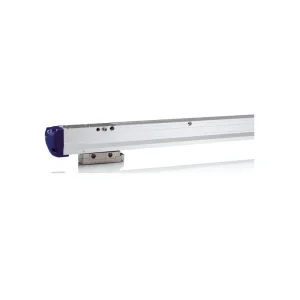
Optical glass scales and scanning carriages must incorporate sealed lip elastomers resistant to hydrocarbons, synthetic cutting coolants, and equatorial salt-spray degradation.
Heidenhain METALLUR or DIADUR glass graduations deliver defined thermal expansion coefficients (approx. 8 ppm/K) matching structural steel, critical for unconditioned Port-Gentil bays.
Pure serial EnDat 2.2, SSI, Fanuc serial, and 1 Vpp sinusoidal signals bridge European precision sensors seamlessly to Japanese and German CNC architectures.
Examining how high-tier oilfield service companies (SLB, Baker Hughes, Halliburton subcontractors) and national maritime yards are transitioning from open-loop mechanics to closed-loop digital twin environments.
Historically, heavy workshops across the Gulf of Guinea relied on open-loop position measurement, deriving axis coordinates exclusively from rotary encoders mounted on the tail-end of servo drive motors. While sufficient for rudimentary flange resurfacing, this indirect methodology fails to account for thermal expansion of the ballscrew, backlash induced by abrasive marine sand ingress, and mechanical deflection on large-travel boring mills (X-axes exceeding 6 meters).
Current industrial modernization mandates in Port-Gentil focus on direct closed-loop feedback. By installing sealed optical linear scales directly alongside the guide ways, machine tool thermal drift and drive mechanism pitch errors are read and corrected in real time by the CNC controller. This architectural shift eliminates cumulative errors when manufacturing deep-sea choke manifolds and riser connector rings that operate under 15,000 PSI downhole pressure.
Many specialized heavy gantry machines and multi-axis horizontal borers in Port-Gentil represent significant capital investments made over the past 15 to 25 years. These machines are mechanically sound, featuring heavy meehanite cast-iron beds capable of absorbing immense cutting vibrations. However, their legacy control electronics—such as early Heidenhain TNC 410/426 systems, Siemens 810D, or Fanuc Alpha drives—regularly encounter micro-component failure due to persistent equatorial thermal cycling and capacitor desiccation.
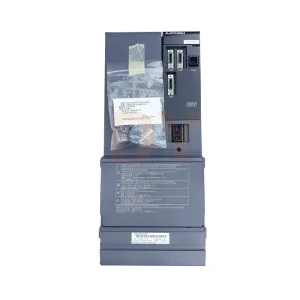
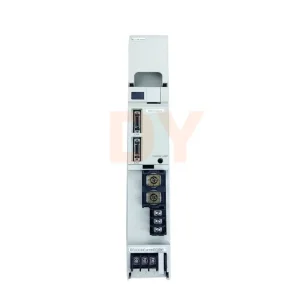
Global procurement teams are moving away from whole-machine scrap-and-replace programs. Instead, they require agile drop-in replacements, compatible newer-generation drives (such as Fanuc Alpha i, Siemens Sinamics V90/S120, Mitsubishi MDS), and modern touch probe retrofits (Heidenhain TS 740, Renishaw contact tool setters). Sourcing these assemblies with documented parameter mappings and wiring schematics preserves millions of dollars in mechanical infrastructure.
| Performance Dimension | Indirect Feedback (Motor Encoder Only) | Heidenhain Direct Optical Closed-Loop | Impact on Port-Gentil Coastal Machine Shops |
|---|---|---|---|
| Thermal Expansion Compensation | Ignored; ballscrew growth at 32°C ambient causes position drift up to 45 µm/m. | Directly measured; linear scale expands at identical rate to steel workpiece bed. | Prevents out-of-tolerance rejects on critical subsea riser couplings and valve seats. |
| Mechanical Backlash Correction | Software backlash tables require constant manual re-calibration as screws wear. | Completely bypassed; actual table slide position is continuously transmitted to CNC. | Eliminates reversal step marks on circular interpolation (boring cylinder liners). |
| Ingress Protection & Salt Fog | Motor rear-cover enclosures often suffer internal condensate accumulation. | IP64 sealed extrusion with dry purge-air capability (IP67 sealing level). | Immunity to tropical humidity, salt-mist crystallization, and coolant flooding. |
| High-Speed In-Process Inspection | Manual dial gauge setup; high operator dependency and spindle idle time. | Automated probing via Heidenhain TS 740; optical infrared/cable telemetry. | Reduces job setup time by up to 70% during urgent vessel emergency dry dock repairs. |
How Ningbo DingYan Machinery leverages strategic port infrastructure, exhaustive physical inventories, and automated functional testing to deliver unmatched reliability to Central Africa.
Procuring specialized European and Japanese CNC spare parts within the Port-Gentil market has historically been fraught with friction. Traditional supply routes through secondary European distributors frequently entail administrative delays, rigid allocation queues, and lead times extending past 16 to 24 weeks for critical optical encoders, servo amplifiers, and high-precision spindle drives. In the high-stakes offshore oil and marine sector, where a single non-operational drilling rig or dry-docked support tug can bleed tens of thousands of dollars per day, such logistical inertia is unsustainable.
This operational reality is where China’s Industry 4.0 supply chain ecosystem, anchored by Ningbo DingYan Machinery, offers unprecedented strategic leverage. As one of the world's most sophisticated manufacturing and maritime shipping epicentres, Ningbo operates as a global nexus for both mechanical machinery manufacturing and high-end industrial automation electronics warehousing.
Every Heidenhain, Fanuc, Siemens, and Mitsubishi component undergoes multi-hour dynamic load testing, encoder wave form verification, and parameter simulation before export packaging.
We work directly through factory-authorized industrial lines, guaranteeing 100% genuine components with original serial traceability, firmware parity, and full factory sealing intact.
Emergency parts are dispatched via DHL, FedEx Express, or dedicated air-cargo routes from Ningbo/Shanghai into Port-Gentil Airport (POG) or via Libreville (LBV) transit within 48 to 96 hours.
Furthermore, China’s industrial ecosystem provides comprehensive coverage across complementary machine tool accessories. When an oilfield maintenance manager in Gabon requires a Heidenhain TS 740 touch probe, they frequently also require precision spindle bearings (such as NSK ultra-precision angular contact sets), dynamic servo power units (Mitsubishi MDS series), or digital readouts. Rather than managing five separate vendors across three continents, DingYan Machinery provides consolidated procurement, single-docket customs clearance, and verified mechanical-electrical drop-in compatibility.
Examining four distinct industrial environments where Heidenhain precision systems and high-reliability CNC hardware maintain operational continuity across coastal Gabon.
The Challenge: High-pressure gas and crude extraction across deepwater blocks off Port-Gentil causes severe erosion and cavitation along internal ring-groove gaskets of subsea BOP bodies. Resurfacing these massive forgings requires portable or large horizontal boring mills operating in humid workshop environments without climate conditioning.
The Solution: Retrofitting horizontal boring machine cross-slides with Heidenhain sealed linear encoders paired with the Heidenhain TS 740 Workpiece Touch Probe. The TS 740 uses wear-free optoelectronic trigger signal generation, allowing precise workpiece centering and runout measurement within ±0.25 µm before re-cutting the critical metallic seal profile. Even when cutting fluid puddles inside the recess, the probe's sealed construction guarantees uncompromised repeatability.
The Challenge: Offshore supply vessels (OSVs) operating in the Port-Gentil roadstead encounter extreme cyclic mechanical stresses. Stern tube bearings and long tail-shafts (frequently exceeding 8 to 12 meters in length) require precise cylindrical line boring to eliminate shaft whip and premature bearing burnout during operations.
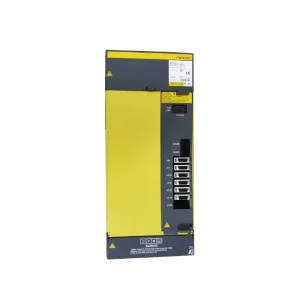
The Solution: Deploying long-length optical systems such as the Fagor L Series Incremental Linear Encoders (400mm - 60m) combined with heavy-duty spindle amplification drives like the Fanuc Alpha i Spindle Module (A06B-6141-H037#H580). The system ensures continuous axis feedback with sub-micron scale fidelity along the entire lathe bed, while the high-output Fanuc spindle module provides steady, low-RPM torque for clean interrupted cuts across bronze and duplex stainless steel.
The Challenge: Drill pipes, heavy collars, and premium connection tubing cycled through drilling campaigns offshore Mandji Island suffer galling, crest chipping, and thread distortion. Re-threading premium connections requires extreme synchronization between the lathe headstock spindle encoder and the Z-axis ballscrew to ensure flawless pitch tracking.
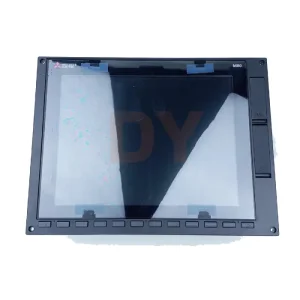
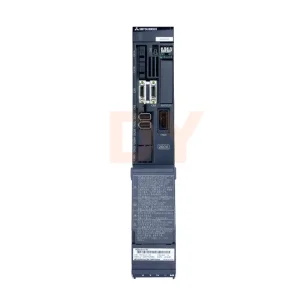
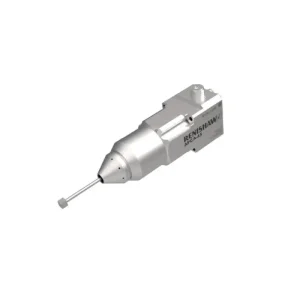
The Solution: CNC retrofitting utilizing the Mitsubishi M80 Series CNC Controller coupled with dedicated spindle drives (Mitsubishi MDS-D-V1-80) and Renishaw Contact Tool Setters APC/APCA-45. Automated tool setting eliminates human measurement errors on carbide chaser inserts, ensuring threads withstand cyclic tension and internal pressure seals.
The Challenge: Gabon is globally recognized for sustainable forestry, particularly Okoumé veneer processing. Industrial rotary lathes spin massive tropical logs against continuous peel knives. Knife-carriage feed drives must continuously accelerate as the log diameter decreases to maintain a consistent veneer sheet thickness (0.8 mm to 2.5 mm).
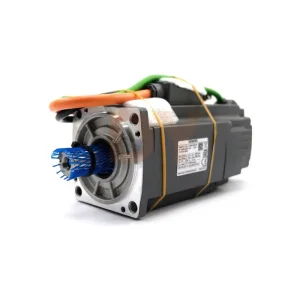
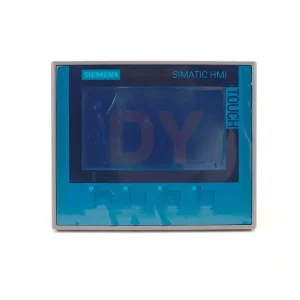
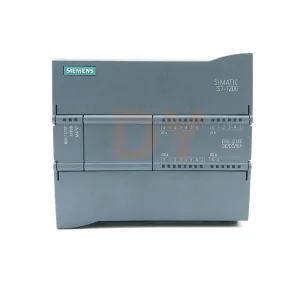
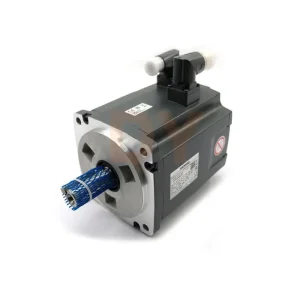
The Solution: Integrating Siemens AC Servo Motors 1FL6042-2AF21-1LB1 and ruggedized Siemens S7-1200 PLC CPUs (6ES7214-1HG40-0XB0) alongside optical thickness monitoring. Operators monitor feed-rate synchronization in real time via an intuitive Siemens KTP700 Basic HMI, maintaining uniform timber thickness while preventing mechanical stalls.
Explore verified OEM control hardware, modular power supplies, touch trigger styli, and digital PLCs ready for rapid logistics mobilization into Gabon.
Clear, authoritative answers covering environmental hardening, model code decoding, signal interfacing, and air-freight logistics into Gabon.