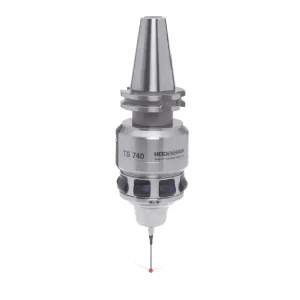
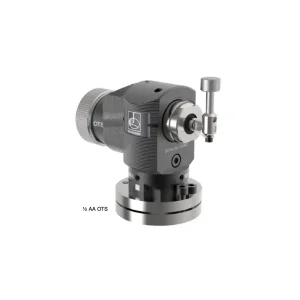
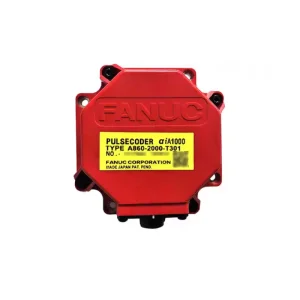
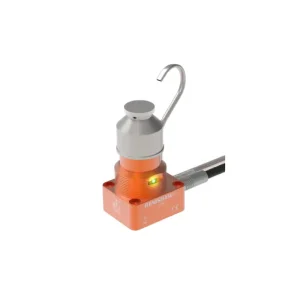
Explore verified stock listings of genuine touch probes, tool setters, styli, servo drives, and industrial automation spare parts available for immediate global export.
In modern ultra-precision CNC machining—spanning aerospace turbine milling, semiconductor vacuum chamber fabrication, and automotive powertrain production—the boundary between nominal dimensions and expensive scrapped workpieces is measured in single-digit micrometers. Renishaw probing systems, tool setters, and precision styli constitute the sensory nervous system of automated machine tools. When a probe system experiences wear, signal attenuation, stem deflection drift, or physical damage, shop-floor yield rates collapse immediately.
Understanding the procurement, technical selection, and maintenance of Renishaw spare parts is not merely an operational necessity for maintenance departments; it is a core financial strategy for reducing scrap rates, extending CNC spindle longevity, and enforcing closed-loop quality control. This whitepaper synthesizes physical metrology principles, global procurement engineering, and deep search-intent analysis to serve plant engineers, CNC maintenance supervisors, and international procurement managers.
Standard touch-trigger probes rely on a classic three-rod mechanical seating system. When the stylus ball contacts a surface, force transfers along the stem to unseat one or more spring-loaded rods from electrical contact points, triggering a high-speed latch signal to the CNC controller (e.g., Fanuc, Siemens SINUMERIK, or Mitsubishi).
High-accuracy models (such as Renishaw OMP400 and RMP600) utilize semiconductor strain gauges to detect microscopic displacement forces before mechanical unseating occurs. This eliminates lobing effects and pre-travel variation (PTV), achieving sub-micron 3D vector measuring performance indispensable for complex 5-axis mold contours.
Modern Renishaw spare parts must match specific telemetry environments. Modulation systems like Modulated Optical (OMI-2T) and Frequency Hopping Spread Spectrum (FHSS) Radio (RMI-Q) prevent cross-talk on multi-machine shop floors operating in dense electromagnetic environments.
Procuring the correct replacement part requires understanding the granular mechanical and electrical interface standards established across Renishaw's product spectrum. Below is an engineering breakdown of core replacement categories:
| Part Category | Common Model / Part Series | Material / Structural Specs | Primary Failure Modes & Maintenance Triggers |
|---|---|---|---|
| Styli & Extensions | M2, M3, M4, M5 Threads (e.g., A-2197-0160 M4 Cube Stylus) | Synthetic Ruby (Grade 5), Tungsten Carbide, Carbon Fiber, Stainless Steel | Stem bending, ruby ball chipping, thread galling, thermal drift mismatch. |
| Contact Tool Setters | OTS, LTS, RTS, TS27R Series | Tungsten carbide datuming cubes, IP68 sealed housings, spring-seated contact pads | Coolant ingress into diaphragm, cable shear, cube surface wear, impact fracture. |
| Workpiece Probes | OMP40-2, OMP60, RMP60, RMP600 | Stainless body, infrared/radio transceivers, PEEK battery caps | Battery contact oxidation, optical window scratching, kinematic ball pitting. |
| Signal Receivers / Interfaces | OMI-2T, RMI-Q, OSI Interface Units | Solid-state optical sensors, 24V DC industrial I/O wiring harnesses | Line-of-sight signal blockage, cable fatigue, CNC controller I/O board failure. |
| Protection Modules | Breakaway Rubbers, Ceramic Shanks, Magnetic Mounts | Brittle ceramic failure shear-links, nitril rubber gaiters | Physical crash absorption, preventative mechanical sacrificial failure. |
When configuring M4 or M3 styli, stylus length ($L$) directly impacts bending deflection under trigger force ($F$). Deflection ($\delta$) scales cubically with length:
$$\delta = \frac{F \cdot L^3}{3 \cdot E \cdot I}$$
Where $E$ represents Young's modulus (Tungsten Carbide $\approx 550 \text{ GPa}$ vs Stainless Steel $\approx 200 \text{ GPa}$). Substituting stainless steel with Tungsten Carbide stems reduces bending deflection by over 60%, drastically increasing pre-travel consistency and part accuracy during high-speed feed probing cycles.
Global machine tool maintenance managers face a constant conflict: original OEM component prices from European or North American distributors often carry massive markups and lead times exceeding 6 to 12 weeks. Ningbo DingYan Machinery Co., Ltd., strategically anchored in the Yangtze River Delta manufacturing hub (Ningbo, Zhejiang), bridges this structural supply gap.
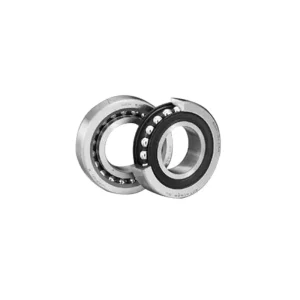
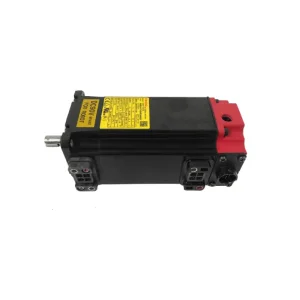
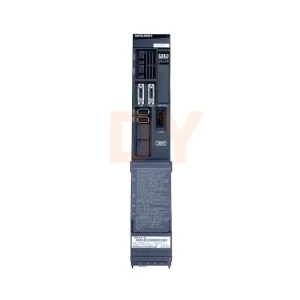
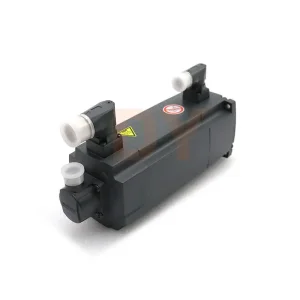
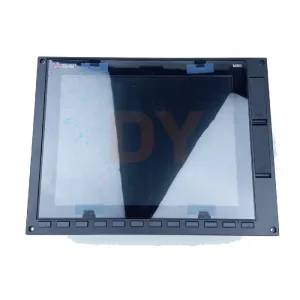
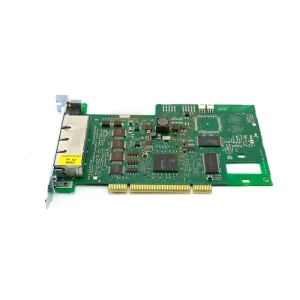
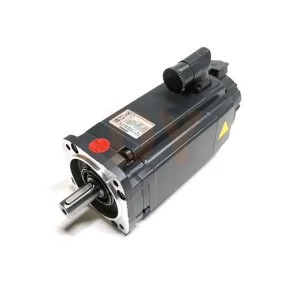
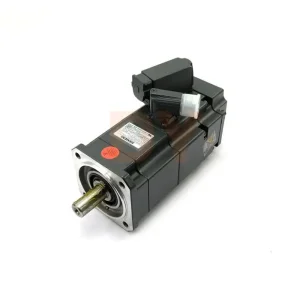
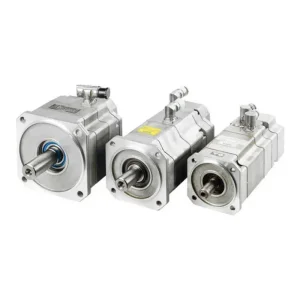
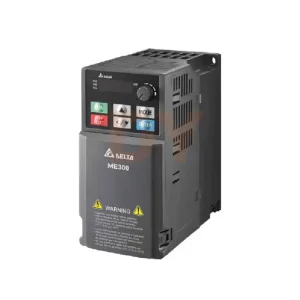
By integrating official distribution channels, authorized agent clearinghouses, and comprehensive precision manufacturing stocks, our Ningbo warehouse holds thousands of high-demand SKU units. We stock not only Renishaw styli, probes, and OTS tool setters, but also complementary CNC system components including FANUC servo amplifiers, Siemens motors, Mitsubishi encoders, Heidenhain handwheels, Fagor linear scales, Delta drives, and NSK spindle bearings.
This consolidation allows international buyers to execute a single procurement package, reducing shipping overheads, customs documentation delays, and administrative processing fees.
Every incoming and outgoing Renishaw probe module or CNC drive unit undergoes strict Quality Assurance in our Ningbo testing facility:
The global machine tool market is undergoing a structural transition from "post-process CMM inspection" to "in-process automated metrology." Driven by Industry 4.0 standards, lights-out manufacturing, and labor scarcity in developed industrial nations, the market demand for Renishaw-compatible replacement hardware is accelerating rapidly.
Modern CNC software routines utilize Renishaw touch probe output to automatically update dynamic work offset tables (G54-G59, G54.2 P1) and tool geometry wear offsets in real time. This eliminates human operator setup errors and guarantees true datum zero alignment even on rough castings.
As CNC machine tool spindles heat up during multi-hour machining runs, thermal drift along the Z-axis causes significant tolerance errors. In-process tool setters (like the Renishaw OTS and LTS) dynamically measure tool length changes every $N$ operations, pushing active thermal delta parameters directly to Fanuc or Siemens controller memory.
Smart CNC factories monitor probe trigger force telemetry and transmission battery health. Micro-variations in trigger latency signal mechanical contamination or spring fatigue, allowing replacement styli or break-stems to be swapped during planned maintenance windows before catastrophic tool breakage occurs.
The deployment of Renishaw probing components and tool setting hardware varies significantly depending on the operational demands of specific industrial sectors:
In 5-axis blisk (bladed disk) and impeller milling using Inconel 718 or Titanium 6Al-4V alloys, tool wear is aggressive. Probes equipped with extended carbon-fiber styli and high-sphericity ceramic balls perform in-situ blade thickness checks. Contact tool setters continually re-verify micro-endmills to prevent costly part scrap on single components valued over $50,000.
EV battery aluminum housing trays and motor stators require high-volume prismatic milling. Ultra-fast optical probes (e.g., Renishaw OMP40-2) operate in automated high-pressure coolant environments, rapidly verifying bolt hole patterns, face flatness, and threaded insert depth across 24/7 continuous production shifts.
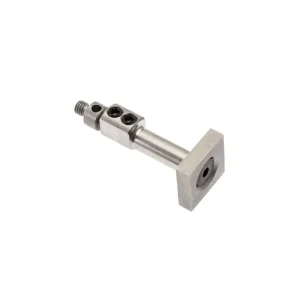
Die-sinking copper electrodes and hardened steel mold inserts require automated surface inspection before EDM processes. Renishaw datuming cube styli (like the A-2197-0160 M4 Tungsten Steel Cube) provide flat reference faces for setting precise corner coordinates and measuring square cutter tips without chipping fragile cutting edges.
Fabricating ceramic wafer chucks or orthopedic titanium bone plates requires micro-styli with ball diameters as small as 0.3 mm to 0.5 mm. Low-spring-force probes ensure delicate thin-walled structures are not micro-deformed during probing passes.
For global procurement directors managing multi-facility factory networks across North America, Europe, Southeast Asia, and South America, component sourcing must balance authenticity, lead times, total cost of ownership (TCO), and risk mitigation.
When a CNC spindle crashes into a tool setter or snaps a probe stylus, the cost of the physical replacement part is minor compared to the factory downtime cost. Sourcing from stocked suppliers like DingYan Machinery ensures international express delivery (DHL/FedEx) within 48 to 72 hours, preventing stalled assembly lines.
Counterfeit styli or sub-standard copycat probe modules suffer from thermal drift, erratic trigger contacts, and uncalibrated ruby ball sphericity errors. We supply verified genuine components directly traceable to official authorized distribution channels, complete with original factory batch certificates.
When primary OEMs discontinue older CNC drive modules (e.g., legacy Fanuc Alpha series, Siemens 6SN1123, or older Renishaw MP series probes), we maintain safety stock and engineer tested retrofits, extending the productive life of legacy machine tool assets.
To assist field service engineers and maintenance technicians, our engineering team has compiled a diagnostic workflow for resolving common touch probe and tool setter operational faults:
| Symptom / Alarm Code | Root Cause Analysis | Recommended Corrective Action |
|---|---|---|
| Erratic Repeatability (> 5 μm variation) | Loose stylus thread, contaminated ruby tip, chips inside kinematic seating mechanism, or excessive feed rate. | Torque stylus to recommended specification (e.g., 2.0 Nm for M4), clean probe seating area with compressed air, execute recalibration on precision datum sphere. |
| Probe Signal Dropout (Skipped Latch Signal) | Optical window blocked by heavy coolant mist, line-of-sight obstruction, low transmitter battery, or radio signal interference. | Clean optical windows on probe & receiver, replace batteries with high-capacity AA lithium cells, perform radio frequency channel sweep on RMI-Q interface. |
| Tool Setter Hard Crash / Broken Break-stem | Incorrect macro program call, Z-axis encoder reference position shift, or incorrect tool clearance height setting. | Replace sacrificial break-stem or ceramic shank adapter, check Fanuc macro variable #5061, verify mechanical height using a dial gauge prior to electronic calibration. |
| Probe Keeps Triggered (Solid LED Red Light) | Internal spring fracture, liquid ingress into probe housing, damaged internal circuit board due to high-voltage surge. | Inspect rubber seal gaiter for coolant entry, measure internal contact resistance, replace internal probe module or swap complete probe unit from emergency stock. |
Clear, expert answers to key technical questions searched by CNC operators, procurement officers, and plant engineers worldwide.
Yes. Ningbo DingYan Machinery Co., Ltd. procures components through official agent networks and authorized channels. All probes, tool setters, styli, Fanuc amplifiers, Siemens motors, and Mitsubishi drivers are shipped 100% brand new in original factory protective packaging. Every shipment includes clear high-resolution pre-dispatch photos showing serial plates, order codes, and factory seals for buyer verification.
To select the exact stylus, confirm four technical parameters: (1) Thread Size (M2, M3, M4, or M5), (2) Stylus Overall Length (EWL - Effective Working Length), (3) Ball Material & Diameter (Ruby, Silicon Nitride, Zirconia, or Tungsten Steel Cube), and (4) Stem Material (Tungsten Carbide, Stainless Steel, Carbon Fiber). Send us your probe model or current part photo, and our engineers will cross-reference the OEM part number (e.g., A-2197-0160) instantly.
A standard ruby ball stylus contacts workpiece surfaces at a single spherical point, ideal for 3D curved surfaces, bore centers, and face offsets. A tool datuming cube stylus (such as the M4 34.5 mm tungsten steel cube A-2197-0160) features flat polished faces designed specifically for contact tool setters (like the Renishaw TS27R or OTS) to measure cutting tool lengths and diameters without slipping off sharp tool flutes.
Fast-moving items held in our Ningbo central warehouse—including popular Renishaw styli, OTS tool setters, Siemens servo motors, Fanuc pulse coders, and Delta drives—are processed and dispatched within 24 to 72 hours. We ship globally via DHL Express, FedEx, UPS, and TNT, providing full air waybill tracking numbers and commercial export documentation.
All new original components carry a comprehensive 12-month factory basic warranty covering operational failure under normal operating conditions. Our dedicated technical support team provides online diagnostic guidance for alarm codes, parameter configuration, and wiring setup prior to any warranty return handling.
Yes. Legacy automation hardware forms a major part of our international supply business. If a part number is officially end-of-life (EOL), we cross-reference our global partner inventory for unused surplus stock, or provide an approved functional equivalent along with required retrofitting documentation and parameter modification support.
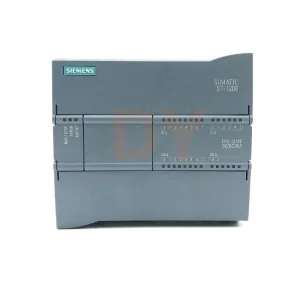
Complete your equipment procurement with our extended line of contact tool setters, high-precision bearings, pulse coders, PLC CPUs, and CNC controllers.