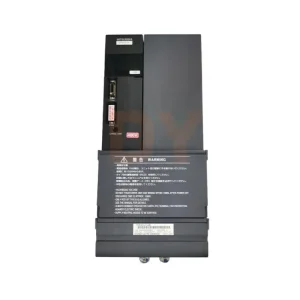
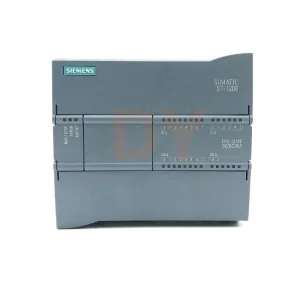
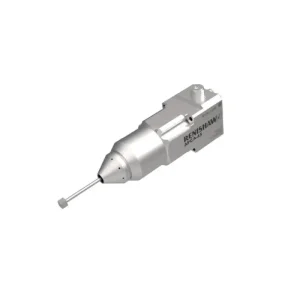
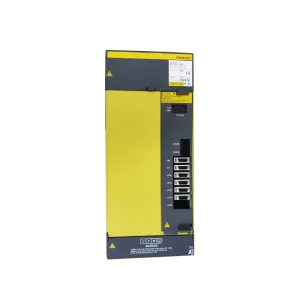
Direct factory-verified hardware inventory spanning FANUC control modules, Renishaw precision probing, Siemens automation CPUs, and NSK spindle bearings.
In the high-stakes ecosystem of Computer Numerical Control (CNC) machining, downtime is calculated not merely in minutes, but in compound financial losses, disrupted supply chains, and missed OEM deliveries. As precision engineering transitions toward Industry 4.0 paradigms, the deployment of high-fidelity hardware and software simulation tools—specifically authentic Fanuc Simulators—has shifted from an educational luxury to an operational necessity.
A Fanuc Simulator serves as a 1:1 hardware-in-the-loop (HIL) operational replicate or high-accuracy digital twin of the world’s most widely deployed CNC control platforms, including the FANUC Series 0i-F / 0i-F Plus, 31i-MODEL B, and the ultra-high-speed Series 30i-MODEL B. By isolating Part Program verification, Programmable Machine Control (PMC) ladder logic debugging, macro statement verification, and operator training away from live multi-million-dollar machine tools, industrial enterprises mitigate catastrophic collision risks, eliminate tool-spindle crash scenarios, and achieve zero-defect commissioning cycles.
Procuring authentic, discount-tier Fanuc Simulators, standalone control hardware, and integrated spare sub-assemblies requires navigating a complex global procurement landscape. Buyers must balance immediate unit pricing against total cost of ownership (TCO), component revision compatibility, firmware synchronization, and international export compliance. This technical guide outlines the complete engineering, financial, and logistical framework governing Fanuc Simulators and associated CNC hardware ecosystems.
From physical teaching units to cloud-native Digital Twin frameworks: how FANUC simulation hardware interfaces with modern industrial IoT.
Physical Fanuc simulators feature genuine FANUC iHMI panels, MDI keyboards, and CNC mainframes. They execute actual CNC software kernels, providing authentic tactile operator experience and exact execution timing for complex G-code sequences and G43.4 5-axis tool center point control (TCPC).
The bridge between software digital twins and physical simulators. Fanuc CNC Guide Pro allows seamless ethernet-based parameter cloning from live shop-floor machines (e.g., FANUC 0i-F Plus) into virtual environments, enabling exact CYCLE TIME forecasting within ±0.5% precision.
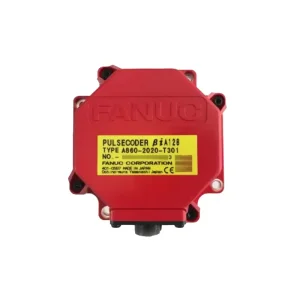
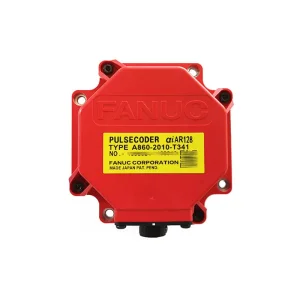
Modern Fanuc simulation setups incorporate MTConnect and OPC UA connectivity protocols. They stream real-time servo drive loads (A06B-6141 series) and encoder telemetry (A860-2010 series) to cloud platforms for machine learning-based thermal error compensation modeling.
Unlike pure PC software emulators that approximate G-code processing speeds, a physical Fanuc Hardware Simulator utilizes authentic FANUC main CPUs and ASIC motion controllers. This guarantees exact interpolation behaviour for high-speed machining functions such as AICC II (Artificial Intelligence Contour Control II) and Smooth TCP, preventing real-world contouring errors caused by buffer underruns during complex surface milling.
Tailored simulation workflows and hardware validation frameworks engineered for demanding manufacturing sectors.
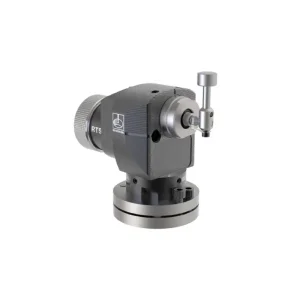
In high-volume EV motor housing and transmission production, tooling downtime halts entire assembly plants. Fanuc simulators allow engineers to test multi-path lathe ladder logic (PMC-SB7) and dual-spindle synchronizations offline. Integrating Renishaw RTS tool setters and FANUC Alpha i Servo Drives into the simulation rig verifies automated tool break detection logic before shop-floor deployment.
Aerospace structural ribs and turbine blades demand complex 5-axis continuous milling. Simulators running Fanuc Series 31i-B software kernels validate NURBS vector interpolations and high-precision look-ahead parameters (G05.1 Q1). Pre-evaluating cutter location (CL) data eliminates costly scrap of titanium and Inconel raw billets.
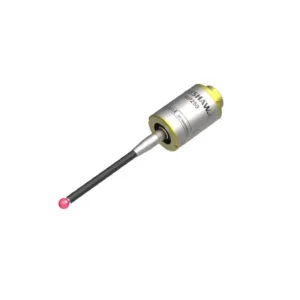
Orthopedic implants require sub-micron surface finishes and strict FDA validation logs. Simulator environments coupled with high-precision feedback systems—such as Renishaw MP250 probes and NSK 60/22DDUCM bearings—ensure that probing macros (Skip Function G31) reliably measure titanium bone screws without surface damage.
High-speed injection mold making relies on rapid axis response and micro-step resolution. Testing FANUC Pulse Encoders (A860-2010-T341) and Siemens SIMOTICS Servo Motors within customized simulation benches ensures closed-loop positioning accuracy under demanding thermomechanical expansion cycles.
Ensuring global interoperability, voltage safety, and certified quality controls across international manufacturing borders.
Deploying industrial CNC control simulators and replacement electronics across different geographical territories requires strict adherence to international electrical, safety, and electromagnetic compatibility standards. A simulator supplied for a North American facility operating at 230V 3-phase 60Hz requires distinct transformer isolated power steps compared to European 400V 50Hz installations.
The global machine tool industry faces ongoing supply chain volatility, extended OEM lead times, and rising replacement component prices. Leveraging Ningbo’s world-class industrial manufacturing hub, Ningbo DingYan Machinery Co., Ltd. provides a strategic supply bridge that combines deep inventory buffering with stringent quality assurance protocols.
Strategically situated near Ningbo-Zhoushan Port and major international air cargo gateways, stocking critical fast-moving spare parts (Fanuc encoders, Renishaw probes, Mitsubishi drives) for 1-3 day global dispatch via DHL/FedEx/UPS.
Every Fanuc simulator unit and spare part is procured through authorized distribution channels. High-resolution optical inspection verifies nameplates, firmware build numbers, and serial labels prior to export.
By eliminating multiple intermediary distributor markups, buyers access genuine OEM hardware—such as Fanuc A06B-0116 Servo Motors and Siemens 1FL6 Servo Motors—at competitive discount tiers without compromising technical warranties.
This dual focus on technical validation and efficient logistics guarantees that maintenance teams can restore downed CNC machinery rapidly, avoiding long factory line suspensions.
Standardizing replacement components across diverse CNC brand footprints to achieve long-term TCO reduction.
Large-scale manufacturing facilities rarely operate machine tools from a single OEM builder. A typical shop floor might feature Japanese turning centers equipped with FANUC and Mitsubishi controls alongside European 5-axis gantries running Siemens SINUMERIK or Heidenhain systems. Purchasing individual spare parts reactively during emergency breakdown states leads to ballooning freight costs and extended downtime.
We work with enterprise procurement managers to establish targeted Critical Spares Buffer Lists based on fleet machine population analyses:
Deep technical answers compiled by senior CNC control engineers and global procurement specialists.
Expanding your spares inventory with high-reliability components from Mitsubishi, Delta, Renishaw, and FANUC.
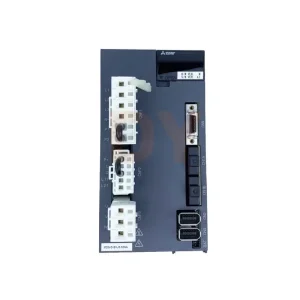
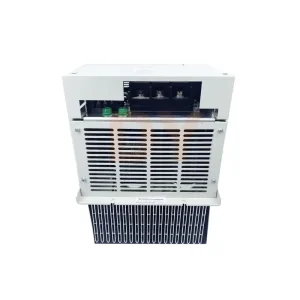
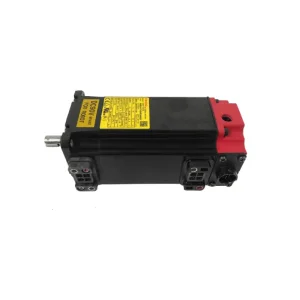
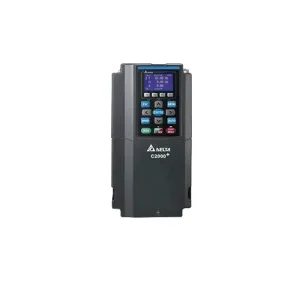
In modern industrial manufacturing, profitability hinges on minimizing unprogrammed spindle stoppages and maximizing cutting efficiency. Whether upgrading factory training facilities with full-scale Fanuc Simulators, optimizing PMC ladder logic offline, or establishing immediate replacement buffer stocks for FANUC, SIEMENS, Mitsubishi, Renishaw, Heidenhain, Fagor, Delta, and NSK components, Ningbo DingYan Machinery Co., Ltd. delivers the engineering depth and supply chain reliability your enterprise requires.
Our sales engineering team stands ready to review your machine nameplates, cross-reference legacy component numbers, and confirm global express delivery timelines. Contact our Ningbo headquarters today to request customized bulk quotes and technical specification sheets.