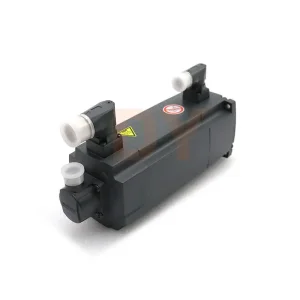
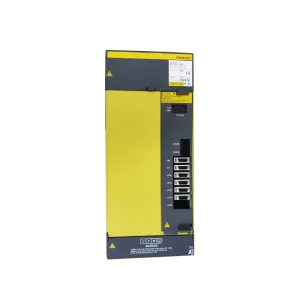
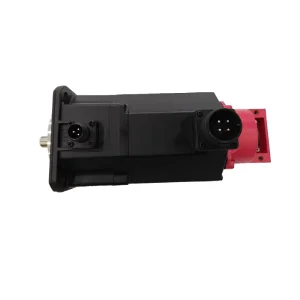
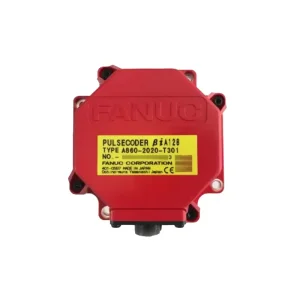
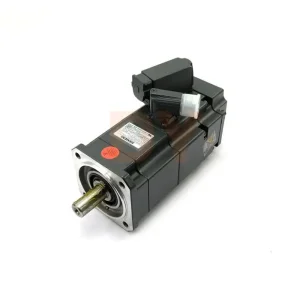
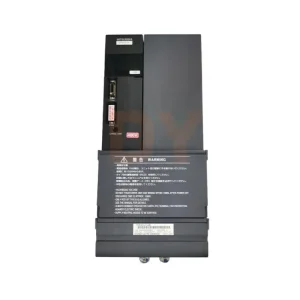
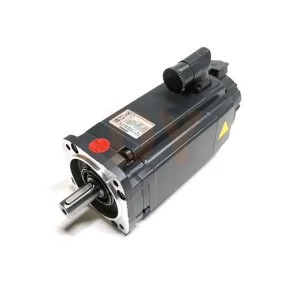
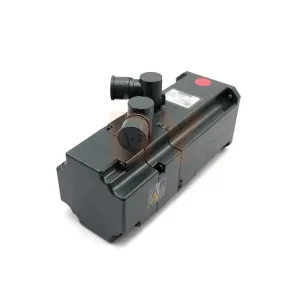
Immediate warehouse dispatch available for factory-sealed drives, high-resolution encoders, and multi-axis CNC interface modules.
In modern high-speed CNC manufacturing, automated assembly lines, and ultra-precision robotics, the motion control subsystem serves as the central nervous system of physical production. Industrial enterprises searching for a discount Mitsubishi Servo Amplifier supplier face a dual imperative: securing high-tier economic value while maintaining uncompromised operational reliability and engineering fidelity. Unplanned machinery downtime in multi-axis milling, semiconductor wafer handling, or continuous automotive body-stamping can cost plant operators upwards of $10,000 to $50,000 per hour. Consequently, procurement strategies must look beyond initial acquisition prices to evaluate total cost of ownership (TCO), Mean Time Between Failures (MTBF), signal bus responsiveness, and supply chain transparency.
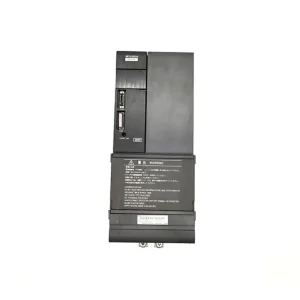
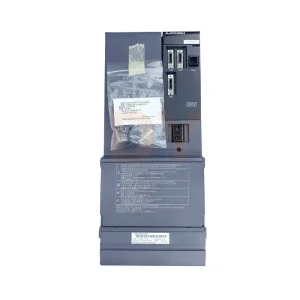
Mitsubishi Electric's motion control ecosystem—spanning legacy lines like the MELSERVO-J2S and MR-J3 up to current-generation MELSERVO-J4 and next-generation MELSERVO-J5 / JET series, alongside CNC-dedicated power supply and drive units such as the MDS-D-CV and MDS-D2-CV series—represents the benchmark for dynamic response, optical encoder feedback resolution, and vibration suppression algorithms. Sourcing these components via optimized distribution channels ensures that automation integrators and MRO (Maintenance, Repair, and Operations) departments retain access to authentic, direct-from-factory components without suffering from excessive lead times or artificial regional price markups.
Multi-axis interpolated motion requires nanosecond-level clock synchronization across power units and drives. Mitsubishi's proprietary optical fiber network prevents electromagnetic noise contamination across multi-meter CNC machine frames.
Integrated hardware safety compliant with SIL 3 / Category 4 PLe standards guarantees rapid emergency cut-offs without discarding system absolute position coordinates, drastically reducing restart cycles.
Dual-knob tuning algorithms dynamically detect low-frequency resonances in mechanical drive trains (such as ball screw deflection or robot arm whip), neutralizing chatter automatically during high-feed cuts.
The industrial landscape is undergoing a structural transition driven by Industry 4.0 digitization, time-sensitive networking, and wide-bandgap power semiconductor topologies. Understanding Mitsubishi's technical roadmap provides enterprise procurement managers with the foresight required to avoid premature component obsolescence and plan retrofits effectively.
The movement from legacy SSCNET III/H (Optical Bus) to CC-Link IE TSN (Time-Sensitive Networking) unleashes gigabit-per-second deterministic Ethernet performance. This enables real-time synchronization between motion control, safety loops, and IT-level SCADA systems over a unified network cable, eliminating complex fieldbus gateways.
Next-gen amplifiers process 67,108,864 pulses per revolution from optical encoder discs. This sub-micron positioning capability practically eliminates micro-step hunting, drastically improving surface finish quality on multi-axis CNC mold machining and optical lens polishers.
Transitioning internal inverter stages from conventional Silicon IGBTs to Silicon Carbide (SiC) and Gallium Nitride (GaN) power devices reduces thermal dissipation losses by up to 40%. The result is significantly smaller drive cabinet footprints and reduced cabinet cooling power usage.
Embedded Maisart (Mitsubishi Electric's AI technology) algorithms evaluate electrical ripple current, encoder signal drift, and mechanical friction profiles in real time. Systems can forecast bearing wear, ball screw backlash, or capacitor degradation weeks before a failure event occurs.
| Series Family | Primary Interface Network | Encoder Feedback Resolution | Core Industrial Target Applications | Lifecycle Status & Sourcing Strategy |
|---|---|---|---|---|
| MR-J2S Series | Pulse Train / Analog (-A), SSCNET I (-B) | 17-bit (131,072 pulses/rev) | Legacy CNC, basic packaging line retrofits | Obsolete / Refurbished & MRO Buffer Stock |
| MR-J3 Series | SSCNET III Optical, CC-Link, Analog | 18-bit (262,144 pulses/rev) | High-speed indexing, textile machinery, automated handling | Legacy Mature / Direct Stock Replacements |
| MR-J4 Series | SSCNET III/H, Multi-axis Fiber Optic | 22-bit (4,194,304 pulses/rev) | 5-Axis Milling, Semiconductor Pick & Place, Automotive Robotics | Active Standard / High Global Availability |
| MR-J5 / JET | CC-Link IE TSN (1Gbps Deterministic) | 26-bit (67,108,864 pulses/rev) | Ultra-precision semiconductor optics, battery tab welding lines | Current Growth Flagship / Factory Direct Delivery |
| MDS-D/D2 (CNC) | High-speed Optical CNC Communication | Dedicated Optical Motor Encoders | Heavy Machine Tool Spindles, CNC Machining Centers | Active Machine Tool OEM Standard |
Mitsubishi servo drives and power units are engineered to operate across rigorous industrial environments. Below is an architectural overview of how enterprise users apply these drives to overcome physical dynamic limitations.
In robotic body-in-white (BIW) welding and high-speed transfer presses, drives undergo intense acceleration/deceleration duty cycles. Utilizing regenerative power supply modules like the MDS-D2-CV-300 permits excess mechanical braking kinetic energy to be inverted cleanly back into the facility’s AC line grid, reducing factory power overhead by up to 30%.
Wafer handling robotics demand absolute velocity smoothness without micro-vibrations that can damage delicate silicon crystals. Mitsubishi's MR-J5 series features auto-tuning algorithms that suppress mechanical frame resonance at frequencies down to 1 Hz, providing ultra-clean displacement profiles.
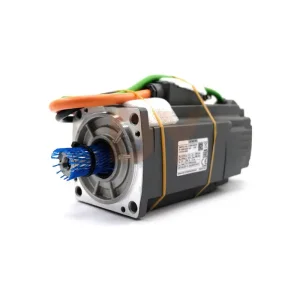
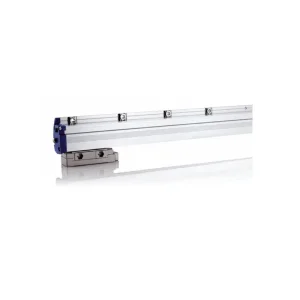
Five-axis simultaneous gantry mills require zero backlash and immediate response to vector motion commands. Paired with high-torque AC servo motors and linear feedback scales, Mitsubishi drives execute high-speed loop closures to maintain exact cutter positioning during contouring maneuvers.
Modern global manufacturing supply chains cannot tolerate extended Lead-Times. Situated in Ningbo, Zhejiang—one of the world's premier maritime and industrial manufacturing centers—our regional distribution operation serves as a strategic inventory hub for international equipment buyers.
By keeping vast reserves of hard-to-find servo amplifiers, power converters, and high-precision encoders in stock, we shield global operations from OEM production delays and unpredictable global component shortages.
Every servo drive unit dispatched undergoes secondary quality assurance: power-up telemetry verification, optical bus link check, encoder signal waveform review, and high-voltage insulation dielectric testing prior to export packing.
Direct proximity to Ningbo-Zhoushan Port and major international air express cargo lanes allows stock items to ship out within 24 to 72 hours via DHL, FedEx, UPS, or direct air freight forwarders with full tracking integration.
For senior procurement directors and maintenance heads, evaluating a discount Mitsubishi Servo Amplifier supplier requires a thorough calculation of total financial and operational impact. Focusing solely on component sticker price without assessing authenticity, warranty terms, and logistics can lead to costly operational failures.
The secondary market contains non-genuine units with re-stamped serial tags, worn-out electrolytic capacitors, or modified firmware. Sourcing directly through verified channels guarantees 100% genuine component architecture, original thermal potting compound, and factory microcode integrity.
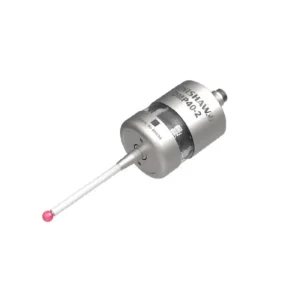
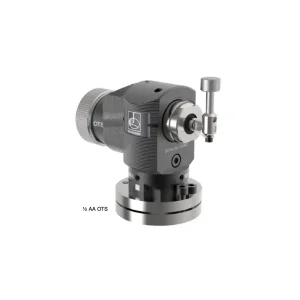
Consolidating procurement for multi-vendor facilities (combining Mitsubishi drives, Siemens motors, Fanuc amplifiers, and Renishaw probing systems under one master purchase order) drastically reduces customs brokerage overhead and international freight costs.
Accessing volume pricing for critical motion spares allows plant managers to establish on-site replacement stock without exceeding annual maintenance budgets. This proactive setup helps avoid overnight emergency air transport costs during line stoppages.
Deploying industrial machinery across North America, Europe, Asia-Pacific, and Latin America requires strict adherence to international electrical safety regulations and network standards.
All Mitsubishi drive and power supply components delivered meet international compliance standards, including CE (Low Voltage Directive & EMC Directive), UL/cUL (UL 508C), and KC (Korea Certification). This guarantees smooth integration into machinery destined for strict regulatory markets.
Drive electronics are designed to operate reliably across global industrial grid voltages—from 200–240V 3-phase down to 100V single-phase control supplies—safeguarding against voltage fluctuations and phase imbalance issues in remote manufacturing locations.
Beyond shipping hardware, our technical engineering desk provides cross-regional guidance on parameter matching, alarm code troubleshooting (e.g., resolving Mitsubishi AL.10, AL.32, or AL.E6 errors), parameter migration, and encoder calibration.
Direct technical insights from our senior motion control specialists addressing key procurement and operational challenges.
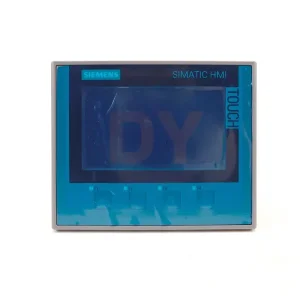
Explore verified inventory across synchronous motors, power modules, HMI displays, and linear scales.