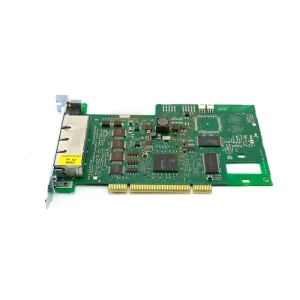
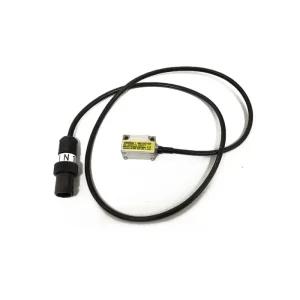
Direct supply of factory-sealed feedback encoders, servo amplifiers, spindle drives, and precision styli tested for immediate deployment.
An in-depth analysis of Renishaw encoder physics, Interpolator Signal Integrity (SDE), and protocol interoperability across contemporary high-speed machine tools.
In modern high-precision CNC manufacturing, semiconductor lithography, and multi-axis aerospace machining, position feedback accuracy dictates overall volumetric tolerance. Renishaw encoders—ranging from optical linear readheads (such as the TONiC™, QUANTiC™, and RESOLUTE™ series) to enclosed linear systems (FORTiS™) and rotary magnetic platforms (Atom™ and Orbis™)—represent the industry benchmark for high-speed, contamination-resistant optical and magnetic position measurement.
The primary advantage of opting for factory-certified Discount Renishaw Encoder Service & Suppliers lies in preserving the original Signal-to-Noise Ratio (SNR) and dynamic bandwidth without paying excessive markup fees charged by regional single-channel distributors. Optical linear scales employ specialized grating structures (such as 20-micron pitch optical tracks or fine-pitch absolute tracks with unique pseudo-random codes). When coupled with advanced Optoelectronic ICs within the readhead, these systems deliver real-time interpolation down to sub-nanometer levels while actively filtering out mechanical vibration and optical noise.
By leveraging custom filtering optics and dynamic gain control (AGC/AOC), Renishaw readheads suppress electronic harmonics, ensuring SDE remains under ±10 nm. This prevents micro-chatter marks during surface milling operations.
Native compatibility with BiSS-C, FANUC Serial Interface, Siemens DRIVE-CLiQ, Mitsubishi High-Speed Serial, and Panasonic communication channels enables seamless integration into multi-axis drive cabinets.
Zero-expansion Invar scales or engineered substrate carriers align scale expansion directly with workpiece materials, mitigating thermal drift in 24/7 continuous machining cycles.
How sourcing specialized metrology and CNC hardware through Ningbo and East China industrial centers delivers cost efficiency without sacrificing quality standards.
The global CNC and metrology replacement market is undergoing a structural shift. Historically, procuring replacement Renishaw linear encoders, optical readheads, or touch probe styli (such as the M4 tungsten steel datuming cube stylus A-2197-0160) involved long supply chains, extended lead times, and inflated distributor price markups. Today, leveraging established China-based suppliers like Ningbo DingYan Machinery Co., Ltd. offers global buyers a streamlined alternative.
Eastern China—specifically the Ningbo, Hangzhou, and Suzhou industrial corridors—houses one of the world's most concentrated ecosystems for CNC machine tool production, spindle manufacturing, drive integration, and precision accessory distribution. Operating within this hub provides distinct operational advantages:
By bypassing multiple intermediary layers, suppliers pass direct savings (often 20% to 40% off list prices) to global procurement managers, field service engineers, and overhaul specialists.
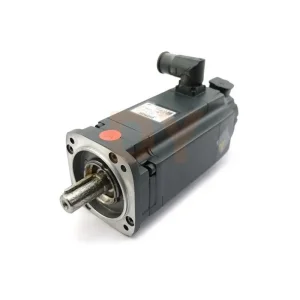
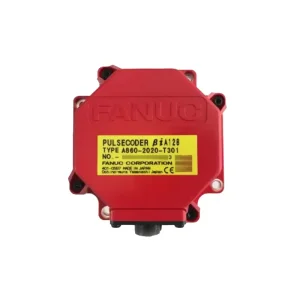
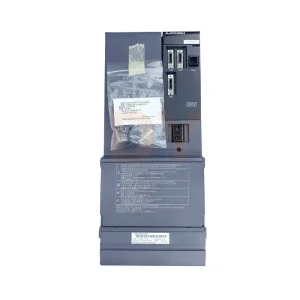
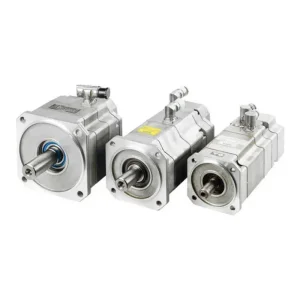
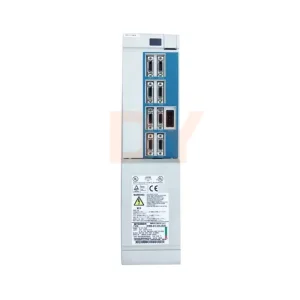
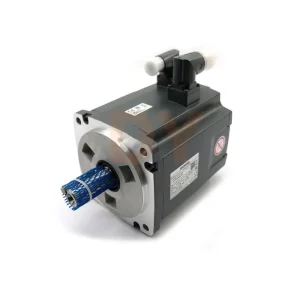
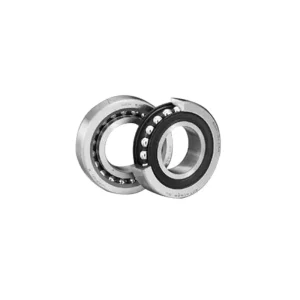
Order Renishaw encoders alongside complementary hardware—such as FANUC Alpha servo encoders (A860-2020-T301), Mitsubishi power converter units (MDS-D2-CV-300), Siemens SIMOTICS servo motors (1FK7060), or NSK thrust bearings (20TAC47C)—all under a single bill of lading.
Every encoder module, readhead, optical scale, and servo drive undergoes thorough verification—including laser interferometer baseline tests, signal phase checks, and serial identification photos—before international dispatch.
Key technological shifts redefining position feedback requirements across Industry 4.0 and automated CNC production environments.
The manufacturing sector is accelerating away from open-loop or motor-mounted rotary feedback toward true full closed-loop feedback systems using linear and angular optical encoders. As machine tool tolerances shift from micrometers to sub-micron and nanometer regimes, open-loop thermal expansion of lead screws can introduce significant dimensional errors.
| Metrology Technology Trend | Legacy Open-Loop System | Modern Closed-Loop Optical Encoder | Impact on Manufacturing Yield |
|---|---|---|---|
| Thermal Expansion Control | Uncompensated lead screw growth (10-30 μm error) | Direct scale reading directly on machine bed scale track | 99.8% dimensional accuracy retained |
| Backlash & Mechanical Play | Subject to gear backlash and ball screw wear | Independent measurement bypasses mechanical drivetrain | Zero backlash positioning error |
| High-Speed Processing (HSM) | Signal latency degrades high-feed surface contouring | Real-time BiSS-C / Fanuc serial clock speed up to 100 m/min | Eliminates tool path deviation marks |
| Diagnostic Monitoring | Manual intervention required upon system failure | Built-in LEDs and soft-diagnostic software tools | Predictive maintenance via real-time optical SNR checks |
The transition toward sealed optical encoders (e.g., Renishaw FORTiS™ series) safeguards internal glass gratings against harsh coolants, chip buildup, and oil mist—substantially reducing downtime in heavy-duty milling applications.
In semiconductor back-end manufacturing and micro-electronic dispensing, ultra-compact optical readheads (such as Renishaw ATOM™) deliver 1 nm resolution within tight footprints, facilitating rapid XY stage settling times.
Hybrid machines combining laser cladding with multi-axis CNC finishing rely on absolute optical encoders to maintain precise spatial coordinate synchronization across broad thermal gradients.
Real-world integration of Renishaw encoders and high-performance CNC hardware across demanding industrial sectors.
Challenge: Large aluminum EV battery tray structures experience thermal distortion during high-speed machining, leading to hole-pattern alignment errors.
Solution: Retrofitting 5-axis gantries with Renishaw absolute linear encoders linked directly to Siemens SIMAMICS drive platforms and 1FK7 synchronous motors. Closed-loop feedback compensates for linear frame expansion, holding hole position tolerances within ±0.008 mm across 3-meter spans.
Challenge: Wafer inspection inspection stages require smooth continuous motion with sub-micron jitter.
Solution: Implementation of Renishaw ultra-high resolution readheads combined with FANUC Alpha servo amplifiers (A06B series) and high-resolution absolute encoders. Signal Sub-Divisional Error (SDE) under ±5 nm ensures smooth, velocity-ripple-free stage movement during optical scanning.
Challenge: High-temperature nickel alloy blades demand tight profile accuracy to prevent aerodynamic turbulence in jet engines.
Solution: Integration of Renishaw MP250 high-accuracy touch probes along with sealed optical scale encoders and NSK super-precision thrust bearings. In-process probing automatically updates CNC work offsets to compensate for wheel wear in real time.
Optimizing Total Cost of Ownership (TCO) by unifying precision optical feedback with robust CNC drives and spindle mechanics.
Achieving peak machine performance requires more than just installing a premium optical readhead. Maximum volumetric precision emerges from seamless communication between the feedback device, the motion controller, and the mechanical assembly. When an engineer specifies a Discount Renishaw Encoder, the entire drive train must be calibrated to match its resolution capability.
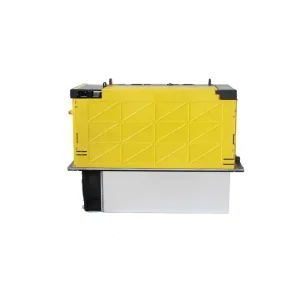
Aligning Renishaw optical output signals (BiSS-C or Fanuc Serial) with appropriate servo amplifiers—such as the Mitsubishi MDS-C1-V2-4520 dual-axis drive or Delta ASDA-B3 series servo driver—eliminates digital quantization error and control loop lag.
Achieving nanometer-level optical positioning is ineffective if the spindle thermal movement or radial runout is excessive. Pairing precision encoders with NSK 20TAC47CDDGSUHPN7C angular contact thrust bearings secures mechanical stiffness across high spindle speeds.
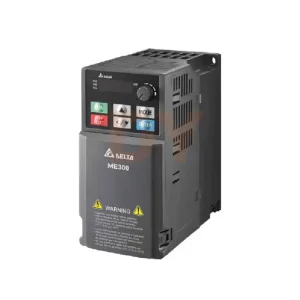
For secondary auxiliary axes, tool changers, or mist collector units, using cost-effective compact drives like the Delta VFD0A8ME11ANSAA ME300 series ensures reliable system operation while keeping cabinet costs within budget.
Essential checklist for procurement officers managing international machinery spare part inventories and breakdown emergency response.
Unplanned CNC machine downtime can cost factory operations anywhere from $5,000 to over $50,000 per hour in lost throughput. When a linear encoder readhead fails due to coolant ingress or a stylus snaps during setup, the procurement team must balance urgency, technical validation, and cost control.
In-depth technical answers addressing common installation, protocol compatibility, and maintenance queries for Renishaw encoders and CNC spares.
Generic optical readheads often lack advanced Dynamic Gain Control (AGC) and optical auto-centering mechanisms. This missing capability leads to higher Sub-Divisional Error (SDE), resulting in micro-scale waviness on machined surfaces. Genuine Renishaw encoders feature patented filtering optics that reject contamination like oil spots and dust, maintaining reliable position feedback even under harsh operating conditions.
Renishaw absolute encoders support multiple open and proprietary serial interfaces. For instance, the RESOLUTE™ line is available with options for BiSS-C, FANUC Serial Interface (01, 02, and 04), Siemens DRIVE-CLiQ, and Mitsubishi High Speed Interface. Always verify the suffix on the readhead part number (e.g., 'F' for Fanuc, 'S' for Siemens) to ensure native controller communication without requiring external protocol converter boxes.
Signal dropouts typically stem from three causes: 1) Physical misalignment exceeding ride-height tolerances (typically ±0.1 mm), 2) Optical scale contamination from coolant residue or metal chips obscuring the pitch grating, or 3) Excessive cable flex wear causing voltage drops across power supply lines. Cleaning the scale track with recommended solvents (e.g., isopropyl alcohol) and re-adjusting readhead installation using setup LEDs or diagnostic tools usually restores full signal integrity.
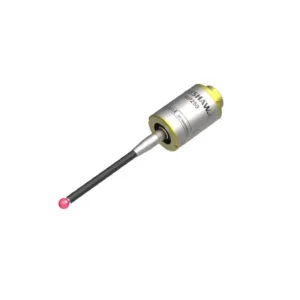
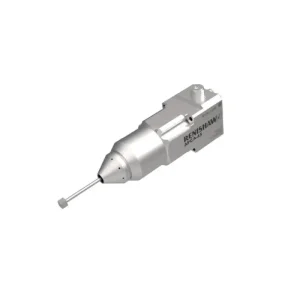
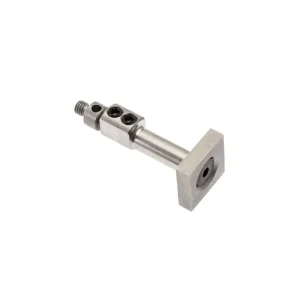
The A-2197-0160 stylus features a 34.5 mm tungsten steel stem with a precision 4-sided cube tip design, engineered specifically for tool datuming and broken tool detection. Tungsten steel provides exceptional bending stiffness, preventing elastic deformation during fast probe contact touches. This ensures reliable, repeatable tool length and diameter offsets down to sub-micron accuracy levels.
Yes. Retrofitting from incremental to absolute linear encoders eliminates the need for reference homing sequences upon machine boot-up, saving setup time and preventing potential crash risks. However, the CNC controller firmware and drive interface card must support absolute serial data streams. Our engineering team can help cross-reference your existing cabinet architecture to confirm hardware compatibility before ordering.
Ningbo DingYan maintains an active inventory of high-demand readheads, scale lengths, touch probes, servo drives, and motors in our Ningbo distribution facility. Because Ningbo is a major global shipping hub with direct connections to major express routes (DHL, FedEx, UPS) and deep-water sea ports, stocked items can be packed, customs-cleared, and dispatched within 24 to 72 hours of order confirmation.
Explore our extensive inventory of genuine spare parts to maintain continuous operational readiness across your factory floor.