An authoritative analysis of micro-milling dynamics, ultra-high-speed spindle mechanics, thermal drift mitigation, and global procurement strategies for Tier-1 advanced manufacturing.
In modern industrial manufacturing, the transition from conventional CNC machining to micro CNC machining represents far more than a simple reduction in machine tool physical footprint. Micro machining demands a fundamental paradigm shift in kinematic design, dynamic response, thermal stability, vibration isolation, and high-frequency real-time motion control. Where standard machining deals with tolerances in the range of tens of micrometers (±10 μm to ±50 μm), micro CNC machining operates comfortably in the sub-micron and single-digit nanometer domain (±0.2 μm to ±1.5 μm). As global industries—ranging from implantable biomedical devices and micro-optoelectronics to micro-fluidic channels and defense aerospace guidance units—push the boundaries of miniaturization, securing a reliable, highly technical wholesale micro CNC machine supplier becomes a mission-critical imperative for system integrators, OEMs, and factory managers worldwide.
The evolutionary trajectory of micro CNC machine tools over the next decade is governed by four core technological pillars: advanced structural damping materials, direct-drive linear motors, high-frequency air-bearing spindles, and artificial intelligence-driven real-time compensation algorithms.
Traditional gray cast iron (FC300) beds exhibit thermal expansion coefficients of approximately $12 \times 10^{-6} / \text{K}$, rendering them vulnerable to factory ambient fluctuations. Next-generation micro CNC machines heavily utilize epoxy resin mineral casting (Polymer Granite) or synthetic granite structures. Mineral casting offers a damping capacity 8 to 10 times higher than cast iron, combined with a significantly lower thermal conductivity ($1.3 \text{ W/m}\cdot\text{K}$). This ensures that micro-vibrations induced by high-rpm spindles or ambient factory equipment are rapidly attenuated before reaching the workpiece cutting zone.
In micro-milling, mechanical backlash and friction non-linearities inherent in traditional ball screw assemblies cause severe motion reversal errors (stick-slip effect at directional turnarounds). The industry technical roadmap has shifted decisively toward coreless linear motors for X/Y/Z linear axes and direct-drive torque motors for A/C rotational axes. Linear motor technology eliminates mechanical contact, offering acceleration rates exceeding $2G$, velocity stability down to sub-millimeter per second levels, and zero backlash when coupled with ultra-high resolution glass scales (e.g., Fagor or Heidenhain optical encoders providing sub-nanometer signal interpolation).
To achieve the surface speed ($V_c$) required for micro-endmills (0.05 mm – 0.5 mm diameters) without melting or tearing workpiece materials, spindle speeds must reach between 60,000 RPM and 160,000 RPM. Conventional ceramic ball bearings face speed factor ($DN$) limits and mechanical heat generation. Micro CNC machine suppliers are integrating aerostatic (air bearing) and magnetic levitation spindles. Air bearing spindles yield dynamic runout figures below $0.05 \ \mu\text{m}$ ($50 \text{ nm}$), virtually eliminating tool breakage attributable to spindle vibration.
| Technical Parameter | Standard CNC Milling Machine | Micro CNC Machine (Precision Grade) | Next-Gen Ultra-Precision Micro Machine |
|---|---|---|---|
| Positioning Accuracy | ± 5.0 μm to ± 10.0 μm | ± 0.8 μm to ± 1.5 μm | ≤ ± 0.2 μm (200 nm) |
| Spindle Max Speed | 8,000 – 15,000 RPM | 40,000 – 80,000 RPM | 100,000 – 160,000 RPM |
| Spindle Dynamic Runout | 2.0 μm – 5.0 μm | 0.3 μm – 0.8 μm | ≤ 0.05 μm (50 nm) |
| Min. Micro-Tool Diameter | Ø 1.0 mm | Ø 0.1 mm | Ø 0.02 mm (20 μm) |
| Bed Material & Damping | Meehanite Cast Iron | Polymer Granite / Mineral Casting | Synthetic Granite + Active Air Isolation |
| Feedback System | Rotary Servo Encoder | Optical Glass Linear Scale | Laser Interferometer / Sub-nm Linear Encoder |
The operational demand for micro CNC machine platforms spans several key high-tech industrial sectors. As a leading wholesale supplier, understanding the specific metallurgical, kinematic, and dimensional requirements of each vertical is crucial for providing tailored machinery and genuine spare component solutions.
Medical manufacturing demands biocompatible materials such as Grade 5 Titanium (Ti-6Al-4V), Nitinol shape memory alloys, and PEEK polymers. Micro CNC machines produce intricate orthopedic bone screws, micro-fluidic diagnostic chips, pacemaker housings, and cardiovascular stent nitinol structures. Key requirements include zero surface burr generation, mirror surface finishes ($Ra < 0.02 \ \mu\text{m}$), and oil-free cleanroom dry machining capabilities.
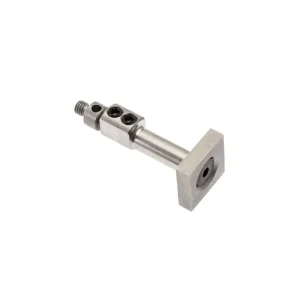
In semiconductor testing and micro-electronics, micro CNC equipment mills complex wafer test socket arrays (BGA socket pins with pitch spacing below 0.3 mm), micro-heat sinks with ultra-dense copper fins, high-frequency RF cavity filters, and optical fiber connector ferrules. Precision tool setters, such as Renishaw tungsten steel datuming styli, ensure automated Z-axis zero setting without risking fragile micro-tool breakage.
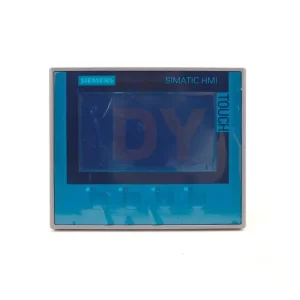
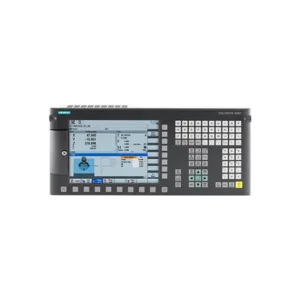
Modern aerospace navigation gyroscopes, micro-hydraulic fuel injection nozzles, optical lens mold inserts, and satellite sensors rely on multi-axis (Simultaneous 5-Axis) micro-milling. Machining complex freeform surfaces on hardened tool steels (60+ HRC) demands dynamic multi-axis interpolation provided by advanced control systems like the SIEMENS SINUMERIK 828D / 840D sl or FANUC 31i-B5 paired with high-response servo amplifiers.
Combining OEM-grade micro-machining hardware with authentic automation component supply chains for total operational resilience.
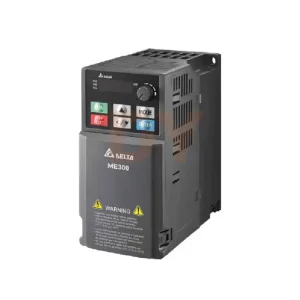
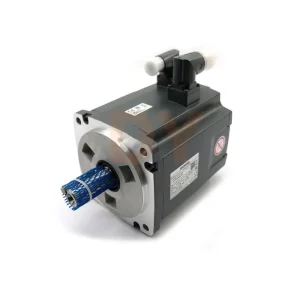
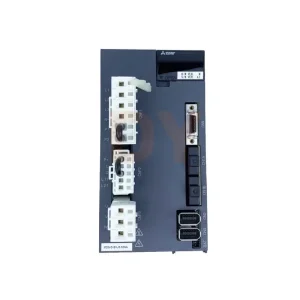
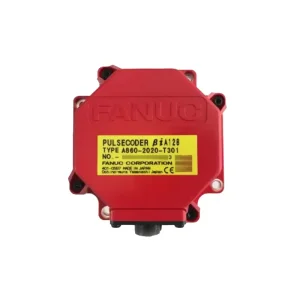
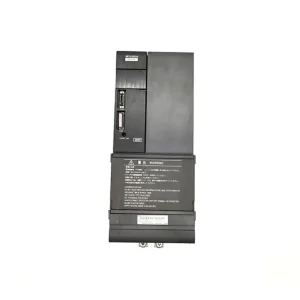
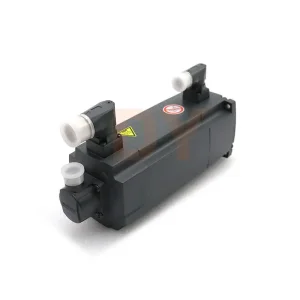
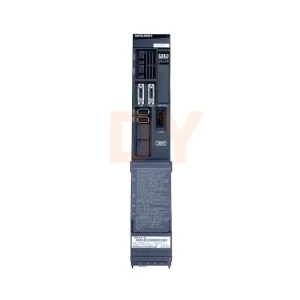
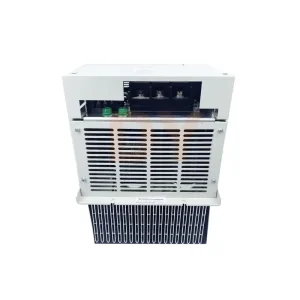
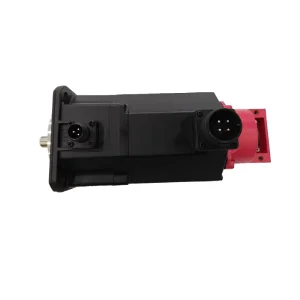
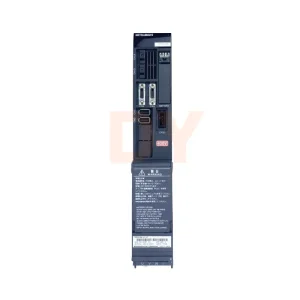
Every servo amplifier, encoder, drive unit, and touch probe is sourced directly through official manufacturer channels (FANUC, SIEMENS, Mitsubishi, Renishaw, Delta, NSK), fully backed by traceable factory serial numbers.
Our dedicated technical team performs pre-shipment cross-referencing of voltage specifications, flange geometry, encoder protocols, and firmware releases to guarantee seamless plug-and-play installation.
Located in the Ningbo industrial port zone, our central warehouse holds thousands of high-demand items ready for dispatch within 24 to 72 hours via DHL, FedEx, UPS, or air freight express lines.
The global precision machine tool industry has seen rapid cluster evolution, with China's Yangtze River Delta (specifically Ningbo, Suzhou, and Hangzhou) emerging as a premier global hub for micro CNC machine manufacturing and industrial automation distribution. This concentration provides unmatched supply chain resilience and cost-efficiency advantages for international buyers:
Evaluating micro CNC machine suppliers requires a comprehensive Total Cost of Ownership (TCO) calculation rather than evaluating machine sticker price alone. Procurement officers and chief engineers should utilize the structured decision matrix below to evaluate supplier capability:
| Decision Criterion | Evaluation Metric | Standard Supplier Risk | Wholesale Enterprise Solution |
|---|---|---|---|
| Kinematic Integrity | Bed natural frequency & damping ratio | Cast iron thermal drift; structural flexure under high acceleration | Polymer granite bed; finite element analyzed (FEA) symmetrical frame |
| Control System Authenticity | CNC controller & drive origin | Refurbished, cloned, or grey-market drives causing axis jitter | 100% genuine FANUC, SIEMENS, Mitsubishi original controls & amplifiers |
| In-Process Metrology | Tool setter & workpiece probe accuracy | Manual zero setting resulting in micro-tool breakage | Integrated Renishaw/Heidenhain touch probes with automatic offset macros |
| After-Sales Spares Support | Emergency part availability & SLA | 6–12 week factory backorder for critical drives or encoders | Strategic Ningbo buffer warehouse; 24–72 hour global dispatch |
| International Compliance | Regulatory certification & electrical standards | Non-compliant wiring; failure during regional safety audits | Full CE Machinery Directive, ISO 9001:2015, UL/RoHS compliant design |
Navigating cross-border machine procurement requires strict adherence to international electrical, mechanical, and safety regulations. Every micro CNC machine and automation assembly supplied through our global network undergoes rigorous compliance testing:
CE & ISO 9001 Certification: Machines are engineered in compliance with the EU Machinery Directive 2006/42/EC and Electromagnetic Compatibility (EMC) Directive 2014/30/EU. Internal cabinet wiring adheres strictly to EN 60204-1 safety standards, utilizing shielded twisted-pair feedback cables to prevent EMI noise interference from high-frequency spindles.
Traceable Quality Documentation: Every spare part shipment includes factory inspection certificates, exact nameplate photographs, order number verification, and comprehensive wiring pinout schematics. This eliminates guesswork for overseas maintenance technicians during emergency downtime repairs.
Direct answers from senior CNC application engineers regarding machine selection, component integration, and maintenance protocols.
Whether you require a custom wholesale micro CNC machine build or urgent replacement drives from FANUC, SIEMENS, Mitsubishi, or Renishaw—our application engineers are standing by.