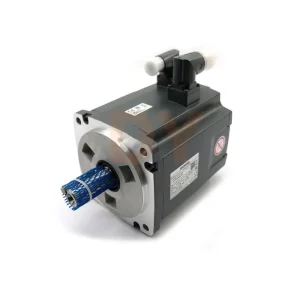
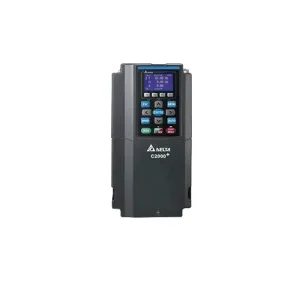
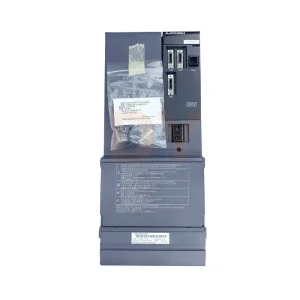
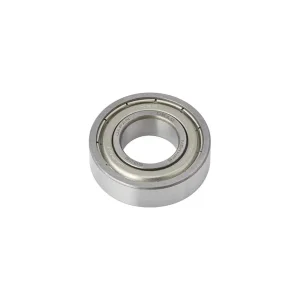
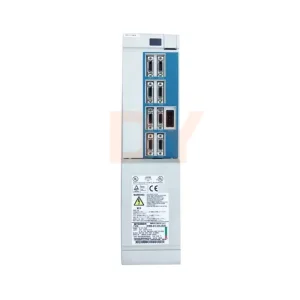
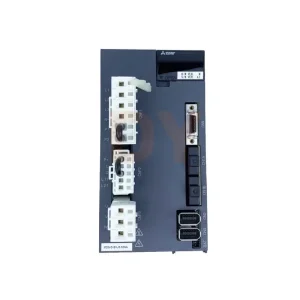
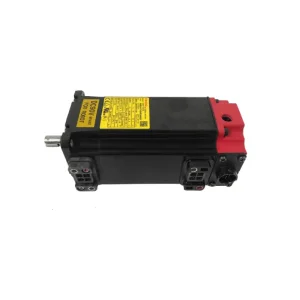
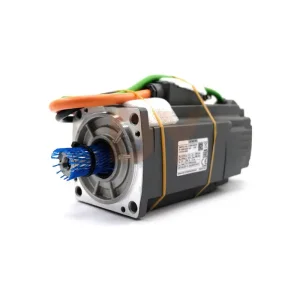
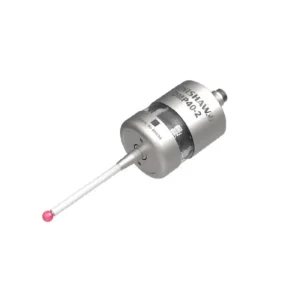
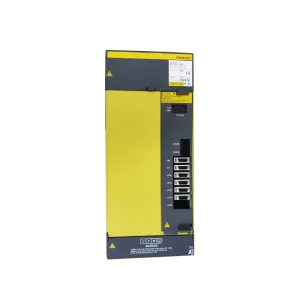
Verified 100% original CNC modules, servo drives, and tool setters configured for seamless integration into Belgian manufacturing lines.
The Kingdom of Belgium stands as one of Western Europe’s most densely industrialized, export-driven economies. Positioned strategically at the crossroads of European commerce—anchored by the Flemish Diamond (incorporating Antwerp, Ghent, Leuven, and Brussels) and the industrial corridors of Wallonia (Liège and Charleroi)—Belgian industrial enterprises operate under rigorous performance, energy-efficiency, and labor-cost dynamics. In an era governed by high labor indexation and strict EU environmental directives, operational uptime and automated throughput are not merely performance indicators; they are existential imperatives for Belgian manufacturers.
The industrial architecture of Belgium is defined by diverse high-tech clusters: advanced automotive assembly plants in Ghent and Brussels, world-class chemical and petrochemical complexes around the Port of Antwerp-Bruges, aerospace engineering precision hubs in Liège, and specialized medical device, pharmaceutical, and food-processing automation facilities across Wallonia and Flanders. Within these highly automated ecosystems, FANUC Computer Numerical Control (CNC) systems and robotics platforms represent the foundational digital backbone. At the heart of these control networks lie FANUC I/O Modules (Input/Output interface units), which serve as the vital sensory nervous system connecting CNC mainboards, operator panels, solenoid valves, safety light curtains, proximity sensors, and auxiliary machinery drives.
As Belgian enterprises accelerate their transition toward Industry 4.0, smart factory integration, and cyber-physical production systems, the demand for ultra-reliable, noise-immune, and instantly replaceable FANUC I/O hardware has surged. Ningbo DingYan Machinery Co., Ltd. delivers a dedicated technical procurement framework tailored specifically to the Belgian industrial sector, mitigating global supply chain bottlenecks by supplying 100% genuine, factory-tested FANUC I/O units, servo amplifiers, and peripheral CNC spare parts with rapid dispatch across Europe.
FANUC I/O modules are engineered to operate seamlessly under extreme electromagnetic interference (EMI), mechanical vibration, and thermal fluctuations typical of heavy-duty machining environments. Understanding their core electronic design is vital for maintenance directors, automation integrators, and retrofit engineers operating in Belgian facilities.
FANUC employs proprietary serial bus communications designed to handle high-density binary and analog signal exchange with near-zero latency. The legacy FANUC I/O Link protocol utilizes high-speed differential signal transmission over twisted-pair shielded cabling or optical fiber links, capable of connecting main CNC control units (such as FANUC 0i-MD, 0i-MF, 30i-B, and 31i-B series) to remote terminal I/O boards, operator panels, and machine tool operator station interface cards. The evolved FANUC I/O Link i standard expands bandwidth exponentially, supporting dual-channel redundancy, high-speed point-to-point data throughput, and extended physical cable distances up to hundreds of meters without signal degradation. This allows complex multi-axis machining centers in Belgian plants to manage thousands of digital I/O points across distributed cabinet configurations effortlessly.
Operational safety and system survivability are engineered into every FANUC I/O printed circuit board assembly (PCBA). Digital input channels feature high-grade optical isolators (optocouplers) rated up to 2,500V RMS isolation, decoupling sensitive 5V TTL microcontrollers on the main CPU card from 24V DC field logic signals. In Belgian industrial environments—where heavy motor switching, inductive load collapse, and high-frequency inverter noise are prevalent—this galvanic isolation prevents catastrophic voltage surges from breaching the central CNC controller.
In accordance with Western European industrial standards, FANUC offers both PNP (Source Logic) and NPN (Sink Logic) module variations. While Asian machine tool builders traditionally utilize NPN sinking configurations, European and Belgian safety standards (such as EN ISO 13849-1 and IEC 62061) strongly favor PNP sourcing inputs, where field switches switch the positive +24V DC rail to the input terminal. This ensures that an accidental wire short-circuit to mechanical ground does not falsely register as an active logical "1", preventing hazardous unintentional machine actuation.
FANUC I/O units incorporate intelligent onboard diagnostics. Micro-channel current sensors continuously monitor digital outputs for short-circuit, overcurrent, and thermal overload conditions. If a solenoid coil or auxiliary relay fails short, the intelligent driver IC instantly trips into a latching fault state, illuminating diagnostic status LEDs on the module faceplate (such as ALM or LINK indicators) and transmitting precise fault codes (e.g., System Alarm or I/O Link Failure) directly to the FANUC HMI display screen. This rapid diagnostic mapping drastically reduces Mean Time to Repair (MTTR) for maintenance engineers on Belgian production lines.
Galvanic isolation rated up to 2.5kV RMS protects central CNC logic boards against field-side voltage spikes, ground loops, and high-frequency inverter noise.
High-bandwidth optical and copper serial communications supporting ultra-low latency, dual-channel diagnostic monitoring, and high-density digital signal channels.
Engineered for 24VDC sourcing logic complying with EU EN ISO 13849-1 machine safety mandates, guarding against short-to-ground false triggers.
The manufacturing sector in Belgium is renowned for high specialization and capital intensity. Operating under stringent European Union environmental regulations and high operational labor costs, Belgian manufacturers cannot afford extended machine downtime. A single halted CNC milling machine in a tier-1 automotive plant in Ghent or a disrupted pharmaceutical packaging unit in Wallonia can incur downtime losses reaching tens of thousands of Euros per hour.
Procuring original FANUC replacement components through traditional local distribution channels in Europe often exposes manufacturing operations to extended lead times (frequently ranging from 6 to 16 weeks for specialized or legacy I/O modules), aggressive regional markups, and minimum order restrictions. When legacy machine tools (such as FANUC 16i/18i/21i or early 0i series controllers) experience I/O card failures, legacy module phase-outs present a severe risk of operational obsolescence.
Ningbo DingYan Machinery Co., Ltd. bridges this critical supply gap for Belgian procurement teams. Headquartered in Ningbo—one of the world's premier logistics and industrial manufacturing hubs—DingYan maintains an extensive, live warehouse inventory of 100% genuine, brand-new FANUC I/O modules, servo drives, spindle amplifiers, and peripheral measurement electronics. By maintaining direct procurement channels with authorized distribution networks and maintaining complete technical documentation, DingYan offers Belgian enterprises rapid 24 to 48-hour international express shipment via DHL, FedEx, and UPS, effectively restoring operational capability in a fraction of standard European lead times.
To demonstrate the practical versatility and reliability of FANUC I/O architecture, the following engineering case studies highlight real-world applications across prominent Belgian industrial sectors.
Challenge: Intermittent I/O communication dropouts on a 12-station press transfer line caused by heavy inductive solenoid interference and worn legacy wiring.
Solution: Implementation of FANUC I/O Link i high-density optical interface modules (A03B series) with dual-channel noise filtering. Direct supply of original FANUC expansion cards restored 100% signal stability, eliminating spurious emergency stop faults.
Challenge: Thermal growth of CNC spindles during 5-axis milling of aerospace titanium alloys resulting in dimensional drift beyond ±3 microns.
Solution: Deployment of FANUC High-Precision Analog Input I/O modules coupled with multi-point Pt100 RTD sensors. Real-time temperature data injection into the FANUC 31i-B CNC control permitted active thermal compensation routines, securing tight tolerances.
Challenge: Corrosive ambient atmosphere causing contact oxidation on traditional screw-terminal I/O blocks inside a hazardous material handling plant.
Solution: Standardizing on sealed, spring-cage terminal FANUC DIN-rail I/O modules backed by conformal-coated PCB surface treatments. Guaranteed compliance with European Machinery Directive standards ensured zero corrosion-induced outages.
Deploying industrial electronic components within the European Economic Area (EEA) requires total alignment with European Union harmonized standards, safety directives, and environmental regulations. Importing components into Belgium demands verified authenticity and compliance documentation to satisfy local safety inspectors (such as FPS Economy inspectorates) and customs authorities.
All FANUC I/O modules, servo drives, and industrial controls supplied by Ningbo DingYan Machinery fully conform to mandatory EU directives:
To eliminate shipping errors, damaged components, or software incompatibility, DingYan enforces a rigorous four-stage pre-shipment quality verification protocol for every Belgian order:
High-resolution photographic capture of part order numbers (e.g., A03B-XXXX-XXXX), hardware revision codes, and serial plates sent to the client prior to packing.
Bench testing of 24VDC logic circuits, channel LED indicators, and terminal continuity on certified FANUC test rigs to verify zero initial defect rate.
Sealing in ESD shielding bags with desiccants, wrapped in high-density shock-absorbing foam inside heavy-duty corrugated export packaging.
Creation of complete export documentation, accurate HS tariff coding (HS 853710), and commercial invoices enabling rapid VAT/EORI customs clearance at Brussels (BRU) or Liège (LGG) airports.
As the industrial automation sector moves toward gigabit fieldbus speeds, artificial intelligence, and edge-computing diagnostics, the architecture of industrial I/O systems is undergoing a profound transformation. Belgian manufacturers upgrading their production lines must align their procurement strategies with FANUC's technological roadmap.
While traditional serial FANUC I/O Link protocols continue to dominate existing machine fleets, the latest generation of FANUC CNC controllers (including the 30i-B Plus and 0i-F Plus series) increasingly integrates PROFINET IRT (Isochronous Real-Time) and EtherNet/IP interface modules. Future-proof FANUC I/O modules are migrating toward Time-Sensitive Networking (IEEE 802.1Qbv) standard Ethernet backplanes. This enables deterministic real-time control traffic to coexist with high-volume IT cloud data on a single unified fiber-optic cable, breaking down historical silos between shop-floor Operational Technology (OT) and enterprise Information Technology (IT).
The next decade of FANUC I/O technology moves beyond reactive fault reporting to predictive health management. Emerging smart I/O modules incorporate onboard micro-sensors capable of measuring ambient terminal temperature, supply voltage ripple, and cumulative switching cycles of output relays. By feeding these metrics into cloud-based AI analytics platforms (such as FANUC FIELD system), maintenance teams in Flanders and Wallonia can predict impending sensor degradation or power supply failure days before an actual stoppage occurs, scheduling maintenance during planned shifts.
With the implementation of the European Union's NIS 2 Directive and the Cyber Resilience Act, industrial automation components deployed across Belgian critical infrastructure must meet strict cybersecurity standards. Future FANUC network interface modules feature encrypted firmware signatures, secure boot capabilities, and hardware-level access controls compliant with IEC 62443-4-2, preventing unauthorized intrusion or malicious command injection into machine tool I/O buses.
Browse our extensive stock of original automation parts, backed by direct technical cross-referencing and guaranteed European delivery.
Detailed technical answers addressing hardware compatibility, importation protocols, warranty terms, and direct replacement procedures.
Send us your FANUC component part numbers, machine model details, or nameplate photographs. Our specialized technical engineers respond within 24 hours with accurate pricing, live stock availability, and expedited European express shipping options.