Factory-certified components, high-precision drives, and servo controls for industrial robotic arm integration.
Navigating the transformation from standalone machining centers to fully automated robotic cell architectures.
The global manufacturing sector is experiencing a structural paradigm shift. The integration of 6-axis articulated CNC robot arms into automated machining cells has evolved from a high-tier luxury to a foundational operational requirement. Modern industrial automation demands seamless interoperability between computer numerical control (CNC) machine tools, programmable logic controllers (PLCs), and robotic manipulators. As industrial enterprises battle rising labor costs, localized skill shortages, and stringent throughput demands, purchasing wholesale robotic arms and motion components directly from established global supply hubs has become a core strategic initiative.
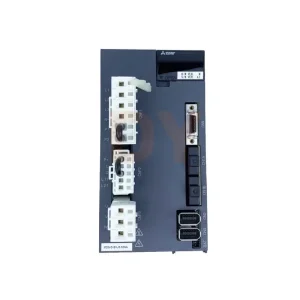
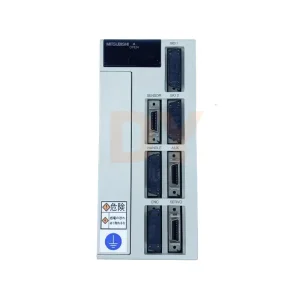
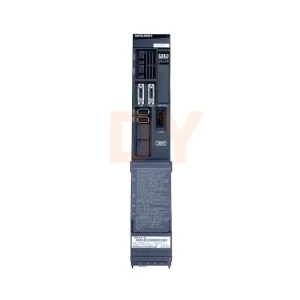
Historically, machine tending and component manipulation relied on human operators for load/unload cycles. Today’s industrial ecosystem leverages high-payload, high-speed robotic manipulators outfitted with advanced absolute encoders, high-torque AC servo drives, and closed-loop feedback systems. Brands such as FANUC, SIEMENS, Mitsubishi, and Yaskawa set the standard for closed-loop motion intelligence. However, sourcing complete robotic systems alongside compatible spare parts—such as servo amplifiers, strain-gauge tool setters, and precision bearings—requires a deep understanding of hardware alignment, communication protocols (PROFINET, EtherCAT, CC-Link), and kinematic dynamics.
Articulated CNC arms are classified by wrist torque capacity, spherical workspace reach, and structural rigidity. Engineering choices balance dynamic inertia against joint flexure, preserving sub-millimeter precision under heavy machining loads.
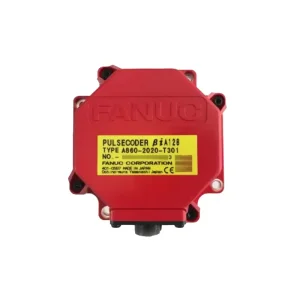
Modern robotic joints utilize high-resolution optical and magnetic encoders (e.g., Mitsubishi OSE/OSA series) coupled with digital servo drives to eliminate hysteresis and mechanical backlash during multi-axis interpolation.
Robotic arms deployed near CNC lathes and milling machines feature IP65/IP67 rated joints, pressurized internal air channels, and chemical-resistant polyurethane seals to withstand aggressive coolant mist and metal swarf.
Unpacking the structural economic advantages, localized component density, and rapid-fulfillment ecosystems driving global procurement.
China’s industrial automation supply chain has undergone a rapid technical transformation. Once considered primarily an assembly hub, key industrial manufacturing clusters—such as Ningbo, Zhejiang, and the Pearl River Delta—now house fully integrated ecosystems producing precision RV reducers, harmonic drive gearboxes, cast-iron structural housings, high-efficiency brushless motors, and sophisticated controller cards. This geographical concentration of component manufacturing drastically reduces lead times and structural costs for global buyers searching for wholesale CNC robot arm products and suppliers.
| Evaluation Parameter | Western OEM Direct Channel | China Wholesale Sourcing Hub (e.g., Ningbo) | Operational Impact for Buyers |
|---|---|---|---|
| Average Lead Time | 12 - 24 Weeks | 1 - 3 Weeks (Stocked Spares: 48 hrs) | Eliminates catastrophic machine downtime lineside |
| Component Cost Index | 100% (Baseline OEM Premium) | 55% - 70% of OEM Baseline | Significantly improves ROI on automation CAPEX |
| Customization Agility | Strict engineering change orders (ECO) | Rapid tooling & custom flange modification | Tailored end-effectors and mountings |
| Spare Parts Availability | Legacy parts frequently phased out | Extensive inventory of active & obsolete units | Extends operational lifecycle of existing cells |
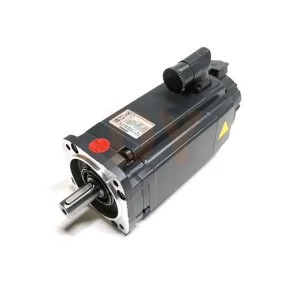
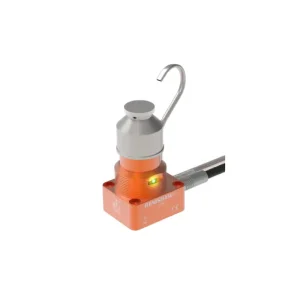
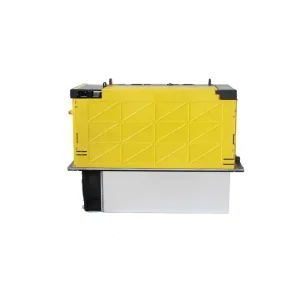
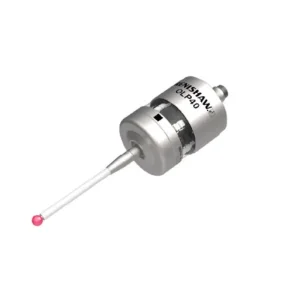
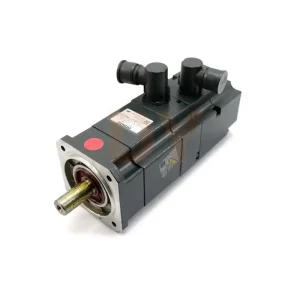
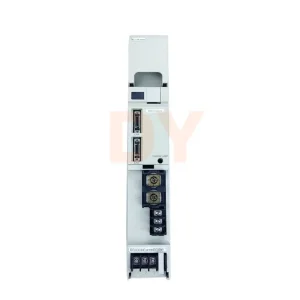
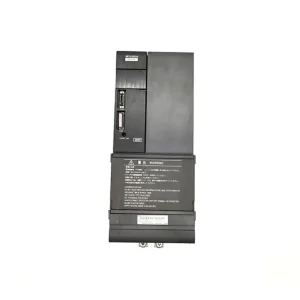
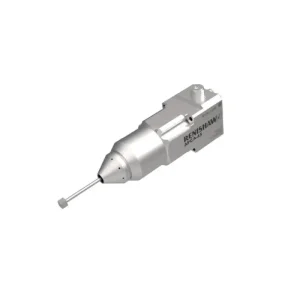
The practical benefit of direct-factory wholesale purchasing extends beyond basic price arbitrage. When procurement managers source through specialized industrial suppliers in China, they tap into comprehensive component cross-referencing databases. For instance, replacing a faulted FANUC servo amplifier, a SIEMENS SIMOTICS synchronous motor, or a Renishaw contact tool setter often requires rapid identification of flange dimensions, shaft keys, voltage constants, and communication protocols. Chinese supply chains excel at verifying these critical parameters prior to shipment, backed by rigorous factory testing protocols and 12-month basic warranties.
From sub-micron machining workcells to heavy foundry operations: Where 6-axis CNC arms deliver maximum yield.
Automated loading of raw billets and unloading of finished workpieces into multi-axis CNC lathes. Robotic arms interfaced with pneumatic grippers and hydraulic door-openers execute door-to-door cycles under 15 seconds, maximizing spindle utilization hours.
By attaching compliant force-control spindles to the robot tool center point (TCP), arms follow complex 3D contour paths on cast aluminum engine blocks or turbine blades. Constant force compliance guarantees uniform chamfering and burr removal.
Integrating 3D structured-light cameras with high-speed robot controllers allows 6-axis arms to pick randomly oriented automotive forgings out of deep bins, dynamically adjusting grip vectors to feed downstream CNC machining lines.
A systematic, engineering-first approach to evaluating robot arm parameters, component compatibility, and lifecycle costs.
Procuring wholesale CNC robot arms and motion spare parts involves technical risk management. Buyers must look beyond initial purchase prices and evaluate the total cost of ownership (TCO) across a 10-year operational horizon. Below is an engineering checklist built by senior automation directors for evaluating potential suppliers and machinery parameters:
Verify that the arm's rated payload accounts for the weight of the end-of-arm tooling (EOAT), quick-change couplers, sensors, and maximum part weight. Ensure moment of inertia ratings on Axes 4, 5, and 6 are not exceeded during high-speed acceleration phases.
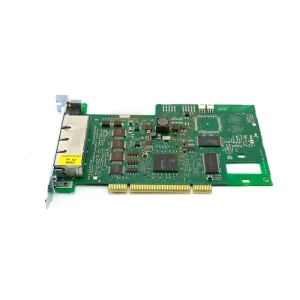
Confirm whether the robot controller natively interfaces with your existing master CNC system. Sourcing suppliers capable of providing pre-configured communications cards (such as Siemens Communications Processor Cards) ensures plug-and-play installation without custom software patches.
Demand ISO 9283 testing reports confirming pose repeatability. For precision workholding and direct spindle loading, positional deviation must remain within ±0.02mm to prevent tool alignment jams and premature collet wear.
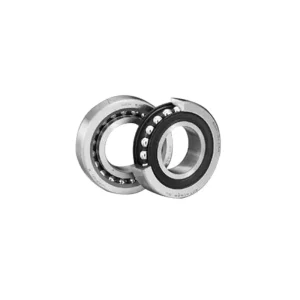
Partner with wholesale suppliers maintaining deep inventory reserves of critical replacement items: AC servo motors, optical encoders, power modules, replacement styli, and precision bearings. Sourcing from unified stockists drastically reduces breakdown risks.
How next-generation robotic technology is reshaping the manufacturing floor between 2026 and 2030.
As smart factories transition toward Industry 4.0 maturity, the line between traditional industrial robot arms and collaborative robots (cobots) is blurring. Next-generation wholesale robotic platforms incorporate artificial intelligence at the edge, real-time vibration suppression algorithms, and dynamic path-planning software.
Sensors embedded inside joint reducers monitor vibration frequencies, thermal expansion, and current draw. Digital twins stream telemetry back to maintenance management platforms, predicting drive failure before line stoppages occur.
Advanced machine learning models enable robot arms to identify arbitrarily arranged workpieces on conveyor belts. This eliminates expensive custom mechanical fixtures, slashing setup times for high-mix, low-volume production batches.
Safety laser scanners allow high-speed industrial arms to operate at full velocity (>2,000mm/s) when unpopulated, automatically reducing speed to safe cobot thresholds when human operators enter the working envelope.
Explore our expanded wholesale catalog of touch probes, communication cards, encoders, and power supply units.
Expert answers to critical engineering, logistics, and compatibility questions faced by procurement managers.
Verification requires matching four parameters: physical mounting interface/flange, motion protocol (e.g., EtherCAT, PROFINET, FANUC FSSB), operating voltage/current ratings, and feedback device type (absolute vs. incremental encoder resolution). Our application engineers cross-reference component nameplates and serial numbers against master technical schematics prior to order confirmation.
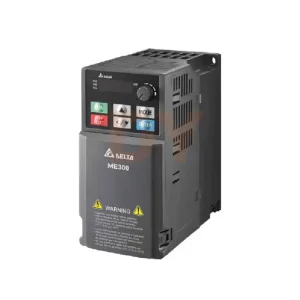
Yes. All brand components—including FANUC amplifiers, SIEMENS motors, Mitsubishi drive units, and Renishaw probes—are sourced through authorized distribution channels. Every item ships in original factory packaging and includes our 12-month technical warranty covering functional operation under standard industrial conditions.
In-stock maintenance spares (such as encoders, bearings, and drive modules) ship from our Ningbo warehouse within 24 to 48 hours via DHL/FedEx Express. Complete wholesale orders of 6-axis robotic arms or specialized multi-unit workcell packages carry a manufacturing and testing lead time of 2 to 4 weeks depending on custom end-effector specifications.
Absolutely. Due to China's expansive industrial maintenance market, suppliers maintain stock of legacy series (e.g., older Mitsubishi MDS-C1 or Siemens 1FK6 series). Where original units are fully out of production, our technical team provides field-tested drop-in alternatives along with wiring retrofit schematics.
All sensitive components (such as communication processor cards and servo drives) undergo anti-static vacuum sealing, triple-layer bubble encapsulation, and placement within heavy-duty export corrugated containers or reinforced wooden crates. Each shipment includes shock-watch and tilt-indicator monitors for international ocean and air freight.
Sourcing directly through Ningbo hub suppliers eliminates multi-tier regional agent markups, yielding direct cost savings of 30% to 45%. Furthermore, Ningbo’s direct proximity to major deep-water port terminals streamlines export customs processing and drastically speeds up global logistics fulfillment.
Whether you require complete 6-axis CNC robot arm packages or hard-to-find replacement drives, our engineering team is ready to verify your specifications and deliver competitive wholesale pricing within 24 hours.
Request Technical Quote