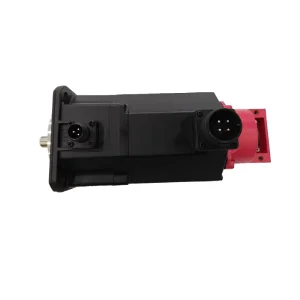
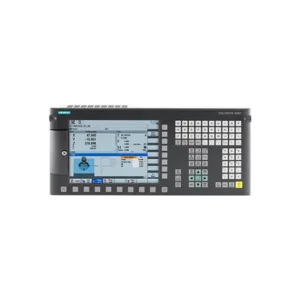
Explore our prioritized global inventory of genuine Siemens controllers, servo systems, HMIs, and precision components.
Integrated cryptographic protection, secure boot capabilities, access control lists (ACL), and OPC UA security profiles aligned with IEC 62443 standard requirements for micro-automation nodes.
Seamless scalability via signal boards, communication modules, and Ethernet-based remote I/O drops, ensuring minimal footprint without sacrificing control capacity.
Native MQTT, JSON, and RESTful API protocol bridging allows direct micro PLC-to-cloud data ingestion for Siemens MindSphere, AWS IoT, and Microsoft Azure ecosystems.
The global industrial automation sector has undergone a profound structural transformation over the past decade. Micro Programmable Logic Controllers (Micro PLCs)—traditionally defined as compact control platforms handling up to 128 to 256 digital and analog Input/Output (I/O) points—have evolved from isolated relay-replacement units into highly connected, intelligence-dense micro-computing nodes. Siemens has consistently maintained a pioneering command over this domain through its SIMATIC controller portfolio, specifically the legacy S7-200, the region-optimized S7-200 SMART, and the industry-benchmark SIMATIC S7-1200 compact controller series.
In the contemporary B2B market, wholesale procurement of Siemens Micro PLCs is driven by OEM machine builders, system integrators, and global industrial distributors who demand extreme hardware reliability, standardized programming environments, and rapid global supply chain fulfillment. Driven by global initiatives such as Industry 4.0, China Manufacturing 2025, and Europe’s Green Deal Industrial Plan, the micro-PLC market segment is projected to exceed USD 12.4 Billion by 2030, registering a CAGR of over 6.8%.
Strategic Market Insight: Micro PLCs are no longer selected purely on basic hardware unit costs. B2B procurement directors and system architects evaluate micro-controllers based on Total Cost of Ownership (TCO), total software engineering cycle reduction (via Siemens TIA Portal), supply continuity, and cybersecurity compliance.
Modern industrial operations face volatile raw material costs, tightening carbon emissions standards, and a persistent shortage of skilled automation engineers. Consequently, Siemens Micro PLCs serve as the primary execution engine for automated packaging lines, HVAC smart environmental controls, building management systems (BMS), solar trackers, water treatment micro-factories, and precision auxiliary control within CNC metalworking machines.
Understanding the technical trajectory of Siemens Micro PLCs is essential for procurement managers and control engineers attempting to balance legacy machine maintenance with next-generation system retrofits. Siemens' technical roadmap in micro-automation is characterized by three major evolutionary pillars:
The technical comparative matrix below details the structural parameters governing contemporary Siemens Micro PLC implementations:
| Specification Parameter | SIMATIC S7-200 (Legacy) | S7-200 SMART (Compact OEM) | SIMATIC S7-1200 (TIA Integrated) |
|---|---|---|---|
| Primary Target Application | Standalone Machinery, Simple Pumps | High-Speed OEM Packaging, Motion | IIoT Edge Nodes, Complex OEM & Process |
| Engineering Software | STEP 7-Micro/WIN | STEP 7-Micro/WIN SMART | TIA Portal (V13 through V19+) |
| Native Onboard Network | RS-485 / PPI / Modbus RTU | Ethernet (Modbus TCP) + RS-485 | PROFINET IRT / Modbus TCP / OPC UA |
| Motion Control Capabilities | 2-Axis PTO (100 kHz) | 3-Axis PTO (up to 200 kHz) | Integrated Technology Objects (PTO/PWM/Drive) |
| Cybersecurity Specs | Basic Password Protection | Multi-level Password Hierarchy | Integrated Cryptographic Security & Secure Boot |
| IIoT / Cloud Protocols | Requires Gateway Module | Modbus TCP / Custom IP Scripting | Native MQTT, JSON, REST API & MindSphere |
Siemens Micro PLCs are engineered to function across diverse, harsh industrial environments. By leveraging distributed intelligence, these controllers enable flexible, resilient, and energy-efficient automation across key macro industries.
Micro PLCs coordinate high-speed registration marks, rotary cutters, and capping mechanisms. With high-speed counter inputs (HSC) operating up to 200 kHz, S7-1200 controllers execute real-time position tracking for servo-driven conveyor synchronization.
In precision milling and turning centers, Siemens Micro PLCs operate alongside main numerical controls (such as the SINUMERIK 828D). They handle auxiliary tasks including automated tool changers (ATC), chip conveyor indexing, coolant temperature regulation, and safety door interlocks.
Deployed in remote utility-scale solar farms, micro PLCs run real-time astronomical algorithms to adjust photovoltaic panel angles via stepper or servo drives. Low power consumption and wide operating thermal envelopes (-20°C to +60°C) make them ideal for rugged outdoors.
Distributed pump stations utilize S7-1200 controllers integrated with SIMATIC HMI panels (such as KTP700/KTP400) for PID pressure control, flow rate telemetry, automated chemical dosing, and emergency remote shutdown via cellular telemetry modems.
The single greatest driver of Siemens Micro PLC adoption in wholesale enterprise environments is the software ecosystem. The Totally Integrated Automation (TIA) Portal unifies PLC programming, Human-Machine Interface (HMI) screen design, drive parameterization (SINAMICS V90, G120), and safety evaluation into a single digital engineering environment.
From an engineering execution standpoint, this unified architecture yields substantial economic benefits:
As the industrial automation landscape transitions toward software-defined manufacturing, Siemens Micro PLCs are undergoing a massive technological convergence. Key vectors shaping the decade ahead include:
For international procurement directors, system integrators, and OEM supply chain managers, acquiring Siemens Micro PLCs in volume requires a structured risk-mitigation framework. Counterfeiting, unauthorized refurbishment, and supply chain disruptions necessitate strict vendor verification steps:
Wholesale Verification Protocol: Always demand original factory packaging with tamper-evident seals, serial number traceability, Certificate of Origin (COO), and official Siemens channel verification documents. Cross-reference nameplate part numbers against exact ordering codes (6ES7... / 6AV2...).
Furthermore, maintenance planners should evaluate component lifecycle status. Operating obsolete equipment without pre-arranged stock reserves exposes manufacturing facilities to severe downtime risks. Partnering with specialized, high-volume suppliers ensures immediate access to both active-catalog CPUs and hard-to-find legacy replacement parts.
Comprehensive engineering & procurement responses regarding Siemens Micro PLCs, system integration, and global supply logistics.
Explore additional high-precision drives, encoders, CNC controllers, and measurement systems available for wholesale global dispatch.