Explore our inventory of genuine, high-performance CNC components from leading global manufacturers.
An authoritative analysis of industrial automation dynamics, supply chain economics, and multi-axis control integration.
The modern manufacturing ecosystem is undergoing an unprecedented transition driven by Industry 4.0 digitisation, energy efficiency mandates, and the demand for extreme geometrical precision. At the heart of this physical transformation lies the CNC Motor Controller—the critical cyber-physical unit responsible for interpreting high-level G-code commands and executing continuous vector-controlled motion across multiple mechanical axes.
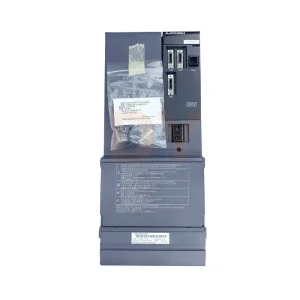
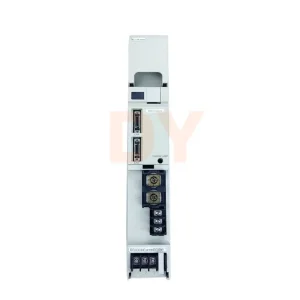
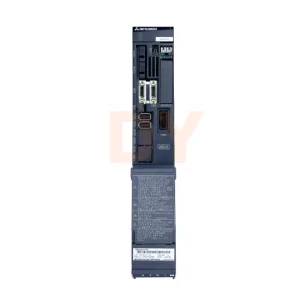
Historically dominated by closed, proprietary ecosystems, the market for modern numerical controllers, servo drives, and AC/DC converter units (such as the Mitsubishi MDS Series or Siemens SIMOTICS/SINAMICS platforms) has evolved toward hybrid, high-speed industrial communication protocols like EtherCAT, PROFINET IRT, and MECHATROLINK-III. This democratization allows industrial enterprise buyers, OEM machine builders, and automated workshop operators to source discounted, factory-certified surplus and direct OEM replacement units without compromising system integrity or operational uptime.
Machine tool downtime costs enterprise manufacturing facilities an average of $260,000 per hour across high-volume automotive and aerospace lines. When a primary spindle drive or multi-axis power module fails—such as an AC/DC converter unit like the MDS-D2-CV-300—procuring directly through traditional legacy distribution channels can incur lead times of 12 to 26 weeks.
Consequently, the strategic market for discount CNC motor controller products has transitioned from a secondary option to a vital supply chain resilient strategy. Verified stockists and certified component suppliers maintain immediate warehouse availability of brand-new, factory-sealed, or fully reconditioned units, reducing factory MTTR (Mean Time to Repair) by up to 92%.
Examining field-oriented control, wide-bandgap semiconductors, and closed-loop metrology feedback integration.
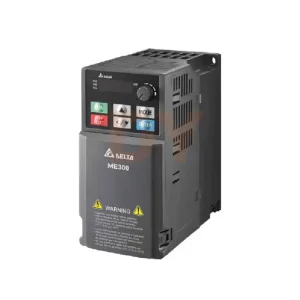
The adoption of Silicon Carbide (SiC) and Gallium Nitride (GaN) power transistors inside modern compact drives—such as the Delta MH300 Series (e.g., VFD112MH43AFSAA)—has fundamentally reshaped thermal dynamics and switching frequencies. Traditional IGBT-based inverters suffered from substantial switching losses at frequencies above 10 kHz. Modern SiC-driven CNC motor controllers operate comfortably at switching frequencies exceeding 32 kHz, yielding three distinct mechanical advantages:
1. Harmonic Distortion Reduction: Ultra-smooth current waveforms entering synchronous motors like the Siemens SIMOTICS 1FL6/1FK6 series, minimizing cogging torque and micro-vibrations during sub-micron contouring.
2. Volumetric Footprint Reduction: Up to 40% smaller drive dimensions, allowing control cabinet engineers to design high-density multi-axis control layouts.
3. Thermal Efficiency: Reduced heat dissipation lowers the ambient cooling load within IP54/IP65 sealed control cabinets.
| Architecture Feature | Legacy Open-Loop / Stepper Systems | Standard Vector Servo Control | Next-Gen Closed-Loop AI Drive Architecture |
|---|---|---|---|
| Feedback Loop Rate | None (Open-loop) | 1 kHz – 4 kHz (Optical/Resolver) | 32 kHz – 62.5 kHz Real-time FOC |
| Communication Bus | Pulse / Direction (5V TTL) | Analog +/-10V / Early Fieldbus | Deterministic TSN / EtherCAT / PROFINET IRT |
| Position Accuracy | ± 50 arcsec | ± 5 to 10 arcsec | < ± 0.5 arcsec (Sub-micron) |
| Thermal Compensation | Manual Offsets | Static Parameter Tables | Dynamic Thermal Drift Compensation via Edge Sensing |
| Metrology Integration | Post-process CMM only | Basic Tool Setter Trigger Switches | In-Situ Scanning Probes (Renishaw OSP60 / OTS / LTS) |
A CNC motor controller cannot guarantee geometric fidelity without continuous, high-speed closed-loop feedback. Modern machine tools rely heavily on integrating scanning probes and contact tool setters directly into the CNC kernel's interrupt loops.
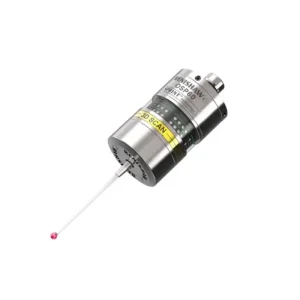
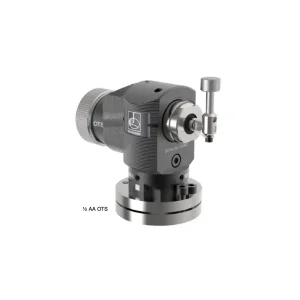
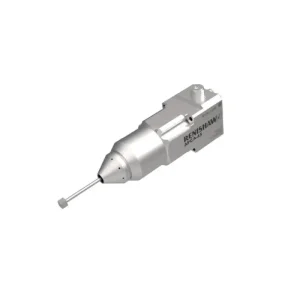
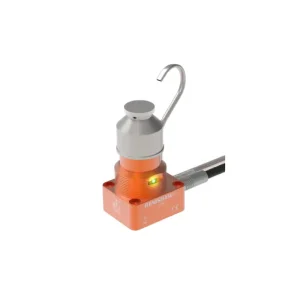
Devices such as the Renishaw OSP60 Scanning Probe and Renishaw OTS/APC/LTS Contact Tool Setters supply thousands of discrete surface data points per second directly into the motion engine. By feeding sub-micron spatial coordinates back into the servo loop, the motor controller dynamically calculates cutter radius wear, thermal growth offsets, and workpiece misalignments in real time—eliminating scrapped parts before a single chip is cut.
How specialized motor controllers, servo drives, and feedback systems perform in real-world manufacturing environments.
Machining monolithic aircraft wing spars from solid Titanium 6Al-4V blocks requires extreme continuous torque at low RPMs alongside instantaneous dynamic acceleration on rotational axes (A/C axes).
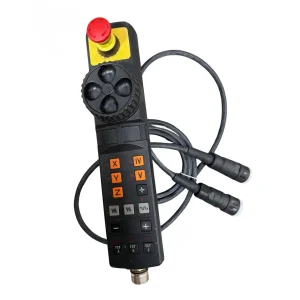
High-output single and dual-axis servo amplifiers, such as the Mitsubishi MDS-DH-V1-800 coupled with heavy-duty AC spindle modules, deliver controlled vector torque under fluctuating tool engagement. The integration of high-resolution handwheels (Heidenhain HR410) allows operators to execute safe, sub-millimeter manual alignment during initial raw stock setup.
High-volume electric vehicle component manufacturing demands fast feed rates (up to 60 m/min) and continuous duty cycles operating 24/7/365.
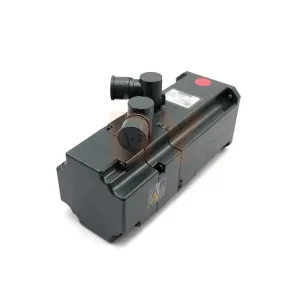
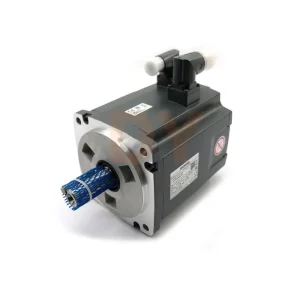
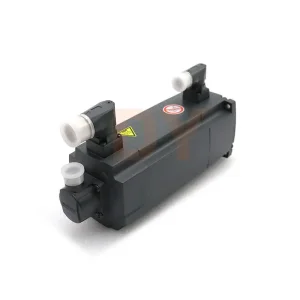
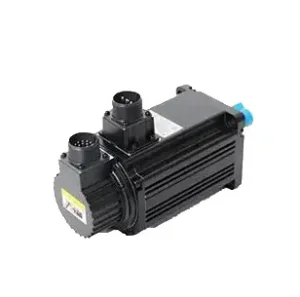
Units like the Siemens SIMOTICS 1FL6/1FK6 AC Servo Motors coupled with high-efficiency power supply units (MDS-D2-CV-300) ensure high power factor energy regeneration back into the plant grid during deceleration cycles. In-line tool check instruments like the Renishaw LTS/OTS automatically detect broken endmills between part cycles, maintaining automated line continuity without operator intervention.
Fabricating orthopedic titanium bone screws and cobalt-chrome hip joints necessitates surface roughness tolerances below Ra 0.05 µm.
Compact, high-precision drives like the Delta MH300 Series and precision servo controllers eliminate backlash and velocity ripple. Paired with Renishaw OSP60 scanning technology, micro-milled surfaces are verified continuously within the machine envelope, guaranteeing medical device regulatory compliance.
The evolutionary trajectory of intelligent CNC drives, edge AI execution, and self-optimizing servo loops.
Motor controllers will natively execute deep-learning micro-models on integrated DSP chips, analyzing current signature harmonics (Motor Current Signature Analysis - MCSA) to predict ball-screw wear and bearing failure weeks before mechanical breakdown occurs.
Complete convergence toward IEEE 802.1 Time-Sensitive Networking (TSN). Proprietary optical buses will yield to unified gigabit Ethernet backbones capable of synchronizing 128 motion axes with jitter under 10 nanoseconds.
CNC kernels will continuously run a parallel physics-based digital twin of the machine structure, adjusting control loop gains on-the-fly based on instantaneous machine thermal expansion and mass changes caused by stock removal.
To remain competitive amidst tightening margins and volatile supply chains, industrial operators must adopt a three-pillar hardware optimization strategy:
In-depth engineering insights regarding component compatibility, troubleshooting, and procurement protocols.
Cross-referencing requires four critical parameters: 1) Executive part/order number matching (e.g., Siemens 1FL6044 series or Mitsubishi MDS series), 2) Bus protocol compatibility (analog ±10V vs optical bus systems like SSCNET III/H), 3) Motor feedback encoder protocol (absolute multi-turn vs incremental EnDat/BISS-C), and 4) Voltage/Current rating matching. Providing a clear photo of the motor/drive nameplate to our engineering team guarantees 100% plug-and-play verification prior to shipping.
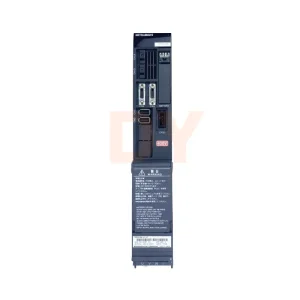
An AC/DC Power Supply Converter (such as the Mitsubishi MDS-D2-CV-300) rectifies 3-phase AC line voltage into a centralized high-voltage DC bus (typically 300V-600V DC). The individual single-axis or dual-axis servo drive units (e.g., MDS-DH-V1-800) connect directly to this shared DC bus to power the AC servo motors. Centralizing the power conversion improves energy efficiency, allows regenerative braking sharing across axes, and reduces cabinet footprint.
Yes. All products listed—including Siemens SIMOTICS motors, Delta drives, Renishaw probes, and Mitsubishi NC controllers—are sourced through authorized OEM channels, surplus liquidations, and factory-certified distributors. Items are shipped 100% brand-new in original factory packaging and carry our comprehensive 12-month operational replacement warranty.
Unlike traditional touch-trigger probes that capture single point data, a scanning probe (such as the OSP60) continuously drags a diamond stylus across complex freeform surfaces, transmitting thousands of measurement vectors per second. The CNC controller uses this high-density data to dynamically adjust toolpath offsets, correct form errors, and verify geometric tolerances on the machine tool before unclamping the workpiece.
Common failure indicators include: 1) Overcurrent / IPM module alarms during acceleration, 2) Excessive motor vibration or hum at standstill (indicative of encoder signal degradation or loss of current loop tuning), 3) DC bus overvoltage alarms during rapid deceleration (indicating a failing regenerative converter or braking transistor), and 4) Thermal runaway alarms triggered by internal cooling fan failure or heat sink clogging.
Yes. The Delta MH300 series (such as VFD112MH43AFSAA) supports open-loop and closed-loop vector control for both induction and permanent magnet motors. Featuring built-in PLC functions, STO (Safe Torque Off), and high-speed frequency output up to 2000 Hz, it serves as an ideal, cost-effective replacement for legacy spindle inverters in light-to-medium milling and lathe applications.
For stock components, orders confirmed before 14:00 (GMT+8) are dispatched standard same-day via express international air freight (DHL, FedEx, UPS). Global transit times range from 2 to 5 business days depending on destination customs clearance, effectively minimizing critical machine downtime.
When a cutting tool contacts the stylus of a tool setter like the Renishaw OTS or LTS, a high-precision optical or hardwired trigger signal is sent directly to the high-speed skip input (G31 interrupt) of the CNC controller. The controller immediately latches the current axis encoder positions, automatically calculating tool length and diameter offsets with repeatability under 1.0 µm.
Complete your CNC maintenance and system upgrade requirements with our expanded hardware lineup.