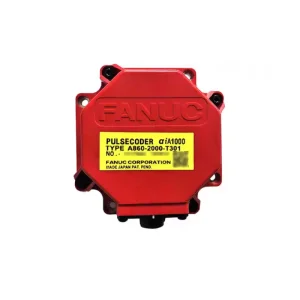
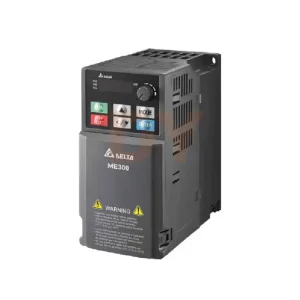
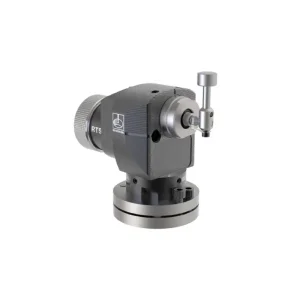
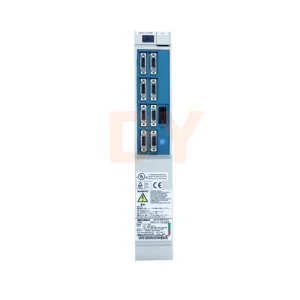
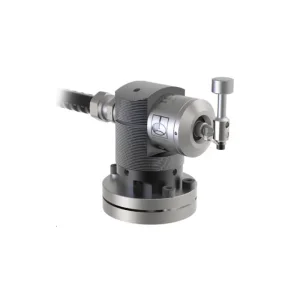
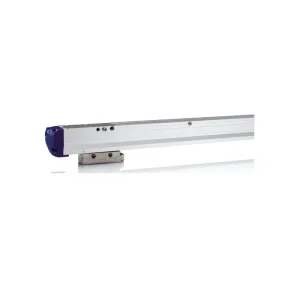
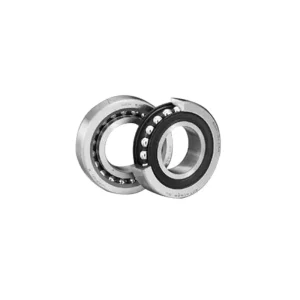
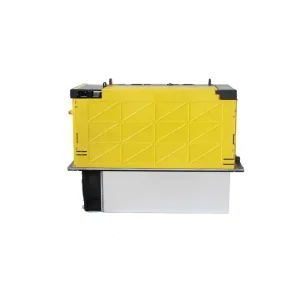
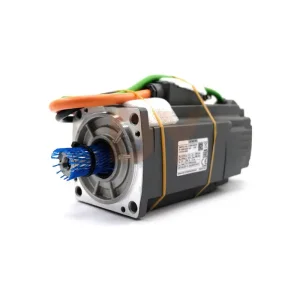
Verified original inventory including Delta variable frequency drives, servo power supplies, encoders, and precision CNC automation components available at wholesale discounts.
An authoritative analysis of motor velocity control systems, power electronics evolution, carbon neutrality targets, and the strategic positioning of Delta AC motor drives in modern factory automation.
In the contemporary industrial ecosystem, electric motor systems account for more than 70% of total electrical energy consumed in manufacturing processes and over 40% of global electricity usage. As international regulatory bodies enforce stringent energy conservation directives (such as EU Ecodesign Directive 2019/1781 and US Department of Energy IE3/IE4 mandates), industrial enterprises face escalating pressure to modernize legacy constant-speed motor drives. Delta AC Motor Drives (Variable Frequency Drives / VFDs) stand at the forefront of this industrial transition, serving as essential control nodes that regulate speed, torque, position, and power factor with exceptional precision.
Modern industrial operations require much more than rudimentary frequency modulation. Contemporary variable speed drives must integrate complex Vector Control algorithms (such as Field-Oriented Control, or FOC), direct digital signal processing (DSP), and advanced thermal management to deliver high starting torque at low frequencies, rapid transient response, and seamless industrial network connectivity (MODBUS, EtherCAT, PROFINET, Ethernet/IP). Sourcing authentic, discounted Delta AC drives through accredited B2B supply channels enables plant managers, machine builders (OEMs), and systems integrators to drastically lower capital expenditure (CAPEX) while establishing sustainable reductions in operational expenditure (OPEX).
A deep dive into Delta's inverter topology, control algorithms, thermal dissipation engineering, and an empirical evaluation against traditional motor starter topologies.
| Performance Metric / Feature | Traditional Direct-On-Line (DOL) | Star-Delta (Y-Δ) Starter | Solid-State Soft Starter | Delta AC Motor Drive (VFD Vector Control) |
|---|---|---|---|---|
| Inrush Current Multiplier | 600% - 800% Rated Current | 300% - 400% Rated Current | 200% - 400% Rated Current | 100% - 150% Controlled Inrush |
| Speed Adjustment Range | Fixed Speed (100%) | Fixed Speed (100%) | Fixed Speed after Start | 0.1 Hz to 1500 Hz (Full Stepless Range) |
| Low-Speed Torque Capability | High Inrush, Fixed Torque | Reduced Torque (33% during Y) | Limited Torque during Ramp | 200% Rated Torque at 0 Hz (FOC + PG Encoder) |
| Energy Efficiency Optimization | None (High Mechanical Losses) | None | Minimal (Only reduces startup loss) | Optimal (Automatic Energy-Saving V/f & Vector) |
| Built-in PLC & Logic Functions | Requires External Contactor Relays | Requires Relay Logic Timers | Basic Fault Monitoring | Integrated Delta Safe Logic (2k to 10k steps) |
| Safety Integrity Level (SIL) | N/A | N/A | Optional External Safety Relay | Built-in STO (Safe Torque Off) SIL2 / SIL3 |
Delta AC drives leverage modern Insulated Gate Bipolar Transistors (IGBTs) coupled with space-vector pulse-width modulation (SVPWM). This allows the drive to synthesized pure sinusoidal-equivalent AC currents even under severe variable load conditions. Series such as the VFD-C2000+ and VFD-MS300 feature dual-rating designs (Normal Duty for pumps/fans and Heavy Duty for extruders/crushers), enabling seamless transition between V/f scalar control, sensorless vector control (SVC), and closed-loop field-oriented control (FOC).
Non-linear power conversion inherently induces harmonic distortion back into the supply grid. High-tier Delta AC drives are manufactured with integrated DC link chokes and high-grade Class B / C2 RFI/EMC filters. This internal shielding dampens total harmonic distortion (THD-i) to comply with international IEEE 519 standards, safeguarding sensitive digital encoders, programmable logic controllers (PLCs), and adjacent measurement instruments from electromagnetic noise.
How Delta AC drives are customized to meet severe industrial demands across diverse commercial sectors globally.
In commercial real estate, data centers, and hospital cleanrooms, Delta's VFD-CP2000 series drive utilizes multi-pump control algorithms, automated sleep/wake modes, and built-in BACnet MS/TP protocols. By dynamic modulation of chilled water pump velocity based on real-time thermal differential sensors, facilities achieve up to a 45% reduction in annual kilowatt-hour usage.
Precision turning, milling, and grinding machines require high-frequency output and stable low-speed torque. Compact drives such as the Delta ME300 and MH300 support output frequencies up to 1500 Hz. Integrated rigid tapping functions, rapid deceleration braking via dynamic brake resistors, and pulse-input positioning ensure micrometric tolerance retention across heavy metal removal cycles.
Extruders and injection molding equipment demand constant high-torque output under fluctuating backpressures. Delta's specialized hybrid servo drives (such as the VFD-VJ series) combine fast pressure response with accurate flow rate control, preventing thermal degradation of synthetic polymers while dampening hydraulic shock loading on mechanical pumps.
High-speed logistics sortation systems utilize Delta drives featuring built-in positioning control, electronic gear ratios, and multi-axis master-slave synchronization. Smooth acceleration and deceleration profiles prevent package slippage, while STO (Safe Torque Off) safety functions allow operators to perform localized clearing without removing total power from main control panels.
Navigating total cost of ownership (TCO), supply chain verification, and tiered volume discounts for international automation distributors.
Procuring factory-automation components directly through authorized global stockists eliminates redundant intermediary margins. When procuring industrial drives—such as Delta, Mitsubishi, Siemens, and Fanuc units—securing volume-discount pricing substantially lowers project commissioning budgets. Procurement directors are advised to evaluate suppliers based on inventory depth, immediate dispatch availability, and traceably genuine component guarantees.
The initial purchase price of an AC drive accounts for less than 5% of its total lifecycle cost, with consumed electrical energy and unplanned maintenance representing the remaining 95%. Sourcing premium Delta drives at discounted pricing delivers an accelerated Return on Investment (ROI), often recovering total drive acquisition costs within 3 to 8 months of continuous operational deployment.
Rigorous quality certifications ensuring seamless installation across global industrial regions.
Delta AC drives adhere strictly to international safety and electrical compatibility directives. Compliance with UL 61800-5-1 standards ensures safety approval across North American industrial grids, while CE marking and IEC/EN 61800-3 certifications validate conformity throughout European markets. All circuit assemblies strictly conform to RoHS and REACH environmental guidelines.
Industrial deployment environments frequently expose electrical components to corrosive gases (hydrogen sulfide, chlorine, sulfur dioxide), conductive dust, and high humidity. Delta applies standard Class 3C3 chemical gas resistance and Class 3S3 solid particle resistance PCB conformal coatings across drive series, extending component longevity in textile plants, wastewater facilities, and chemical manufacturing plants.
Exploring the next decade of power electronics: SiC/GaN semiconductors, cloud-linked edge analytics, and active regenerative power units.
The transition from silicon-based IGBTs to Silicon Carbide (SiC) and Gallium Nitride (GaN) power switches enables dramatically higher switching frequencies (up to 50 kHz+) with significantly reduced thermal dissipation. Future Delta drive iterations will achieve up to 50% smaller enclosure footprints while boosting power conversion efficiency beyond 98.5%.
Next-generation Delta drives embed micro-processing cores dedicated to anomaly detection. By continuously sampling motor current signatures, vibration harmonics, and thermal gradients, the drive can predict bearing wear or winding degradation weeks prior to physical equipment failure, pushing failure alerts via MQTT to cloud maintenance dashboards.
In high-inertia overhauling applications (hoists, centrifuges, elevators, unwinding machines), kinetic energy is conventionally wasted as heat across dynamic braking resistors. Active Front End (AFE) technology converts braking energy into clean, low-distortion AC current and feeds it back into the facility power grid, transforming the AC drive into a net-positive energy recovery system.
Expert answers to common engineering questions, model selection procedures, parameter setup, and purchasing verification.
Sizing a Delta AC drive requires evaluating the load profile rather than matching motor horsepower alone. Normal Duty (ND) ratings apply to variable torque loads such as centrifugal pumps, HVAC fans, and blowers where overload requirements rarely exceed 120% of rated current for 60 seconds. In these applications, the drive can be selected equal to or slightly below nominal motor horsepower if current ratings match.
Conversely, Heavy Duty (HD) ratings are mandatory for constant torque or high-inertia applications—such as extruders, positive displacement pumps, conveyors, crushers, and CNC spindles—where starting torque is high and overloads reach 150% for 60 seconds or 200% for 3 seconds. Always check the continuous full-load amps (FLA) listed on the motor nameplate against the drive's HD output current rating, applying a 10-15% derating safety margin if operating in ambient temperatures exceeding 40°C or at high carrier frequencies (above 8 kHz).
When a Delta drive trips, the digital keypad displays a diagnostic alarm code. For an "oc" (Overcurrent) code during acceleration, check for mechanical binding on the motor shaft, short circuits in motor wiring (phase-to-phase or phase-to-ground), or insufficient acceleration time (parameter Pr.01-09). Increasing the ramp time or setting proper V/f torque boost parameters usually remedies nuisance trips. If "oc" occurs at steady speed, inspect for abrupt load spikes or loose terminal connections.
An "ov" (Overvoltage) trip indicates that regenerated energy from a decelerating motor has charged the DC bus capacitor voltage beyond maximum limits (typically around 410V DC for 230V drives and 820V DC for 460V drives). To resolve "ov" faults, extend the deceleration time (Pr.01-10), enable the drive's Overvoltage Stall Prevention feature, or install an external dynamic braking resistor (BR series) with a properly configured internal brake chopper.
V/f (Voltage-to-Frequency) Control maintains a fixed linear ratio between output voltage and frequency. It is simple, requires no motor parameter auto-tuning, and allows a single drive to power multiple motors simultaneously. However, V/f control lacks torque responsiveness at low speeds and cannot compensate for slip under heavy load fluctuations.
Sensorless Vector Control (SVC) mathematically separates magnetizing current from torque-producing current based on an internal mathematical model of the motor. SVC delivers up to 150-200% rated torque near zero speed (down to 0.5 Hz), maintains tight speed regulation (within ±0.5%), and responds rapidly to sudden load impacts. SVC requires performing an offline "Auto-Tuning" routine (measuring stator resistance and leakage inductance) prior to operation.
Yes. Delta AC drives serve as cost-effective, direct retrofit replacements for legacy variable frequency drives across virtually all major brands. When replacing a drive, confirm four key parameters: input voltage supply (single-phase vs three-phase, 230V/460V), output current capacity (amps), control wiring IO (digital inputs, analog 0-10V/4-20mA signals, relay outputs), and fieldbus communication protocol (MODBUS RTU, CANopen, PROFIBUS, EtherCAT). Delta drives include adaptable terminal blocks and programmable digital logic to match existing wiring schematics without replacing the underlying AC motor.
To ensure high electromagnetic compatibility (EMC): 1) Use double-shielded symmetric motor cables (copper braid + foil) and ground the shield 360 degrees at both drive and motor ground glands. 2) Keep signal cables (encoders, 0-10V analog lines) at least 20 cm away from high-voltage power cables; if they must cross, cross them at a 90-degree angle. 3) Ensure the AC drive is mounted to a grounded metal backplate with paint removed at mounting contact points. 4) Use short, low-impedance ground straps to connect the drive frame directly to the main facility earth bus.
Authentic industrial automation products—such as Delta drives, Fanuc coders, Siemens motors, and Mitsubishi power modules—are supplied with original factory serial number labels, barcode tracking, and QR code security seals. When procuring from discounted wholesale distributors, buyers should request photographic verification of nameplates, original factory packaging seals, and official certificate of conformity (CoC) documentation prior to shipment release. Reputable suppliers provide warranty coverage (typically 12 months) and technical support for model cross-referencing.
Explore additional discounted industrial components, PLCs, encoders, drives, and precision tool setters from our stock.
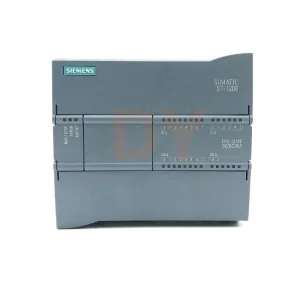
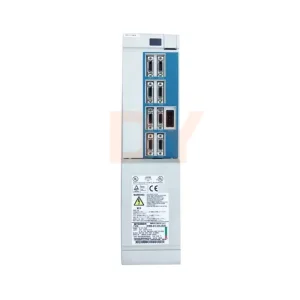
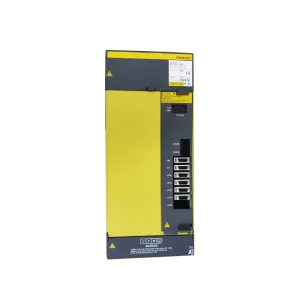
Connect directly with senior application engineers to verify AC drive compatibility, request official CAD drawings, or receive immediate wholesale pricing quotes.