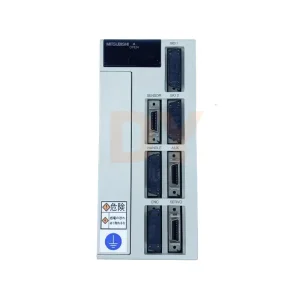
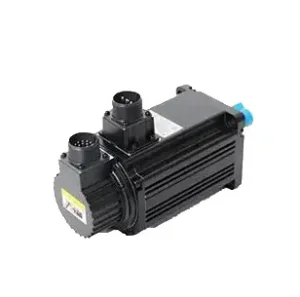
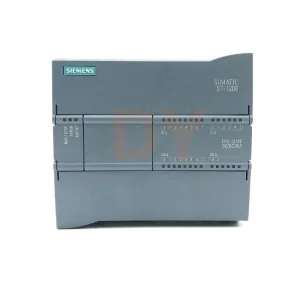
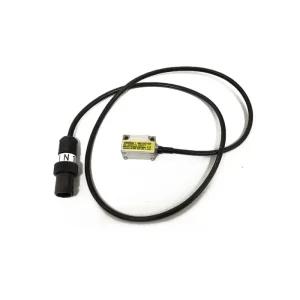
Directly sourced, factory-tested replacement components and modules for high-precision industrial machine tools.
An executive evaluation of global machine tool maintenance, system longevity, and strategic component sourcing for industrial automated ecosystems.
In the contemporary landscape of high-precision manufacturing, Computer Numerical Control (CNC) machinery serves as the foundational backbone of global industrial productivity. From multi-axis machining centers to high-speed turning centers, systems powered by FANUC, SIEMENS, Mitsubishi, and Delta demand continuous operational integrity. However, global supply chains face unprecedented challenges: original equipment manufacturer (OEM) lead times for replacement drive modules, encoders, and controllers frequently stretch into weeks or months, creating catastrophic financial risks associated with unscheduled facility downtime.
Procuring high-grade, discount Fanuc CNC parts and equivalent motion-control hardware has evolved from a simple cost-reduction strategy into a core operational resilience framework. Modern procurement managers, plant engineers, and maintenance directors must balance three critical parameters: absolute component authenticity, rigorous technical compatibility, and rapid supply chain deployment. This whitepaper analyzes the market mechanics, engineering architectures, and global supply chain networks that empower manufacturing facilities to secure verified, high-performance CNC parts without paying exorbitant distributor markup fees.
Key Insight for Procurement Executives: Unscheduled machine downtime in automotive and aerospace precision machining costs an average of $8,500 to $22,000 per hour per spindle line. Sourcing verified, pre-tested replacement modules through specialized supply hubs yields both an immediate financial saving of 30-55% and a critical reduction in mean-time-to-repair (MTTR).
How Chinese industrial ecosystems, concentrated in hubs like Ningbo and the Yangtze River Delta, deliver unprecedented supply availability and rigorous quality control.
China's Yangtze River Delta industrial belt, anchored by Ningbo and Shanghai, represents the world's most concentrated logistics and warehousing node for machine tool automation components. By maintaining direct channels with authorized regional distributors, OEM liquidations, and certified component rebuilders, suppliers in China can consolidate massive inventories of FANUC Alpha/Beta modules, Siemens SINAMICS drives, and Mitsubishi MDS units that are out-of-stock elsewhere globally.
Top-tier Chinese sourcing partners do not simply act as trading intermediaries; they operate sophisticated electrical engineering and diagnostic testing centers. Prior to global dispatch, components undergo rigorous multi-point validation: power-stage IGBT insulation tests, optical encoder signal resolution analysis, full-load thermal cycling on real FANUC control racks, and high-frequency noise immunity audits to guarantee plug-and-play field stability.
With direct proximity to Ningbo-Zhoushan Port and Shanghai Pudong International Airport (PVG), Chinese suppliers utilize priority international express channels (DHL, FedEx, UPS). Emergency spare components can be picked, custom-crated in protective anti-static packaging, processed through export customs, and delivered to facility floors in North America, Europe, or Southeast Asia within 3 to 5 business days.
Understanding component series, order number syntax, fault diagnostics, and mechanical-electrical interchangeability.
FANUC’s motion control ecosystem utilizes a highly structured part numbering convention. A thorough understanding of this syntax is essential for maintenance engineers to prevent hardware incompatibility during emergency component replacement. The table below outlines critical FANUC product categories, structural identifiers, and common failure modes addressed by direct component exchange.
| Component Category | Typical Part Prefix | Key Engineering Sub-types | Primary Failure Vectors | Diagnostic & Diagnostic Alarms |
|---|---|---|---|---|
| FANUC Servo Modules | A06B-6114 / A06B-6141 | Alpha i (αiSV), Beta i (βiSV), Single/Multi-axis | IPM IGBT breakdown, DC Bus overvoltage, cooling fan failure | Alarm 401 (VREADY), Alarm 414 (Axis Servo Detect), Alarm 9 (DC Current) |
| FANUC Spindle Modules | A06B-6117 / A06B-6240 | αiSP, βiSP, High-output synchronous drives | Pre-charge relay failure, sensor communication loss, thermal trip | Spindle Alarm 01 (Motor Overheat), Alarm 12 (DC Bus Overcurrent) |
| Pulse Coders / Encoders | A860-2000 / A860-2162 | Alpha iA64, A1000i, Sensor Heads, Absolute Optical | Optical glass contamination, bearing noise, FSSB comm error | Alarm 368 (Serial Data Error), Alarm 385 (Pulse Coder Fault) |
| CNC Control Systems | A02B-0338 / A02B-0309 | Series 0i-MF, 0i-TF, 30i-B, 31i-Model B | SRAM battery failure, main board CPU fault, backplane I/O loss | System Alarm 970 (NMI Occurred), Graphic Display Blackout |
When a FANUC CNC system triggers a system fault, rapid diagnostic isolation is required before ordering replacement modules. For example, a persistent Alarm 414 (Axis Digital Servo System Error) combined with a digital display code of b, c, or d on the servo amplifier status LED indicates a hardware fault within the drive's power section or feedback cabling.
Deploying replacement motion control components across critical industrial manufacturing verticals.
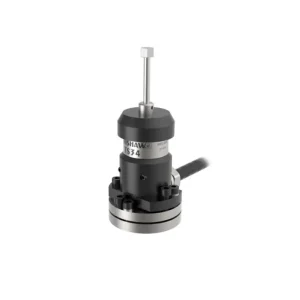
High-tier aerospace machining of titanium and Inconel structural components requires continuous multi-axis interpolation with zero velocity lagging. Utilizing high-resolution feedback systems like the Renishaw TS34 Contact Tool Setter alongside FANUC αi Series Servo Motors ensures sub-micron repeatability during extended 5-axis milling cycles, preventing thermal chatter and dimensional creep.
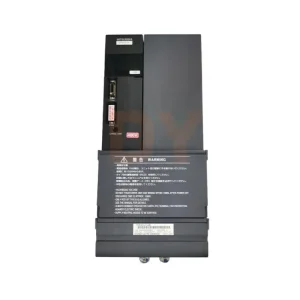
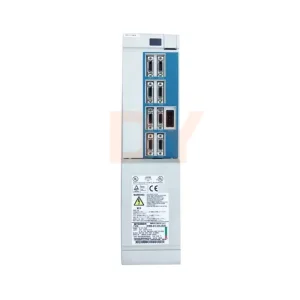
Automotive transfer lines operate on aggressive takt-time metrics. Implementing robust drives such as the Mitsubishi MDS-D-V1-80 and Siemens 1FK7 Servo Series guarantees high acceleration/deceleration rates without over-temperature trips. Stocking pre-configured direct-replacement modules in regional factory stores eliminates extended line stoppages during high-volume engine block lathe turning.
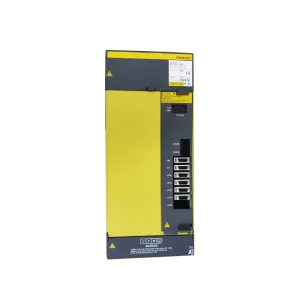
In injection mold manufacturing, optical surface quality dictates polish requirements. High-resolution linear feedback scales coupled with dynamic servo tuning mitigate reversal spikes at surface boundaries. Replacing aged spindle drives with modern units like the FANUC A06B-6141-H037#H580 ALPHA i Spindle Module maintains uniform speed regulation under fluctuating torque loads.
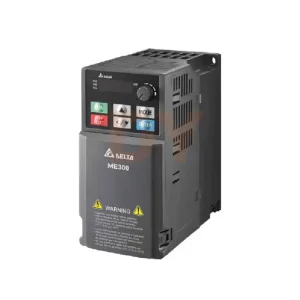
Fabrication of smartphone enclosures, semiconductor heat sinks, and miniature connectors demands ultra-fast micro-feed motion. Compact drives like the Delta VFD-MH300 Series and compact HMI control panels enable high-density machinery footprints while retaining full fieldbus connectivity (EtherCAT, PROFINET, CC-Link).
How smart manufacturing, IoT diagnostic telemetry, and green automation are transforming legacy machine tool lifecycles.
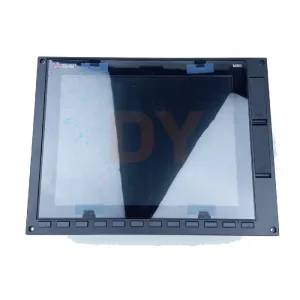
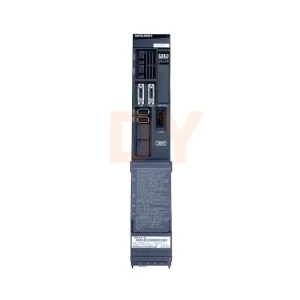
The global CNC maintenance industry is undergoing a structural evolution from reactive repair to intelligent, sensor-driven predictive maintenance. Modern CNC controllers, including the Mitsubishi M80 Series and Siemens SINUMERIK 828D/ONE, now integrate edge-computing algorithms capable of analyzing high-frequency drive current ripple, vibration signatures, and thermal dissipation metrics in real time.
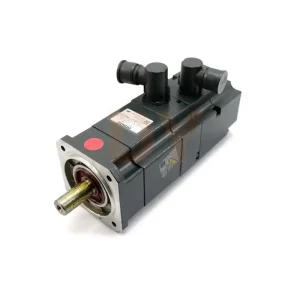
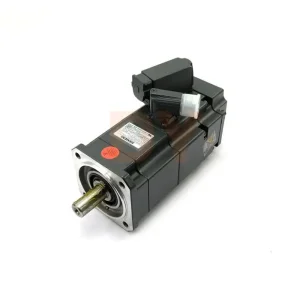
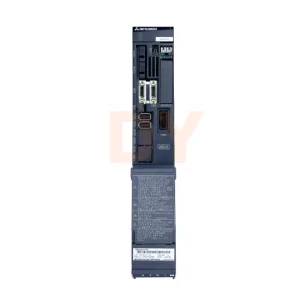
By capturing telemetry directly from servo amplifier internal sensors (such as FANUC αi Series current feedback loops), predictive AI platforms can detect mechanical ball-screw wear, bearing spalling, or IGBT thermal degradation weeks before a total catastrophic shutdown occurs. This technological shift enables maintenance teams to order necessary replacement parts—such as a Siemens 1FK6 Servo Motor or Mitsubishi MDS Power Unit—during scheduled maintenance windows, completely neutralizing lost-production costs.
Modern spindle drives (such as the FANUC αiPS and Mitsubishi MDS-D-CV series) feature smart line-regenerative braking systems. Instead of dissipating deceleration kinetic energy as waste heat through braking resistors, power is fed back into the plant grid, reducing machine operating energy consumption by up to 32%.
Replacing an entire multi-axis CNC machine tool due to an obsolete drive or controller can cost upwards of $250,000. Retrofitting existing machine frames with direct-replacement control boards, modern optical encoders, and refurbished servo amplifiers extends asset operational life by 10 to 15 years at a fraction of capital expenditure.
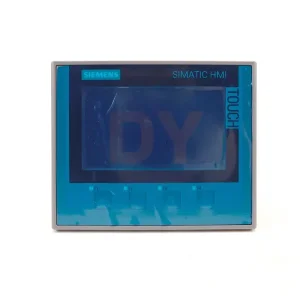
Industry 4.0 standards (OPC UA, MTConnect) are breaking down proprietary silos. Replacement HMIs, such as the Siemens KTP700 Basic Panel, can now interface seamlessly across multi-vendor shop floors containing FANUC, Mitsubishi, and Delta controllers.
Standardizing quality assurance, serial traceability, warranty enforcement, and cross-border shipping compliance.
Enterprise procurement teams must implement strict counter-counterfeit measures. High-value CNC spares—especially optical encoders (e.g., FANUC A860 series) and power modules—should be supplied with verifiable factory nameplate photographs, matching order codes, and clear origin documentation. Verified suppliers provide high-resolution visual confirmation prior to shipping to ensure physical plug configuration compatibility.
Reliable sourcing partners stand behind their inventory with comprehensive warranty coverage. Whether supplying 100% brand-new stock or certified pre-owned units, a standard 12-month functional warranty ensures protection against early electrical failure, voltage surge breakdown, or component manufacturing defects.
Browse our global inventory of verified replacement modules, PLC processors, and tooling equipment.
Direct answers to critical procurement, compatibility, diagnostic, and logistical questions encountered by industrial buyers.
Need immediate pricing for FANUC servo drives, Siemens motors, Mitsubishi encoders, or Renishaw tool setters? Submit your part number or machine nameplate photo for immediate stock check and expert support.