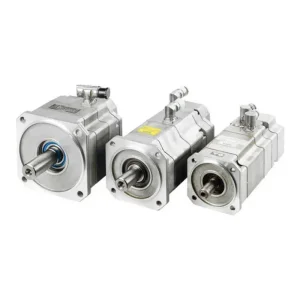
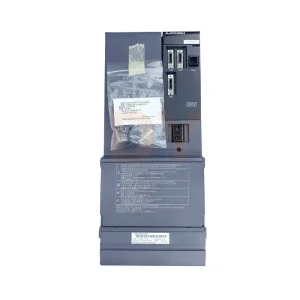
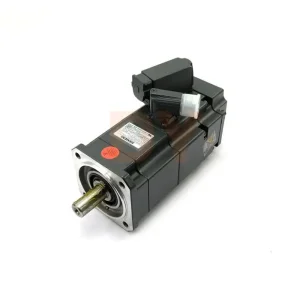
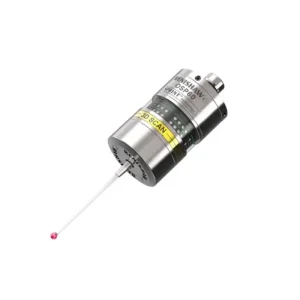
Direct access to genuine OEM & high-grade industrial replacement modules from Mitsubishi, Siemens, Delta, Renishaw, and Heidenhain.
The global CNC (Computer Numerical Control) and industrial automation landscape is undergoing an unprecedented structural transition driven by the convergence of high-precision mechanical engineering, advanced motion control electronics, and edge-computing integration. As modern manufacturing shifts from traditional batch production to high-mix, low-volume automated operations, demand for robust, high-reliability CNC replacement parts, multi-axis servo amplifiers, synchronous AC motors, and optical metrology feedback systems has surged globally.
Today, industrial end-users, machine tool builders (OEMs), and system integrators operate under tight operational tolerances. Machinery downtime caused by component wear—such as drive unit power stage failures, encoder feedback drift, or touch probe calibration breakdown—incurs exorbitant financial penalties. According to recent industrial survey data, an unplanned breakdown on a multi-axis CNC gantry milling center can cost automotive tier-1 suppliers upward of $15,000 per hour in lost throughput.
Regionally, the market exhibits distinct commercial vectors:
A high-performance machine tool relies on the seamless real-time interoperability of three critical sub-systems: Drive Controls, Feedback Devices, and Human-Machine Interfaces.
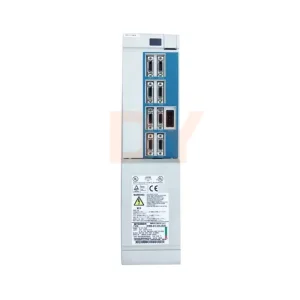
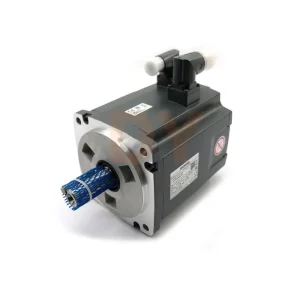
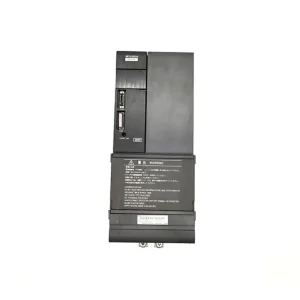
Servo drives function as the muscle of CNC machine tools. Units like the Mitsubishi MDS-C1-V2-4520 and Siemens SINAMICS S120 / SIMOTICS 1FL6 convert numerical trajectory commands from the CNC kernel into ultra-precise three-phase AC current. Advanced Field-Oriented Control (FOC) algorithms allow these amplifiers to dynamically control torque, position, and velocity with sub-micron accuracy, suppressing mechanical resonance in real time.
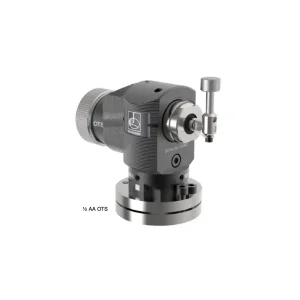
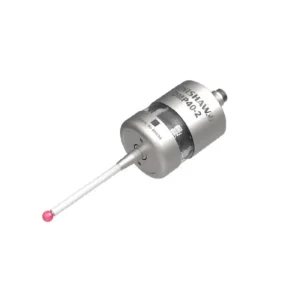
In-process workpiece inspection and optical tool setting—pioneered by industry leaders like Renishaw (OTS, OSP60, OMP40-2)—eliminate manual operator setup errors. By transmitting kinematic trigger signals via strain-gauge or optical sensors, these systems dynamically measure tool length wear, thermal expansion, and part zero-points directly on the machine table, reducing scrap rates by up to 90%.
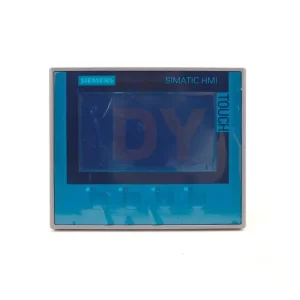
Closed-loop feedback is reliant on absolute linear and rotary optical encoders (Heidenhain, Fagor) transmitting millions of pulses per revolution over real-time serial interfaces (EnDat 2.2, Drive-CLiQ, Mitsubishi High-Speed Serial). Paired with industrial operator panels like the Siemens SIMATIC HMI KTP400 Comfort, operators gain instantaneous visualization of machine diagnostics, alarm histories, and G-code execution paths.
How artificial intelligence, regenerative energy design, and open cyber-physical architectures are transforming CNC hardware sourcing over the next decade.
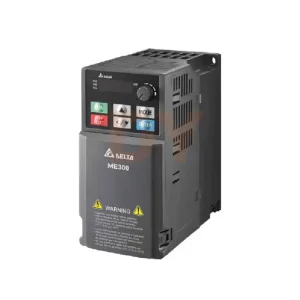
The traditional replacement model—wherein components are swapped only upon catastrophic hardware breakdown—is rapidly vanishing. Modern CNC components, such as the latest generation Delta ME300 vector drives and Mitsubishi MDS-D2 power units, incorporate integrated microcontroller diagnostics. These units track capacitor bank ESR values, IGBT thermal cycles, and bearing vibration fingerprints, feeding predictive maintenance models via Industrial IoT (IIoT) protocols.
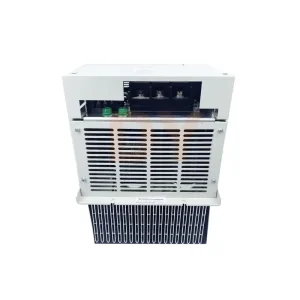
Rising energy tariffs in manufacturing hubs have made regenerative power modules mandatory. Units like the Mitsubishi MDS-D-CV-300 capture kinetic energy generated during rapid axis deceleration and feed clean AC power back into the factory grid, reducing total machine energy consumption by up to 25% while stabilizing DC-bus voltage levels.
Proprietary communication loops are giving way to unified deterministic fieldbus networks (OPC UA over TSN, EtherCAT, and PROFINET IRT). Hardware component selection now prioritizes multi-protocol compatibility, allowing seamless integration between a Mitsubishi drive stack, a Siemens CNC kernel, and third-party robotic end-effectors.
Next-generation optical probes and encoder feedback systems dynamically compensate for structural machine tool deformation. Real-time temperature data from motor stators and spindle bearings are calculated by AI algorithms to offset thermal expansion drift in real time down to sub-micron accuracy bands.
Examining how specialized CNC hardware configurations solve distinct engineering challenges across key global manufacturing industries.
Challenge: High-speed surface milling of lightweight aluminum EV motor housings and battery trays requiring zero downtime and micro-meter flatnesses.
Hardware Architecture: Siemens SIMOTICS 1FK7 synchronous high-dynamic servo motors coupled with compact Siemens SINUMERIK control nodes, supported by Renishaw OMP40-2 optical workpiece measurement probes for instant datum setting.
Challenge: Heavy-duty, high-torque cutting of tough aerospace alloys (Inconel, Titanium Grade 5) where spindle motor stall or drive fault causes catastrophic part scrap.
Hardware Architecture: Multi-axis Mitsubishi MDS-C1/MDS-D drive systems providing extreme peak torque overloads, integrated with Fagor G-Series high-resolution glass linear scales to isolate mechanical backlash.
Challenge: Micro-drilling of PCBs, graphite electrode erosion, and semiconductor wafer handling demanding high acceleration without vibration overshoot.
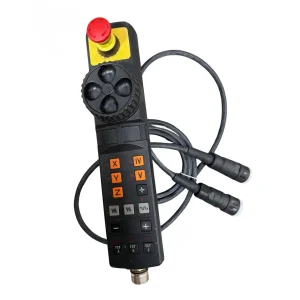
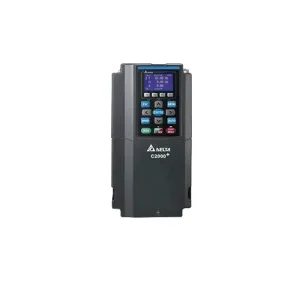
Hardware Architecture: Delta ME300 / C2000 high-frequency vector control drives paired with Heidenhain HR410 electronic handwheels for microscopic jog-mode manual positioning during optical mold alignment.
Evaluating Total Cost of Ownership (TCO), lead-time risk mitigation, and retrofit economics for industrial maintenance directors.
For factory managers supervising large CNC machine fleets, sourcing replacement automation parts presents a constant strategic balancing act between official OEM factory lead times (which frequently stretch from 12 to 26 weeks) and the imperative of immediate machine recovery. Wholesale automation suppliers bridge this gap by maintaining localized, ready-to-ship inventories of authentic components.
| Evaluation Parameter | Direct Factory Channel (OEM) | Wholesale Specialized Stockist | Unverified Marketplaces |
|---|---|---|---|
| Average Dispatch Lead Time | 8 to 20 Weeks (Made to Order) | 1 to 3 Business Days (In Stock) | Unpredictable / Dropshipped |
| Component Authenticity | 100% Guaranteed OEM | 100% Verified Genuine / Original | High Risk of Counterfeit / Refurbished |
| Pricing Structure | List Price Premium (High TCO) | Wholesale Discount (Optimal TCO) | Suspiciously Low (Unreliable) |
| Technical Cross-Referencing | Restricted to Current Lines | Full Legacy & Obsolete Mapping | No Technical Support Available |
| Warranty Coverage | Standard 12 Months | 12-Month Comprehensive Replacement | None or Limited 30 Days |
When an existing machine tool structure (cast iron base, linear guideways, ball screws) remains mechanically sound, complete machine replacement is financially inefficient. System integrators frequently execute electrical cabinet retrofits—replacing obsolete drive amplifiers and worn analog feedback loops with modern digital equivalents like the Delta ME300 series or Mitsubishi MDS power modules. This process extends asset operational life by 10–15 years at approximately 25% of the capital expenditure of a new machine tool.
Expert guidance on component selection, cross-compatibility, alarm troubleshooting, and preventative maintenance.
Compatibility of Mitsubishi MDS series (such as MDS-C1, MDS-B, MDS-D, or MDS-D2) depends on three main variables: the CNC control bus protocol (optical optical bus vs. copper high-speed serial interface), motor feedback encoder resolution (OSE/OSA series), and total axis power rating (kW). Always check the exact part suffix printed on the drive nameplate (e.g., MDS-C1-V2-4520) and cross-reference the control software version before replacing. Our engineering staff can cross-verify your machine's parameter backup against our unit specifications prior to dispatch.
The distinction lies in the integrated Safe Torque Off (STO) function and built-in EMC filter options. The "ANNAA" variant is the standard compact vector control model without STO functionality, ideal for general auxiliary motor driving (such as coolant pumps, chip conveyors, or basic spindles). The "ANSAA" model incorporates hardware-level Safe Torque Off (STO SIL2/PL d compliance), which is required for primary axis motion safety circuits where operator intervention occurs near moving components.
Signal dropouts in optical or radio touch probes (such as Renishaw OTS, OSP60, or OMP40-2) are typically caused by line-of-sight obstruction, optical lens contamination from mist/coolant build-up, weak internal batteries, or RF frequency interference from unshielded VFD cabling. Ensure the receiver window is cleaned with alcohol, check receiver optical power switches, and verify that all surrounding motor power cables use continuous 360-degree braid shielding grounded to a central industrial earth ground bus.
While third-party high-performance vector drives can technically supply three-phase AC voltage to run a 1FK7 motor, it is strongly discouraged for high-precision CNC applications. Siemens 1FK7 synchronous motors feature proprietary DRIVE-CLiQ or absolute encoder electronic nameplates that automatically transmit thermal profiles, inductance matrices, and commutation offsets directly to Siemens SINAMICS drives. Running them on generic drives requires complex manual motor tuning and risks demagnetizing permanent rotor magnets under heavy transient loads.
The primary causes of power supply module (CV unit) failure are cabinet heat accumulation, internal conductive dust ingress, and incoming AC line voltage surges. To maximize operational lifespan: (1) Ensure electrical cabinet heat exchangers maintain an internal temperature below 40°C; (2) Periodically clean internal heat-sink cooling fans; (3) Inspect intermediate DC-bus busbar screws for correct torque tightening to prevent arc erosion; and (4) Install line reactors to suppress grid voltage spikes.
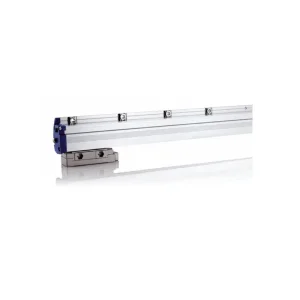
Fagor G-Series incremental glass scales utilize specialized double-lip fluorocarbon seals along the scale extrusion channel, combined with an engineered optical reader head geometry that repels fluid accumulation. For extreme coolant environments, introducing filtered dry air purging (0.6 to 1.0 bar pressure) into the scale profile creates a positive internal pressure differential, completely preventing coolant mist, oil droplets, and fine metal swarf from contacting the optical glass grating.
Explore additional wholesale CNC components available with immediate global express dispatch.