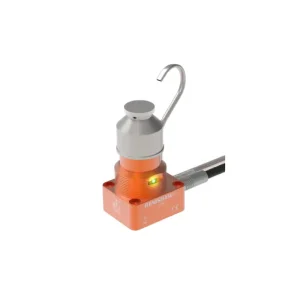
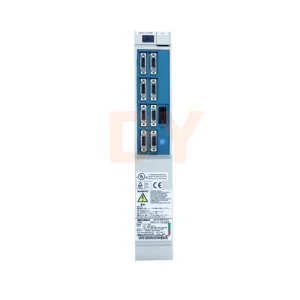
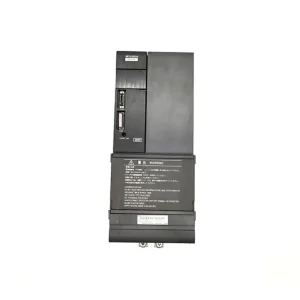
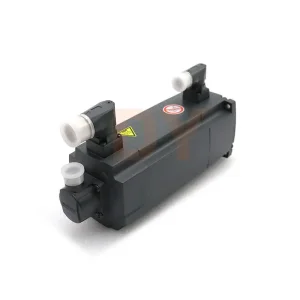
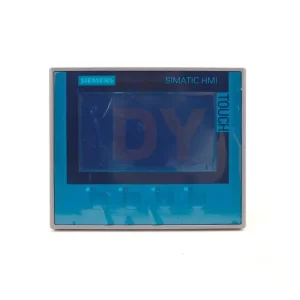
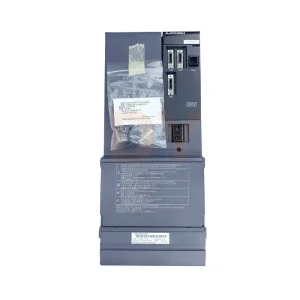
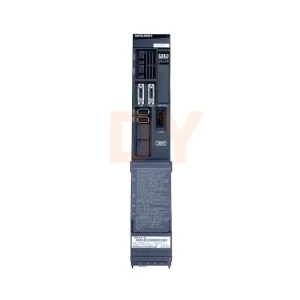
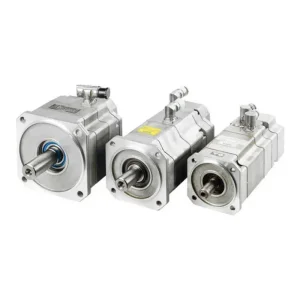
Direct supply of genuine Fanuc, Mitsubishi, Siemens, Fagor, Delta & Renishaw precision CNC hardware with factory warranty.
An in-depth analysis of high-frequency switching electronics, power regeneration topology, and wholesale supply chain dynamics.
Fanuc Spindle Drives (such as the A06B-6110, A06B-6120, and A06B-6220 series) command a dominant share of the worldwide computer numerical control market. From tier-1 automotive manufacturing lines in Germany and Detroit to precision micro-machining facilities in Japan and South Korea, Fanuc spindle drive architecture serves as the benchmark for rotational velocity control, rigid tapping performance, and dynamic torque stability under severe industrial loads.
Modern wholesale Fanuc spindle amplifiers utilize advanced High Response Braking (HRB) and power regeneration line filters. Rather than dissipating deceleration energy as waste heat through external braking resistors, these units feed kinetic energy back into the factory AC power grid. This reduces cabinet thermal dissipation requirements by up to 35% while yielding substantial energy cost savings in high-duty cycle production environments.
For industrial plant managers and maintenance procurement teams, acquiring wholesale Fanuc spindle drives involves navigating strict compatibility protocols. Legacy machines operating on FANUC 0i-MF, 31i-B, or older 16i/18i platforms require accurate cross-referencing of order numbers, PCB board revisions, module kw ratings, and optical feedback interfaces to prevent costly operational downtime.
Understanding internal hardware topologies, IGBT control loops, optical encoder feedback, and thermal modulation.
The standard Fanuc αi series architecture separates power conversion from motion control. The Power Supply Module (PSM / A06B-6110 series) rectifies incoming 3-phase AC power (200-240V or 400-480V high-voltage models) into a stabilized DC bus voltage (typically 283V to 600V DC). The Spindle Amplifier Module (SPM / A06B-6112 or A06B-6220 series) draws from this DC bus, utilizing Intelligent Power Modules (IPM) featuring Insulated Gate Bipolar Transistors (IGBTs) modulated via Pulse Width Modulation (PWM) to drive high-speed AC spindle motors.
Maintaining DC link capacitor voltage stability is critical. Capacitance degradation over 5 to 8 years of continuous operation can introduce voltage ripple, leading to spindle torque fluctuations during heavy milling operations or triggering Alarm 04 (DC Bus Undervoltage) and Alarm 12 (DC Bus Overcurrent).
| Module Series | Input Voltage | Peak Output Power | Communication Interface | Primary CNC Compatibility |
|---|---|---|---|---|
| Fanuc αiSP Series | 200-240V / 400-480V AC | 2.2 kW – 75 kW | FSSB High-Speed Optical | FANUC 30i / 31i / 32i / 0i-MODEL F |
| Fanuc βiSV / βiSP Series | 200-240V AC Direct | 0.75 kW – 15 kW | FSSB & Serial Bus | FANUC 0i-Mate / Standard Lathes & Mills |
| Legacy SPM Series | 200-230V AC | 1.5 kW – 45 kW | Analog / PWM Serial Link | FANUC 16i / 18i / 21i / 0i-MC |
| High-Voltage SPM-HV | 380-480V 3-Phase AC | 11 kW – 100 kW+ | FSSB Optical Interface | Heavy Gantry Mills & Aerospace Turn-Cut |
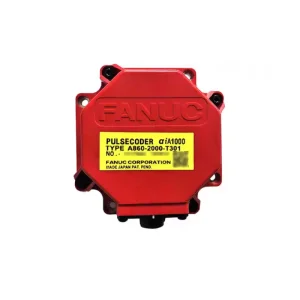
High-precision machining requires absolute synchronization between spindle revolution and axis feedrates—especially during high-speed rigid tapping operations. Fanuc spindle drives rely on high-resolution feedback units such as the Fanuc A860-2000-T301 Pulse Coder Encoder or spindle optical sensor units (MZ / BZ sensor series).
These feedback devices transmit position and speed data to the drive control board via differential high-speed RS-485 serial communication. If alignment strays by even micro-degrees, the drive's field-oriented vector control algorithm adjusts the phase currents ($I_q$ torque component and $I_d$ magnetic flux component) within microseconds, guaranteeing zero chatter and sub-micron rotational precision.
How Silicon Carbide (SiC) power electronics, AI predictive maintenance, and optical bus speeds are shaping wholesale motion procurement.
The industrial motion control sector is undergoing a fundamental shift from silicon-based IGBT modules to Silicon Carbide (SiC) MOSFETs. SiC power stages operate at significantly higher switching frequencies with up to 70% lower switching losses. For Fanuc spindle amplifiers, this transition reduces physical footprint by 40%, lowers cooling fan thermal demands, and delivers cleaner sinusoidal output current to spindle motors, eliminating harmonic motor hum and reducing thermal expansion in high-speed machining heads.
Modern machine tool operators demand zero unplanned downtime. Next-generation Fanuc spindle drive modules are incorporating embedded DSP edge intelligence. By continuously analyzing high-frequency current waveforms and motor back-EMF, the drive detects micro-vibrations indicative of spindle bearing pitting, encoder disc contamination, or mechanical imbalance long before physical failure occurs—triggering predictive maintenance alerts directly on the CNC panel or cloud management system.
As manufacturing moves toward single-setup complete machining, spindle drives must seamlessly toggle between high-torque velocity mode (turning at 6,000+ RPM) and precise C-axis position mode (milling index angle with arc-second accuracy). Contemporary αi-B series spindle drives execute mode transitions in under 50 milliseconds without dropping position feedback reference.
Rising raw material costs and global ESG mandates are elevating the strategic importance of wholesale drive remanufacturing. Wholesale supply chains now integrate certified testing rigs, original PCB component replacements, and automated burn-in dynamic testing, allowing factory maintenance teams to source rebuilt and surplus OEM units with performance metrics matching brand-new factory output.
How specialized machining environments leverage high-performance Fanuc spindle drives and encoder feedback.
Processing massive titanium engine mounts and aluminum airframe spars requires high-horsepower spindle amplifiers capable of sustaining peak torque output over continuous 18-hour cutting cycles. Fanuc high-voltage SPM-HV series drives deliver consistent vector power, ensuring feed speed stability during deep slot milling without thermal trip-outs.
High-volume engine manufacturing lines demand lightning-fast rigid tapping acceleration/deceleration curves. Paired with high-resolution encoders like the Fanuc A860-2000-T301, spindle drives perform 0 to 6,000 RPM speed changes in milliseconds, enabling rapid pitch matching during thread tapping without thread tearing.
Micro-scale optical molds require surface finishes with sub-nanometer mirror roughness. Drive noise or torque ripple manifests directly as visible surface chatter marks. Fanuc αi-B spindle drives feature 24-bit internal interpolation control to suppress harmonic chatter, meeting stringent semiconductor surface quality standards.
A systematic framework for machine tool retrofitting, drive swapping, and preventive overhaul.
Alarm SP9012 / Alarm 12 (Overcurrent): Inspect output U/V/W phases for insulation breakdown to ground using a 500V Megohmmeter. Check IPM transistor gate driver circuit for short circuits.
Alarm SP9002 / Alarm 02 (EXOverheat): Clean heat sink cooling fins. Check external cooling fan operation (24V DC fan failure is a primary cause). Verify thermistor feedback impedance.
Alarm SP9031 / Alarm 31 (Pulse Coder Disconnection): Check optical encoder cable shielding and ground wires. Inspect A860 series encoder connectors for oil ingress or pin deformation.
Alarm SP9009 / Alarm 09 (Main Circuit Overheat): Verify cabinet thermal exchange, inspect thermal conductive pad integrity, and evaluate ambient operating environment.
Expert technical guidance on Fanuc spindle drive replacement, cross-brand compatibility, and wholesale ordering.
To ensure 100% plug-and-play compatibility, cross-reference three critical data points found on the module side nameplate: (1) The complete Ordering Part Number (e.g., A06B-6112-H015#H550), (2) The PCB Revision board number stamped inside (e.g., A16B-2203-0500), and (3) The firmware version displayed on the CNC diagnosis screen. Ordering wholesale components with matching suffixes ensures identical physical dimensions, connector pinouts, control parameter defaults, and optical communication protocols.
Direct drop-in replacement is generally not possible without system adaptation due to hardware generation differences. Legacy SPM modules communicate via analog command signals or early serial interfaces, whereas modern αiSP drives operate exclusively over Fanuc's high-speed optical FSSB (Fanuc Serial Servo Bus) protocol. Replacing an older SPM unit with an αiSP drive requires updating the CNC main CPU board optical interface, adapting the DC bus cable harness, and re-configuring drive parameters within the controller software.
The primary root cause of optical encoder failure (such as the Fanuc A860-2000-T301 series) is oil mist and coolant vapor ingress penetrating the encoder housing housing seal. Over time, oil film deposits on the glass code disk, scattering the LED light beam and causing signal distortion (Alarm 31). Secondary failure modes include mechanical shock/vibration damaging internal miniature ball bearings and high-voltage static discharge caused by improper machine frame grounding.
Dynamic braking routes motor deceleration energy into high-wattage external ceramic resistors, dissipating energy as ambient heat within the control cabinet. In contrast, Fanuc Power Line Regeneration (found on PSM series modules) uses active IGBT switching to synchronize back-EMF current with incoming 3-phase grid AC power, feeding up to 98% of deceleration energy back into the plant's electrical distribution network. This lowers overall electricity consumption and significantly reduces cabinet air conditioning thermal loads.
In a standard modular Fanuc rack, a single Power Supply Module (PSM) supplies DC bus power (283V to 300V DC) via copper bus bars to both the Spindle Amplifier (SPM) and multiple Servo Amplifiers (SVM). If the DC link capacitance degrades or bus bar connection screws loosen, transient voltage spikes created during heavy spindle braking can overvolt adjacent servo drives, triggering systemic overvoltage or undervoltage alarms across all linked axes.
Every genuine unit undergoes a rigorous 4-stage quality check: (1) Component insulation and high-potential breakdown testing, (2) Full static load thermal imaging under maximum rated current, (3) Closed-loop dynamic run testing on a dedicated Fanuc test bench under continuous load cycles for 24 hours, and (4) Parameter reset and factory optical FSSB handshake verification to ensure seamless plug-and-play installation upon delivery.
Comprehensive inventory of CNC drives, AC servo motors, HMI panels, and power converters ready for global express dispatch.