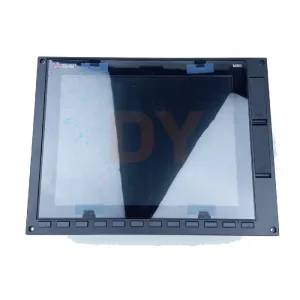
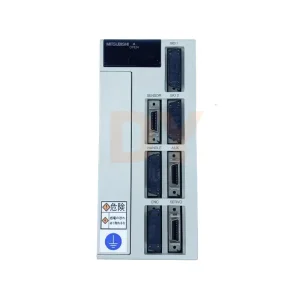
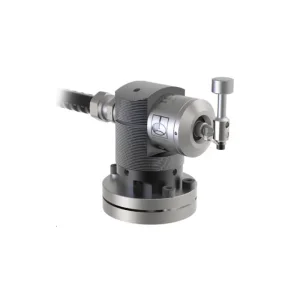
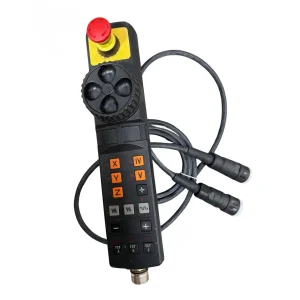
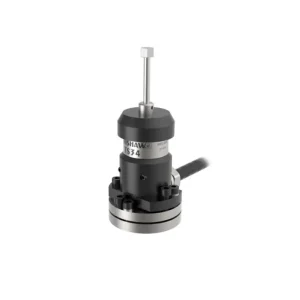
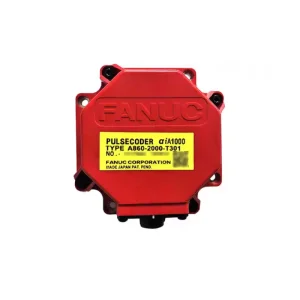
Immediate dispatch options for critical CNC controls, servo amplifiers, and high-precision feedback modules.
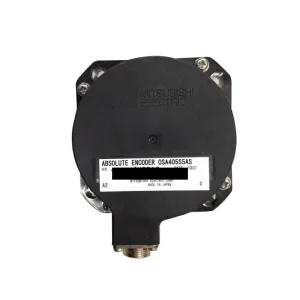
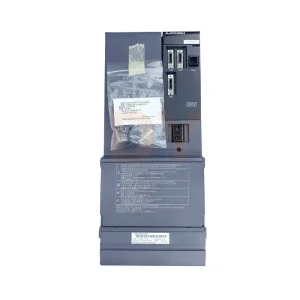
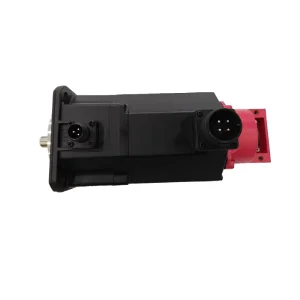
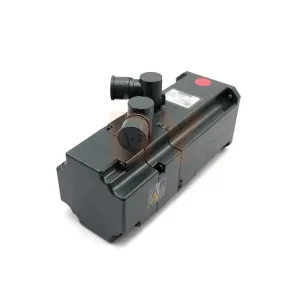
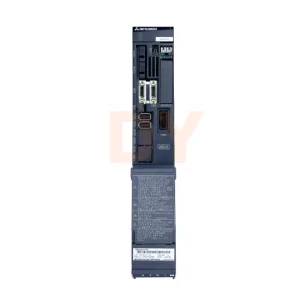
From conventional parallel matrix wiring to high-speed optical fiber Fanuc I/O Link i communication interfaces.
In modern industrial automation and computer numerical control (CNC) systems, Fanuc I/O modules serve as the central nervous system bridging the Programmable Machine Controller (PMC) and peripheral machine hardware. Over the last four decades, Fanuc Corporation has continuously refined its input/output hardware architecture to meet the escalating demands of microsecond-level signal synchronization, severe electromagnetic interference (EMI) immunity, and modular spatial optimization.
Historically, legacy CNC platforms utilized parallel matrix I/O boards requiring extensive, failure-prone copper wiring harnesses. The paradigm shifted dramatically with the introduction of the proprietary Fanuc I/O Link protocol—a high-speed serial bus operating at 1.5 Mbps to 10 Mbps over shielded twisted pair cable (A66L-6001 series). Today, the industrial standard has evolved to Fanuc I/O Link i and I/O Link i Model N, which incorporate advanced time-division multiplexing, fiber-optic physical layers, and extended point-to-point addressing capacity up to 8,192 input and 8,192 output points per channel.
Designed for DIN-rail mounting inside main electrical control cabinets. Features removable terminal blocks, integrated optocoupler isolation, and direct optical interface modules to minimize noise pick-up across multi-axis milling setups.
Compact, backplane-integrated I/O cards mounted directly behind Fanuc operator LCD displays (0i-MF, 0i-TF, 31i-B). Provides high-density discrete inputs for cycle start, feed hold, emergency stop dual-check safety (DCS), and rotary switches.
Specialized rack-type and process I/O boards (A05B series) engineered to withstand harsh industrial environments, handling high-current solenoid valve drivers, weld controllers, and safety interlocking protocols.
Comparative technical analysis of legacy vs. modern Fanuc I/O interface protocols for procurement engineers.
| Architecture Family | Bus Protocol | Max Transmission Rate | Physical Interface | Channel Capacity | Primary Application Scope |
|---|---|---|---|---|---|
| Legacy Matrix I/O | Parallel Bus | N/A (Direct DC Signaling) | 50-Pin Honda (MR-50) Cables | 96 Points / Card | Fanuc System 0, 10, 11, 15 Series |
| Standard Fanuc I/O Link | High-Speed Serial | 1.5 Mbps – 10 Mbps | Shielded Twisted Pair (PCR-E20) | 1,024 Points / Channel | Fanuc 0i-MC/MD, 16i, 18i, 21i Series |
| Fanuc I/O Link i | Synchronous Serial | 100 Mbps | Optical Fiber / Shielded Copper | 4,096 Points / Channel | Fanuc 0i-F, 30i-B, 31i-B, 32i-B Series |
| I/O Link i Model N | Advanced Digital Protocol | Gigabit Optical Link | Optical Fiber Adapter (A66L) | 8,192 Points / Channel | Complex Multi-Gantry Automation Lines & BIW |
When upgrading or retrofitting older CNC machine tools, pay strict attention to the daughtercard communication interface. Standard I/O Link modules cannot be directly daisy-chained onto an I/O Link i master bus without an intermediary protocol converter unit (such as Fanuc A03B-0819-C002 optical converter adapter). Always verify board layout numbers stamped on the PCB before dispatch.
Navigating supply chain volatility, counterfeit risks, and sector-specific deployment requirements.
In the current global industrial landscape, machine downtime translates directly into thousands of dollars in lost yield per hour. Enterprise procurement managers facing unplanned maintenance events for legacy CNC systems encounter severe OEM lead times often stretching from 12 to 26 weeks. Sourcing reliable, factory-original replacement Fanuc IO Modules, servo drives, encoders, and auxiliary control hardware requires an established global supply partner capable of immediate inventory verification and worldwide express dispatch.
Deployment of heavy-duty Fanuc Robot I/O modules operating under high electromagnetic fields. Enhanced optocoupler protection shielding prevents false sensor triggers caused by multi-thousand ampere resistance welding spikes.
Precision analog input/output modules reading linear variable differential transformers (LVDT) and thermal sensors. Ensures real-time axis compensation across 5-axis gantry mills working titanium structural components.
Ultra-compact operator panel I/O units combined with high-frequency pulse counter cards, enabling automated part loader integration with sub-millisecond tactile probing feedback.
Actionable maintenance protocols for diagnosing I/O bus failures, alarm codes, and wiring anomalies.
When a Fanuc PMC detects a breakdown in communication with peripheral digital or analog I/O points, dedicated system alarms are generated on the CNC operator screen. Effective troubleshooting relies on a systematic verification of power supply voltages, communication optical/copper line integrity, and PMC ladder signal address mapping.
Indicates complete signal drop-out between the main CNC board/controller and the remote I/O link module. Common causes include blown 24VDC control supply fuses (Daito MP-series), damaged optical fiber cables (A66L), or incorrect rotary switch setting (Group/Base address allocation).
Illumination of the red FALM LED on an A03B-0819 module flags an overcurrent condition on the 24VDC field output circuit (e.g., shorted solenoid valve coil). The internal micro-fuse opens to isolate the PMC processor from high voltage back-EMF.
Digital input addresses are assigned as X0000.0 – X0127.7 while discrete output signals are designated as Y0000.0 – Y0127.7. Internal non-volatile memory bits (R, K, F, G) are configured using Fanuc LADDER-III software to manage interlocks.
The integration of IoT sensor networks and edge diagnostics with Fanuc I/O ecosystems.
As manufacturing facilities transition toward autonomous Industry 4.0 standards, the role of the humble Fanuc IO module is expanding beyond simple digital switching. Next-generation I/O link architectures incorporate embedded telemetry protocols capable of measuring localized ambient temperature, supply voltage fluctuation, and relay contact cycle counts.
By connecting modern Fanuc I/O Link i modules directly to the FANUC Intelligent Edge Link & Drive (FIELD) system, plant software algorithms analyze signal switching degradation in real time. Predictive maintenance models can warn engineers of impending inductive solenoid valve failure or optical fiber power loss weeks before catastrophic equipment breakdown occurs. Multi-protocol bridge modules now seamless integrate Fanuc PMC data with Ethernet/IP, PROFINET, and EtherCAT network backbones, unifying plant-wide data streams under a single digital twin platform.
Direct answers from our CNC automation specialists regarding specs, hardware compatibility, and ordering.
Full range of factory-new components from Siemens, Mitsubishi, Renishaw, Delta, and Fanuc.
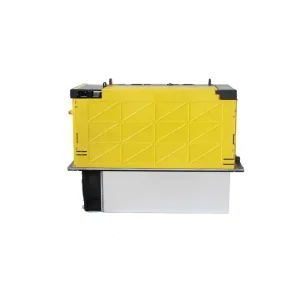
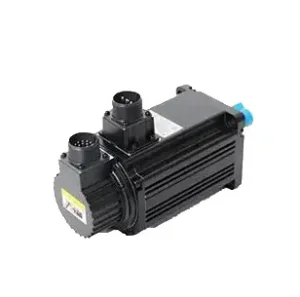
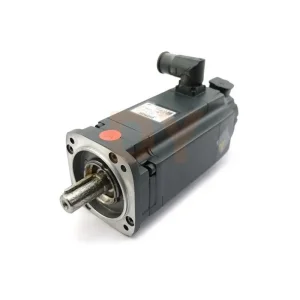
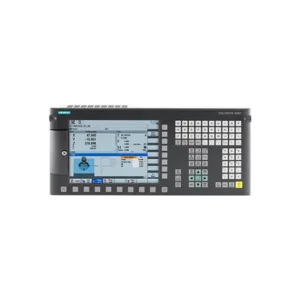
Your authoritative single source for original Fanuc IO modules, Siemens controllers, Mitsubishi encoders, and Renishaw measurement solutions. Guaranteed specification verification and fast global dispatch.