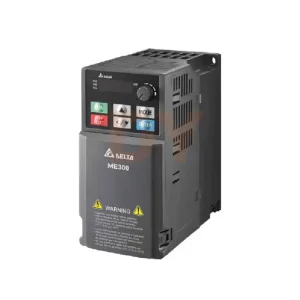
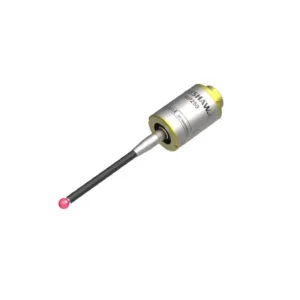
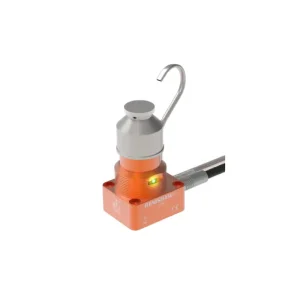
Verified original factory spare parts, drives, encoders, and precision equipment with rapid dispatch options.
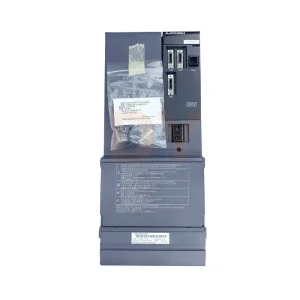
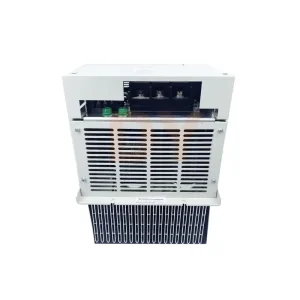
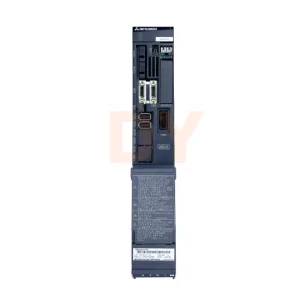
A rigorous examination of control topologies, power electronics design, vector algorithms, and total system integration.
In modern industrial automation, the selection and integration of variable speed drives (VFDs) directly determine operational efficiency, mechanical precision, and long-term facility reliability. Siemens AC Drives—primarily consolidated under the benchmark SINAMICS family—represent decades of continuous engineering refinement. From basic variable-torque pump applications to complex multi-axis synchronized CNC machining centers, understanding the architectural nuances of these drives enables system integrators and procurement engineers to maximize performance while optimizing Total Cost of Ownership (TCO).
Siemens structures its AC drive portfolio to target distinct operational complexities, power ranges, and dynamic requirements. Choosing the correct family variant avoids both under-engineering (leading to premature thermal failure or inadequate speed regulation) and over-costly over-engineering:
| Series Model | Target Power Range | Control Topology | Typical Interface | Integrated Safety Level |
|---|---|---|---|---|
| SINAMICS V20 | 0.12 kW – 30 kW | V/f, FCC (Flux Current Control) | USS / Modbus RTU | Basic Hardware Interlock |
| SINAMICS G120C | 0.55 kW – 132 kW | Sensorless Vector (SLVC), V/f | PROFINET, PROFIBUS, EtherNet/IP | Safe Torque Off (STO) SIL 2 / PL d |
| SINAMICS G120 (Modular) | 0.37 kW – 250 kW | Vector Control with/without Encoder | PROFINET IRT, PROFIBUS DP | Extended Safety (STO, SS1, SLS, SDI) SIL 3 |
| SINAMICS S120 | 0.25 kW – 4,500 kW | Servo Control, Vector Control, V/f | DRIVE-CLiQ, PROFINET IRT | Comprehensive Safety Integrated SIL 3 / PL e |
The hallmark of Siemens high-end AC drives is field-oriented control (FOC), also known as Vector Control. By mathematically decoupling the stator current into magnetizing flux-producing component ($i_{sd}$) and torque-producing component ($i_{sq}$), the inverter controls an AC induction motor or permanent magnet synchronous motor (PMSM) with the instantaneous dynamic responsiveness of a separately excited DC machine.
In high-load precision applications—such as spindle drives, heavy-duty cranes, and tension-controlled winders—closed-loop vector control ensures maximum rated torque availability even at zero speed (0 RPM). This prevents mechanical roll-back in hoist systems and ensures sub-micron surface finish quality on multi-axis CNC lathes and milling machines.
How edge intelligence, digital twins, wide-bandgap semiconductors, and cyber-resilience redefine next-generation drive performance.
Modern SINAMICS drives are evolving from passive execution units into active edge-computing nodes. By embedding high-frequency sampling firmware directly within the drive control board, real-time current, vibration, and thermal telemetry are processed at the microsecond level. Machine learning models running on Industrial Edge devices detect motor bearing degradation and insulation breakdown weeks before catastrophic failure occurs.
Through Siemens SIMIT and DriveSim Basic virtual simulation packages, control engineers model the precise electro-mechanical dynamic behavior of a drive system prior to purchasing physical hardware. Digital Twins allow parallel development of PLC logic and drive parameterization, shortening plant commissioning cycles by up to 40% and eliminating destructive mechanical collisions during initial factory startup.
The transition from legacy Silicon IGBT switching devices to wide-bandgap Silicon Carbide (SiC) MOSFET power electronics represents the next leap in inverter efficiency. SiC technology enables switching frequencies exceeding 16 kHz with minimal thermal dissipation, drastically reducing active cooling requirements, shrinking total enclosure footprints, and elevating overall system efficiency past the strict IE5 ultra-premium efficiency baseline.
As variable frequency drives connect directly to enterprise Industrial IoT networks via PROFINET and OPC UA, cybersecurity has become paramount. Next-generation Siemens AC drives integrate signed firmware validation, encrypted fieldbus communications (PROFINET Security), and hardware-level Security Chips (TPM) to safeguard critical infrastructure against malicious unauthorized access and industrial espionage.
Decelerating high-inertia loads generates substantial kinetic energy. Traditional drive setups dissipate this excess energy as wasted heat through dynamic braking resistors. Siemens Smart Line Modules (SLM) and Active Line Modules (ALM) feed braking energy back into the plant power grid with unity power factor ($cos\ \phi = 1$) and negligible harmonic distortion (THD < 3%), delivering substantial annual electrical utility savings.
Wiring complexity remains a key cost driver in cabinet building. The implementation of One Cable Connection (OCC) integrates power conductors, encoder feedback signals, and safety braking lines into a single flexible industrial cable. This innovation cuts installation labor costs by 50%, reduces total cable mass in moving cable tracks, and minimizes potential electromagnetic interferences (EMI).
Tailored variable speed configurations driving maximum efficiency across critical global industrial sectors.
Industrial machinery demands specialized drive parameterization and hardware configurations tailored to specific mechanical operational profiles. Siemens AC Drives, combined with expert engineering support, deliver optimized sector-specific performance:
In high-throughput automotive stamping presses, robotic body shops, and EV battery assembly lines, process synchronization is non-negotiable. SINAMICS S120 multi-axis drive systems deliver microsecond-level synchronization over PROFINET IRT (Isochronous Real-Time). Integrated Safe Torque Off (STO) and Safely-Limited Speed (SLS) ensure human operators can perform tooling changes without removing main bus power, preserving line velocity and minimizing expensive line stops.
High-speed milling, turning, and grinding require ultra-smooth torque delivery to eliminate surface chatter marks and guarantee workpiece accuracy down to the micrometer. Paired with SINUMERIK CNC controllers, Siemens spindle and axis drives run active damping algorithms that suppress mechanical resonance frequencies within the machine bed frame, extending cutting tool life by up to 25%.
Pumping stations operate under variable fluid dynamic loads. Utilizing SINAMICS G120P specialized clean water drives, municipalities implement multi-pump cascade controls, automatic pipe-fill modes (which prevent hydraulic water hammer stress), and sensorless flow calculations. Energy savings typically range between 30% and 50% compared to fixed-speed throttled valve operations.
Harsh chemical environments demand stringent protective coatings on internal drive circuit boards (IEC 60721-3-3 Class 3C3 compliance) to prevent gaseous hydrogen sulfide and chlorine corrosion. Siemens drives installed in hazardous zones offer certified ATEX thermistor motor monitoring and explosion-proof motor matching, protecting continuous process uptime in refineries and chemical synthesis plants.
Leveraging strategic inventory depth, centralized shipping infrastructure in Ningbo, and stringent multi-point quality assurance.
Global manufacturing facilities cannot afford week-long delays when critical drive electronics fail. Operating out of the advanced Ningbo industrial hardware hub, our supply chain infrastructure combines centralized warehousing with direct manufacturer channel relationships. This structural integration eliminates intermediary delays, ensuring rapid global dispatch for both standard SINAMICS units and hard-to-source legacy drives.
Every AC drive and servo module passes through a strict 5-stage pre-shipment quality inspection protocol: static power terminal check, optical nameplate verification against factory databases, firmware revision matching, anti-static moisture-barrier packaging, and expedited international air-freight logistics handling (DHL, FedEx, UPS, TNT).
Ensuring international regulatory standards, seamless field installation, and continuous lifecycle protection.
Deploying variable speed drives into international jurisdictions requires total adherence to local electrical codes, safety directives, and environmental regulations. Our engineering services ensure that every supplied Siemens AC drive configuration fulfills mandatory global certifications:
Full compliance with CE directives, UL/cUL listing for North American markets, RoHS environmental standards, and ISO 9001 quality management systems. Integrated Category C1/C2 EMC line filters protect nearby sensitive sensor loops from high-frequency radiated electromagnetic interference.
Our senior application engineers provide remote remote parameter backup assistance, guiding maintenance teams through motor auto-tuning (ID runs), fieldbus address allocation, and fault-code diagnosis during urgent retrofit projects.
Every genuine drive component carries a standard 12-month factory-backed basic warranty. In the rare event of a component failure, our rapid replacement protocol ensures minimal operational downtime for your production floor.
Structured bulk purchasing strategies designed for machine builders, system integrators, and MRO maintenance buyers.
For enterprise purchasing directors managing global factory networks, component procurement extends far beyond initial invoice price. Achieving a low Total Cost of Ownership requires evaluating energy efficiency ratings, spare part availability, inventory holding costs, and supplier price discounts.
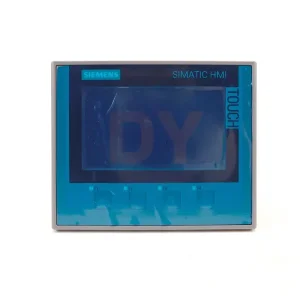
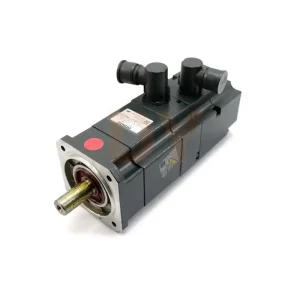
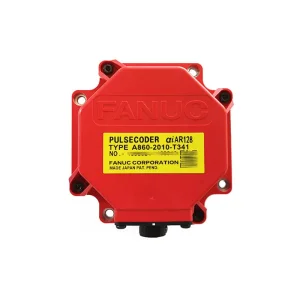
Explore our extended inventory of verified encoders, HMI panels, probes, and numerical control components.
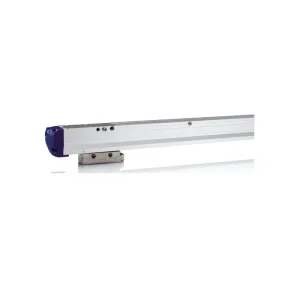
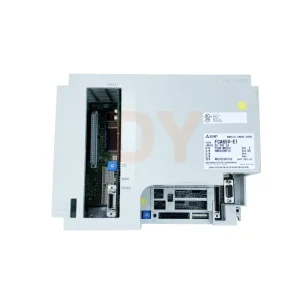
Authoritative engineering answers covering Siemens AC Drive specification, fault troubleshooting, and international procurement logic.