Direct supply of genuine Mitsubishi motion control drives, power supply modules, and complementary precision components.
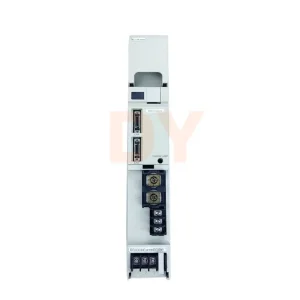
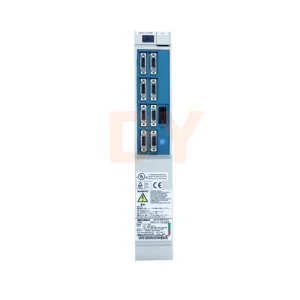
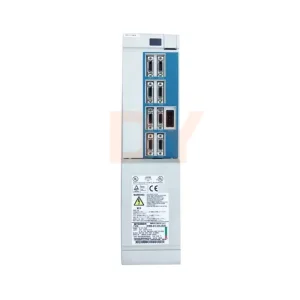
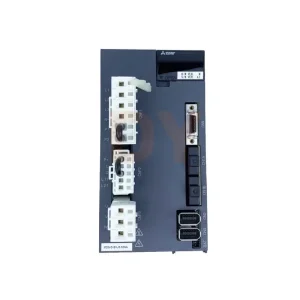
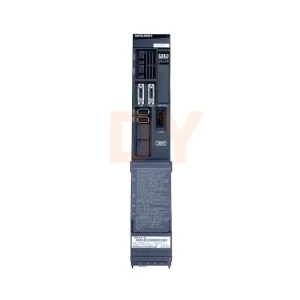
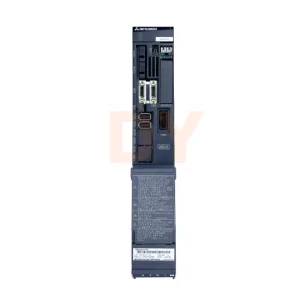
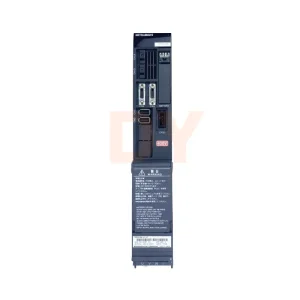
Addressing macro-industrial motion demands across high-precision CNC manufacturing, automotive lines, and semiconductor assembly.
In high-speed CNC machining centers—such as Mazak, Mori Seiki, and Makino platforms—a single axis failure on a servo amplifier (e.g., Mitsubishi MDS-C1 or MDS-D series) halts the entire manufacturing sequence. Enterprise procurement managers face significant hurdles in sourcing authentic replacement drives with exact parameter matches. Modern supply chains demand verified, pre-tested OEM hardware shipped on short lead times to avoid thousands of dollars in hourly revenue losses.
Global manufacturers operating across multi-regional production facilities require standardized component sourcing. By partnering with specialist distributors maintaining deep stocks of legacy and current-generation Mitsubishi servo amplifiers (including MDS-C1-V2, MDS-D-SVJ3, and high-voltage MDS-DH units), enterprise procurement teams streamline cross-border customs documentation, guarantee compliant packaging, and ensure technical interchangeability across legacy toolsets.
Information Gain Insight: Unlike standard automation hardware, Mitsubishi MDS series drives utilize proprietary optical communication networks (SSCNET I, II, III/H). Sourcing replacements requires verifying precise optical bus speed, DC link voltage capabilities, and internal control card firmware versions to prevent axis synchronization mismatches.
In-depth engineering evaluation of Mitsubishi MDS Servo Drive topologies and high-speed CNC multi-axis synchronization.
| Series Topology | Communication Protocol | Voltage & Power Range | Primary Industrial Applications | Key Hardware Features |
|---|---|---|---|---|
| MDS-C1 Series | SSCNET I / II Optical Fiber | 200V Class (0.4kW - 45kW) | Heavy-duty 3-axis to 5-axis CNC Milling, Lathes | Integrated slim design, dual-axis cards (V2), dynamic braking. |
| MDS-D Series | SSCNET III High-Speed Optical | 200V Class (High Current Output) | High-speed multi-tasking centers, Mazak Matrix | Real-time current loop control, high-resolution encoder processing. |
| MDS-DH Series | SSCNET III/H Ultra Fiber Link | 400V High-Voltage Class | Large-scale aerospace gantries, heavy machining | Reduced cable thermal loss, high-torque low-current efficiency. |
| MDS-D-SVJ3 Compact | Direct CNC Interface / SSCNET | 200V Compact All-in-One | Small footprint turning centers, OEM retrofits | Built-in power supply card, ultra-compact enclosure. |
By utilizing noise-immune fiber optic cabling operating at up to 150 Mbps, Mitsubishi servo drives isolate control command signals from high-voltage motor switching noise. This guarantees zero-bit-error position commands across extended cable runs in expansive manufacturing facilities.
Units like the MDS-C1-V2-4520 combine two independent servo drive axes into a unified mechanical footprint. This architecture shares a central DC bus link, enabling regenerative energy from a decelerating axis to power an accelerating adjacent axis, cutting power draw by up to 22%.
Integrating seamlessly with Mitsubishi absolute encoders (e.g., OSE/OSA series), MDS drive power output algorithms execute sub-micron interpolation commands. Pulse feedback processing exceeding 1,000,000 pulses/rev yields mirror surface finishes on complex die and mold surfaces.
From legacy analog velocity commands to AI-driven predictive maintenance and smart factory integration.
Modern industrial IoT deployment leverages the intelligent telemetry output of Mitsubishi servo drives. By continuously evaluating ripple current harmonic spectrums, power supply noise, and temperature spikes across IPM (Intelligent Power Modules), monitoring software predicts ball screw wear, mechanical binding, and bearing degradation before catastrophic machine shutdown occurs.
Future iterations of Mitsubishi drive units transition from traditional IGBT transistors to Silicon Carbide (SiC) power electronics. SiC technology enables ultra-fast PWM switching frequencies, reducing internal thermal losses by up to 50% while allowing drive enclosures to shrink by 35% without compromising current rating output.
When managing legacy equipment running older Mitsubishi MDS-A or MDS-B drives, engineering teams face a critical choice: attempt field component repairs or deploy drop-in replacement units like MDS-C1 / MDS-D series.
Exceeding international standards for electrical safety, electromagnetic compatibility, and industrial performance.
Every Mitsubishi servo drive undergoes rigorous testing prior to dispatch: 100% full-load dynamic motor matching, high-voltage insulation testing, and thermal burn-in under continuous cyclic reversal conditions.
Drives conform to EN 61800-5-1 safety requirements, UL 508C power conversion standards, and European Low Voltage Directives (LVD). Integrated EMC filtering minimizes high-frequency line noise interference.
Units are packed using anti-static ESD shield bags, custom high-density shock-absorbent foam inserts, and reinforced heavy-duty export outer cartons to guarantee safe transit via air or sea shipping.
Complete your CNC maintenance inventory with power supply modules, bearings, tool setters, and secondary drive options.
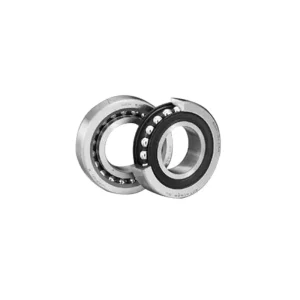
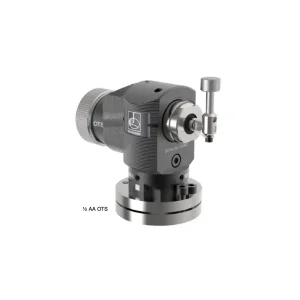
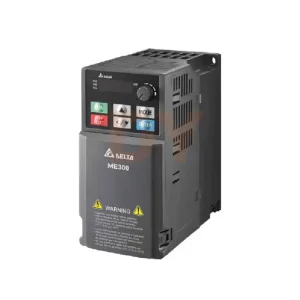
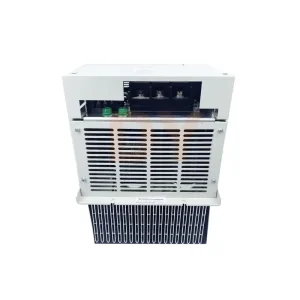
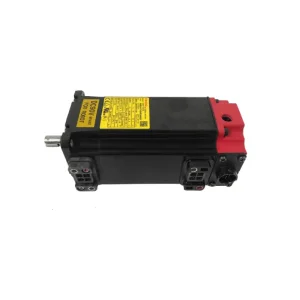
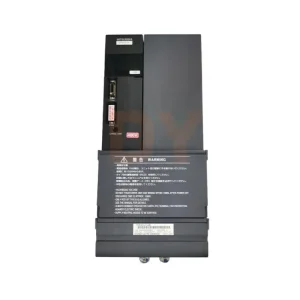
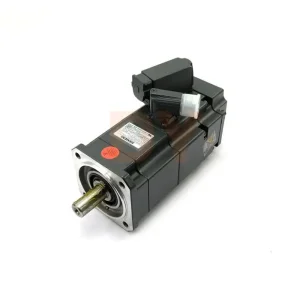
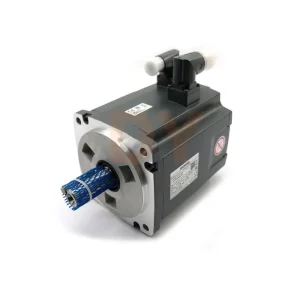
Expert resolution of troubleshooting, parameter migration, alarm codes, and procurement queries.
Mitsubishi MDS series drives report diagnostic status through standard 7-segment LED displays. Common fault classifications include:
Our engineering support staff provides remote alarm code verification and parameter troubleshooting before shipping replacement modules.
While both series serve Mitsubishi NC control platforms (M60/M70/M80 series), direct swap depends on the controller interface protocol. MDS-C1 units utilize SSCNET I/II optical connections, whereas MDS-D relies on high-speed SSCNET III protocols. Interfacing an MDS-D drive to older CNC control cards may require bus converter modules or parameter array reconfiguration. Contact our technical team with your CNC controller part number for direct compatibility clearance.
Single-axis units (e.g., MDS-D-V1-20, MDS-DH-V1-800) power a single servo motor, maximizing individual current output and thermal isolation. Dual-axis drives (e.g., MDS-C1-V2-4520) integrate control logic for two separate motors within one mechanical chassis, sharing a central DC bus link to minimize control cabinet space requirements and increase energy efficiency in compact machine designs.
All items undergo rigorous quality verification: nameplate inspection, serial number tracing through official channels, internal capacitor ESR checks, and real-time load bench testing using authentic Mitsubishi servo motors. We send full serial label photographs and bench test video confirmation before finalizing shipment documentation.
We provide a 12-month baseline functional warranty on all brand-new units. In the event of installation queries, parameter transfer problems, or encoder matching issues, our certified control engineers assist via remote diagnostics to ensure your equipment achieves optimal operational status quickly.
Need urgent delivery of a Mitsubishi MDS drive, power module, or CNC component? Submit your part number and machine model for immediate engineer assistance.
Connect With Motion Control Specialists